Table of Contents
This analysis is brought to you by Inkwood Research, a leading market intelligence firm specializing in European renewable energy markets, distributed generation technologies, and smart grid integration frameworks. Our research team combines extensive experience analyzing Germany’s Energiewende transition, plug-and-play solar innovations, and battery energy storage deployment patterns. Based on our proprietary research methodologies and strategic partnerships with German solar installers, grid operators, and technology providers, we deliver actionable insights that empower strategic decision-making for businesses navigating Germany’s sophisticated solar microinverter market and evolving clean energy ecosystem.
TLDR
Germany pioneered accessible renewable energy through balcony solar systems that democratize photovoltaic adoption for apartment dwellers. These plug-and-play installations drive significant solar microinverter demand across urban populations. The Germany solar microinverter market reached US$392.51 million in 2026, projecting growth to US$1,261.24 million by 2034 at a 15.71% CAGR. The country added 16.4 gigawatts of solar capacity in 2025, reaching 117 gigawatts total installed capacity. Meanwhile, over 1 million balcony solar units collectively contribute meaningful generation. Battery energy storage systems exceeding 1 million residential installations enable sophisticated energy management through virtual power plants. These systems aggregate distributed resources while advanced power electronics provide critical grid support functions addressing renewable intermittency challenges in Europe’s most technically demanding electricity market.
Solar equipment manufacturers targeting European markets will discover critical insights into Germany’s unique regulatory frameworks and technical requirements. This includes specifications for balcony solar and battery integration technologies. Energy technology investors evaluating distributed generation opportunities can leverage our analysis of German policy evolution and market maturation patterns. Grid operators and utilities managing renewable integration challenges need a comprehensive understanding of how solar microinverters provide grid services. These capabilities support Germany’s aggressive clean energy transition goals. Renewable energy consultants advising clients on European market entry must comprehend how German technical standards and consumer preferences influence product specifications and go-to-market strategies in Europe’s largest and most sophisticated solar technology market.
Balcony Solar Revolution in Germany Solar Microinverter Market
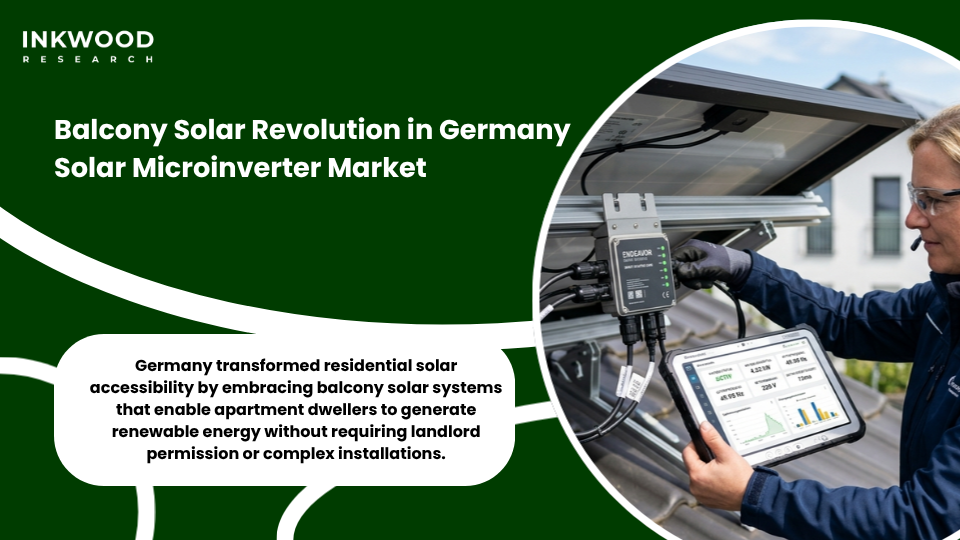
Germany transformed residential solar accessibility by embracing balcony solar systems that enable apartment dwellers to generate renewable energy without requiring landlord permission or complex installations. This innovation fundamentally democratizes photovoltaic technology for populations previously excluded from rooftop solar benefits. Moreover, these plug-and-play systems utilizing solar microinverters connect directly to household electrical circuits through standard outlets. This approach simplifies installation to levels where homeowners confidently complete setups independently without professional electrician assistance.
Consequently, costs reduce while market reach expands beyond traditional single-family homeowners to include renters and apartment residents, comprising substantial portions of the German housing stock. According to Germany’s Bundesnetzagentur, approximately 430,000 new balcony solar installations were registered in 2025. These systems collectively contributed 0.5 gigawatts of capacity to Germany’s renewable energy portfolio.
Additionally, this demonstrates that accessible entry points drive adoption among demographic segments historically unable to participate in solar transitions despite strong environmental values and willingness to invest in clean energy technologies. Practical barriers are removed through innovative product designs and supportive regulatory frameworks, enabling widespread participation.
This balcony solar phenomenon creates unique market dynamics where solar microinverters must meet different requirements than traditional rooftop applications. These include compact form factors, user-friendly interfaces, and enhanced safety features addressing direct connection to household circuits. As a result, such specifications drive product innovation, benefiting all market segments through technologies developed specifically for plug-and-play contexts. Subsequently, these enhancements improve conventional installations through better ease-of-use and superior safety characteristics that manufacturers incorporate across their entire product lines.
Regulatory Evolution Supporting Germany Solar Microinverter Adoption
German policymakers recognized that overly complex regulations historically deterred balcony solar adoption despite technological feasibility. This realization led to systematic regulatory streamlining that removed bureaucratic obstacles while maintaining necessary safety standards. These standards protect grid infrastructure and household electrical systems effectively. Furthermore, recent reforms increased allowable system sizes from 600 watts to 800 watts, enabling homeowners to generate more meaningful electricity quantities.
Additionally, simplified registration procedures eliminate lengthy approval processes that previously discouraged installations through uncertainty and administrative burden. Furthermore, value-added tax exemptions for small solar systems improve project economics by reducing upfront costs. This proves particularly beneficial for balcony installations where modest energy production makes every euro of savings proportionally more important for achieving reasonable payback periods.
These policy adjustments reflect the government’s learning from early program experiences where well-intentioned safety requirements inadvertently created friction, preventing widespread adoption. Moreover, they demonstrate commitment to iterative policy development that responds to market feedback and removes barriers once safety concerns are adequately addressed through technical standards and product certifications.
Also, these measures ensure compliance without imposing excessive documentation or approval requirements on individual homeowners pursuing modest solar installations for personal consumption rather than commercial generation activities requiring more extensive oversight and regulatory scrutiny.
Consumer Adoption Patterns in Germany Solar Microinverter Market
German consumers demonstrate remarkable environmental consciousness coupled with technical sophistication. This combination creates market dynamics where solar technology adoption reflects both climate concerns and genuine interest in energy systems and self-sufficiency concepts that resonate culturally beyond simple financial calculations. Plus, balcony solar appeals particularly to environmentally motivated residents who view modest installations as meaningful contributions toward climate goals while enjoying tangible benefits.
These benefits include reduced electricity bills and satisfaction from generating clean energy, visible through monitoring applications showing real-time production. Moreover, German solar adopters frequently engage actively with technology, researching products thoroughly before purchasing and participating in online communities sharing installation experiences and optimization strategies.
Furthermore, these behaviors create network effects where information dissemination accelerates adoption among social circles and generates word-of-mouth marketing more valuable than traditional advertising. This sophisticated consumer base demands high-quality products backed by comprehensive documentation and transparent performance specifications.
Such expectations elevate overall market standards and reward manufacturers investing in product quality and customer support rather than competing purely on price. These dynamics favor established brands with proven track records over unknown manufacturers offering tempting pricing but uncertain reliability and support quality throughout multi-decade equipment lifetimes. Initial purchase decisions affect experiences and economics for twenty-five years, requiring confidence in manufacturer longevity and commitment to warranty obligations.
Grid Integration and Flexibility Requirements
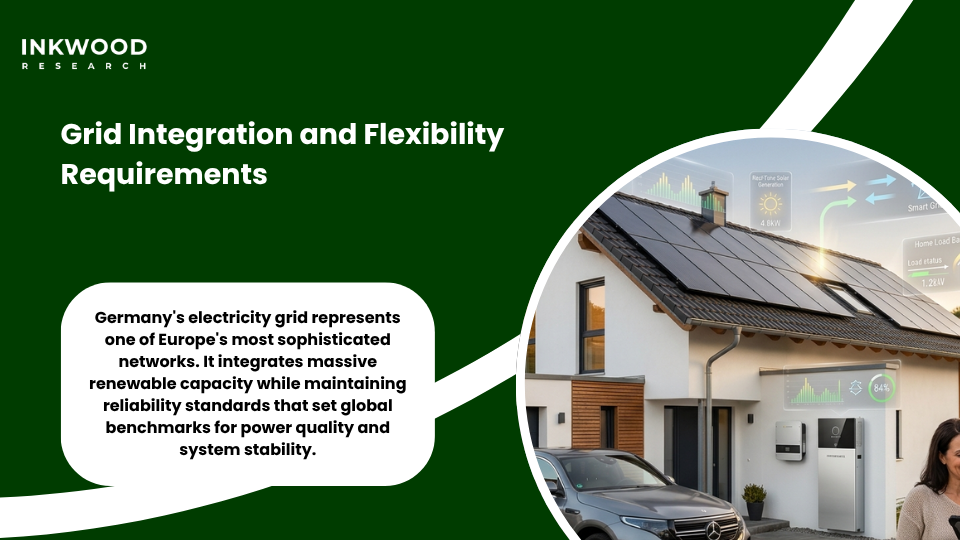
Germany’s electricity grid represents one of Europe’s most sophisticated networks. It integrates massive renewable capacity while maintaining reliability standards that set global benchmarks for power quality and system stability. These achievements occur under challenging conditions, including high renewable penetration that creates intermittency requiring sophisticated management strategies. Solar microinverters increasingly incorporate advanced grid support functions, including voltage regulation, frequency response, and reactive power provision.
On the other hand, these capabilities transform distributed solar installations from passive generation sources into active grid participants providing ancillary services. Traditionally, centralized power plants supplied these services. This evolution proves essential as renewable energy displaces conventional generators whose inherent characteristics historically provided grid stability through rotating mass and predictable dispatch profiles.
These technical requirements create opportunities for innovative power electronics manufacturers developing products meeting German grid codes while anticipating future standards. Subsequently, standards will likely become more stringent as renewable penetration increases and grid management challenges intensify.
Consequently, companies mastering these technologies position themselves favorably for European markets, broadly adopting standards similar to German requirements. Eventually, global markets where renewable integration follows similar trajectories will require comparable technical solutions. These solutions address intermittency and stability concerns inherent to solar and wind generation, regardless of geographic location or specific grid architecture details.
Smart Grid Technologies in Germany Solar Microinverter Systems
German utilities deploy smart meter infrastructure enabling two-way communication between grid operators and distributed energy resources. This infrastructure creates visibility into consumption and generation patterns while providing control capabilities for managing distributed solar during grid stress events or periods requiring demand response interventions. Accordingly, solar microinverters integrate with these smart grid systems through standardized communication protocols.
This integration enables remote monitoring and control that utilities leverage for grid management while providing homeowners with detailed energy data. Homeowners use this data for consumption optimization and self-sufficiency maximization strategies. Furthermore, time-of-use electricity pricing common in Germany creates financial incentives for shifting consumption toward solar production periods or charging batteries during low-price hours for later discharge during expensive evening periods.
Optimization strategies require sophisticated energy management systems coordinating solar generation, battery storage, and flexible loads, including vehicle charging and heat pump operation. These smart capabilities transform solar microinverters from simple DC-to-AC converters into intelligent energy management nodes.
Furthermore, they participate in complex optimization algorithms that consider multiple objectives, including cost minimization, grid support provision, and carbon footprint reduction. This evolution reflects broader trends toward distributed intelligence and coordinated control of numerous small assets. Collectively, these assets provide grid services previously requiring large centralized facilities dedicated specifically to particular functions like frequency regulation or voltage support.
Battery Energy Storage System Integration
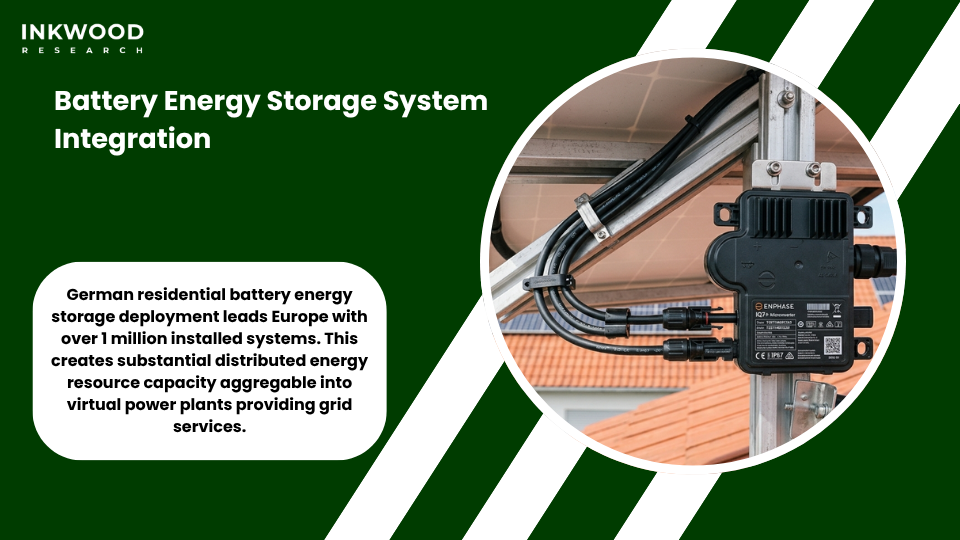
German residential battery energy storage deployment leads Europe with over 1 million installed systems. This creates substantial distributed energy resource capacity aggregable into virtual power plants providing grid services. Simultaneously, these systems deliver value to homeowners through backup power capabilities and electricity bill optimization strategies. Time-of-use pricing structures reward self-consumption and peak demand avoidance effectively.
Further, solar microinverters accommodate battery integration through AC-coupled architectures that retrofit seamlessly to existing installations. This enables homeowners to add storage years after initial solar deployment without equipment replacement or system redesign. Such flexibility proves valuable in markets like Germany, where battery costs declined substantially since early solar installations. Consequently, adding storage to systems originally designed for solar-only operation now makes economic sense when battery economics appeared marginal initially.
Moreover, battery integration fundamentally changes solar system value propositions by enabling time-shifting strategies. Solar energy collected during midday sunshine provides evening electricity when household consumption peaks and grid electricity prices reach maximums. This optimization improves financial returns while reducing grid stress during periods when solar generation falls rapidly. Simultaneously, residential demand surges with cooking and lighting needs coinciding with sunset timing. This dynamic creates challenges for grid operators.
Accordingly, distributed battery systems help address these challenges by storing midday surplus solar and discharging during evening ramping periods. Historically, conventional generators provided balancing services, now complicated by declining baseload plant economics. These economics undermine investments in maintaining flexible conventional capacity available for occasional deployment during challenging grid conditions.
Self-Consumption Optimization in Germany Solar Microinverter Market
Economic analysis increasingly favors maximizing self-consumption over exporting solar electricity to grids. Feed-in tariff reductions make on-site consumption financially superior to selling generation at wholesale rates. These wholesale rates fail to compensate for the full retail electricity value, including distribution charges and taxes. German homeowners pursue self-consumption through multiple strategies, including behavioral changes and shifting electricity use toward sunny periods.
Additionally, they also employ smart appliances programmed to operate during solar generation windows and battery energy storage, enabling temporal consumption shifting without lifestyle disruptions or operational compromises. Solar microinverters facilitate these optimization strategies through detailed monitoring data revealing consumption patterns and solar generation correlation. These insights empower homeowners to identify opportunities for improved matching between production and usage while quantifying financial benefits from self-consumption improvements.
Accordingly, such benefits justify investments in batteries or smart appliances, enabling better alignment between generation and consumption. Furthermore, monitoring capabilities extend beyond simple production tracking to include consumption analysis and grid interaction visibility. This comprehensive data supports sophisticated optimization approaches where artificial intelligence algorithms learn household patterns.
These systems automatically control batteries and flexible loads, maximizing self-consumption while respecting user preferences and comfort requirements. Automation proves particularly valuable for households without time or inclination for manual energy management but still desiring financial benefits from solar investments. As a result, intelligent control systems require minimal user intervention beyond initial preference setting and occasional oversight confirming automated optimization delivers expected benefits.
Technical Standards and Quality Expectations

German technical standards represent among the world’s most rigorous requirements for solar equipment. These standards establish quality benchmarks that protect consumers while creating barriers to entry for manufacturers unable or unwilling to invest in compliance testing and certification processes. Such processes verify product safety, performance, and reliability under demanding operating conditions.
Also, solar microinverters sold in Germany must obtain various certifications, including CE marking, demonstrating European safety directive compliance. They also need grid code conformity, confirming appropriate behavior during normal and fault conditions. Often, additional voluntary certifications from independent testing laboratories provide quality validation beyond minimum regulatory requirements.
These comprehensive standards benefit German consumers by ensuring purchased equipment meets stringent safety and performance criteria. However, they create challenges for manufacturers navigating complex compliance landscapes requiring substantial investment in testing and documentation before market entry. Moreover, these dynamics favor established companies with resources for certification activities over smaller manufacturers. Smaller firms struggle to afford compliance costs even when their products meet underlying technical requirements.
Nevertheless, these high standards ultimately strengthen the Germany solar microinverter market by building consumer confidence in product quality. They also create competitive advantages for German and European manufacturers whose proximity to testing facilities and familiarity with requirements enable efficient compliance compared to distant manufacturers facing language barriers and unfamiliarity with specific German expectations beyond generic international standards.
Longevity Expectations in Germany Solar Microinverter Applications
German consumers expect solar equipment to operate reliably for decades. This creates pressure on manufacturers to design products with longevity matching photovoltaic panel lifespans rather than requiring premature replacement. Moreover, premature replacement undermines system economics and generates electronic waste, contradicting environmental motivations underlying solar adoption. Solar microinverters meeting these expectations utilize high-quality components, including industrial-grade capacitors and robust thermal management.
Additionally, these features ensure stable operation under temperature extremes common in rooftop installations. Ambient conditions fluctuate widely between winter cold and summer heat, concentrated by black roof surfaces absorbing solar radiation. Furthermore, comprehensive warranties extending twenty-five years signal manufacturer confidence in product longevity while providing consumers with financial protection against premature failures.
Such assurance proves particularly important in Germany, where consumer protection regulations establish expectations for equipment durability and manufacturer responsibility. These expectations extend well beyond typical warranty periods in markets with weaker consumer rights. Also, longevity requirements drive continuous product improvement as manufacturers identify and address failure modes through field data analysis and reliability testing programs. Testing protocols subject equipment to accelerated aging, revealing potential weaknesses before deploying products widely.
This iterative development process improves overall market quality and raises baseline expectations. Even budget products must demonstrate reasonable reliability rather than representing purely disposable electronics requiring frequent replacement. Hence, frequent replacement proves inconsistent with sustainability principles, motivating solar adoption among environmentally conscious German consumers demanding products supporting climate goals through both clean energy generation and reduced resource consumption from durable equipment, avoiding premature obsolescence.
Virtual Power Plants and Distributed Energy Resources
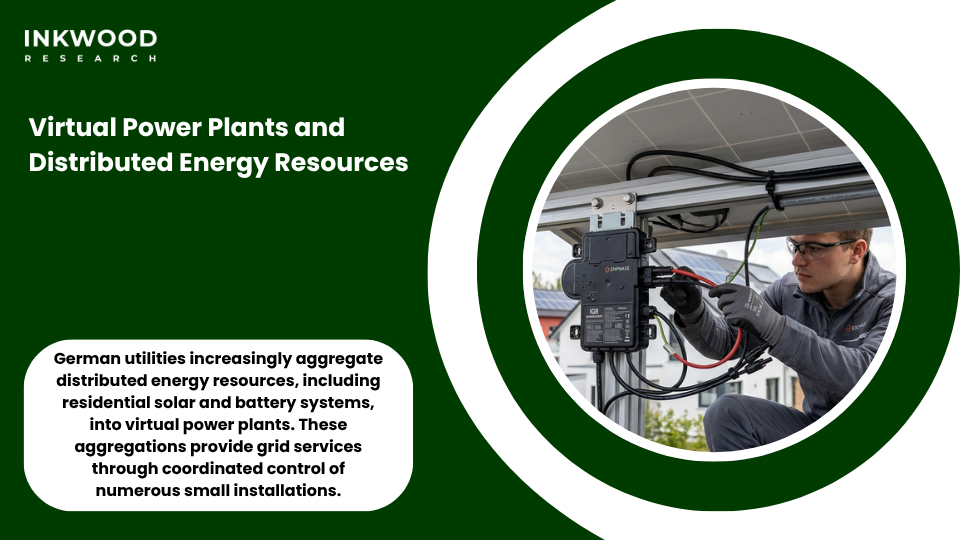
German utilities increasingly aggregate distributed energy resources, including residential solar and battery systems, into virtual power plants. These aggregations provide grid services through coordinated control of numerous small installations. Collectively, these installations become capable of meaningful generation and demand response contributions comparable to traditional power plants.
On the other hand, virtual power plant concepts rely on solar microinverter communication capabilities, enabling remote monitoring and control. These functions transform individual household installations into grid assets participating in electricity markets and providing ancillary services. Compensation through payments augments homeowner economics beyond simple electricity bill savings from self-consumption optimization. Moreover, virtual power plant participation creates network effects where individual system value increases through collective action.
These dynamics encourage residential battery adoption and advanced inverter technology supporting sophisticated control strategies required for effective aggregation and market participation. The virtual power plant model represents evolution from passive distributed generation toward active participation in electricity markets and grid management. Also, this transition gets enabled by power electronics advancement, creating intelligent inverters capable of sophisticated grid interactions.
Communication protocols facilitate coordination among distributed resources previously operating independently without considering broader system implications. They also enable opportunities for providing services valuable to grid operators struggling to manage renewable intermittency. Further, grid operators face challenges using conventional tools designed for controllable centralized generation rather than variable distributed resources, requiring different operational approaches and market structures recognizing distributed energy resource capabilities for providing flexibility services.
Market Mechanisms for Germany Solar Microinverter Grid Services
Electricity market evolution creates opportunities for distributed energy resources to monetize grid services. These services include frequency regulation, voltage support, and peak demand management. Such capabilities prove increasingly valuable as renewable penetration grows and conventional generator retirements reduce traditional flexibility resource availability. Solar microinverters equipped with advanced grid support functions enable homeowners to participate in these markets through aggregator intermediaries.
These intermediaries manage technical complexities and market interfaces while distributing revenues to contributing households. Business models create win-win scenarios where homeowners receive additional income from solar investments while utilities access flexibility resources needed for grid stability. Also, costs potentially prove lower than developing dedicated facilities or maintaining fossil generators operating at low capacity factors.
Fossil generators primarily serve rare peak demand or grid support requirements under current market conditions. These market opportunities drive solar microinverter technology development toward enhanced grid support capabilities and sophisticated communication interfaces. Moreover, real-time control responses to grid conditions become possible through these advances. Requirements push manufacturers beyond simple power conversion toward developing products functioning as intelligent grid edge devices.
Additionally, these devices operate autonomously within parameters established by utility control systems managing portfolios of distributed resources. Virtual power plants aggregate these resources to provide services across multiple time scales. Services range from immediate frequency response requiring millisecond reactions to longer-term capacity provision addressing seasonal demand patterns. Such provision requires sustained availability over extended periods when renewable generation proves inadequate for meeting consumption needs.
Key Takeaways
- Germany’s solar microinverter market demonstrates unique characteristics driven by balcony solar, democratizing renewable energy access.
- Sophisticated grid integration requirements and battery storage proliferation create demand for advanced power electronics capabilities.
- The Germany solar microinverter market reached US$392.51 million in 2026, projecting growth to US$1,261.24 million by 2034 at a 15.71% compound annual growth rate, reflecting market maturation and technology evolution.
- Balcony solar installations exceeded 430,000 new systems in 2025, according to the Bundesnetzagentur. These systems contributed 0.5 gigawatts of capacity while demonstrating that accessible entry points drive adoption among demographic segments.
- Apartment dwellers, historically excluded from rooftop solar benefits, now participate despite strong environmental motivations.
- Battery energy storage integration with over 1 million residential installations creates opportunities for virtual power plants. These aggregations of distributed resources provide grid services while delivering homeowner value through self-consumption optimization and backup power capabilities.
- Technical standards and quality expectations establish high barriers to entry, protecting consumers. They favor manufacturers investing in compliance and product longevity matching twenty-five-year panel lifespans.
- Smart grid technologies enable sophisticated energy management, coordinating solar generation, battery storage, and flexible loads.
- Time-of-use pricing optimization and automated control systems maximize self-consumption while providing grid flexibility services. These services prove increasingly valuable as renewable penetration grows and conventional generation retires from active service.
Ready to navigate Germany’s sophisticated solar microinverter market?
Inkwood Research provides comprehensive market intelligence and strategic consultation services, helping businesses understand technical requirements, regulatory frameworks, and consumer expectations. These factors characterize Europe’s most demanding renewable energy market.
Contact our team to discuss how German market dynamics influence European solar technology trends. Explore opportunities for advanced power electronics products supporting grid integration and battery storage applications.
Frequently Asked Questions
What makes balcony solar significant in Germany’s microinverter market?
Balcony solar systems expand renewable energy access for apartment residents, with Germany recording around 430,000 new plug-and-play solar installations in 2025 that significantly boosted microinverter adoption.
How does Germany’s solar microinverter market growth compare to other regions?
Germany’s solar microinverter market reached about US$392.51 million in 2026 and is projected to grow to US$1,261.24 million by 2034 at a CAGR of 15.71%, reflecting strong renewable energy adoption and technology maturity.
Why do battery energy storage systems matter for German microinverter applications?
More than one million residential battery systems in Germany enable greater solar self-consumption, support virtual power plant participation, and enhance energy management through AC-coupled microinverter systems.
How do government incentives support solar microinverter adoption in Germany?
Government policies promoting rooftop solar, distributed generation, and residential energy storage encourage households to adopt microinverter-based solar systems.
Why are microinverters suitable for Germany’s residential solar installations?
Microinverters optimize energy production at the panel level, making them ideal for smaller rooftop systems and complex installations common in urban and residential settings.
How do microinverters support Germany’s decentralized energy transition?
Microinverters enable distributed solar generation and integration with home energy storage systems, supporting Germany’s broader shift toward decentralized renewable power networks.