Table of Contents

This analysis is brought to you by Inkwood Research, a leading market intelligence firm specializing in Asia-Pacific nutraceutical innovation, bioavailability enhancement technologies, and functional nutrition ecosystems. Our research team combines deep expertise in India’s nutraceutical delivery systems market, traditional medicine-science integration strategies, and advanced supplement absorption technologies across India’s urban and emerging-tier healthcare segments. Through strategic partnerships with Indian formulation companies, regulatory bodies, and distribution networks, we deliver actionable insights for enterprises navigating the India advanced delivery nutraceuticals market.
TLDR
India’s nutraceutical sector is at a genuine inflection point, where centuries of Ayurvedic wisdom are converging with modern delivery science. The India advanced delivery nutraceuticals market is projected to grow from US$4,298.87 million in 2026 to US$13,413.16 million by 2034, reflecting a 15.28% CAGR. However, the central challenge remains bridging a real bioavailability gap in a price-sensitive market. Nanoencapsulation, phytosome technology, and liposomal systems are increasingly offering viable answers, even as affordability and regulatory clarity continue to shape the path forward.
This blog is essential reading for nutraceutical executives, formulation scientists, and product strategists evaluating India as a high-growth market. Additionally, investors tracking Asia-Pacific nutraceutical innovation market growth, regulatory consultants navigating FSSAI frameworks, and brand managers developing Ayurveda-aligned advanced delivery products will find targeted, evidence-grounded insights here. Healthcare professionals and distribution leaders working across India’s tiered consumer market will also benefit from this strategic perspective.
What Is Driving the India Advanced Delivery Nutraceuticals Market Right Now?

The India advanced delivery nutraceuticals market is expanding faster than almost any other nutraceutical market globally. Growing from US$4,298.87 million in 2026 to US$13,413.16 million by 2034 at a 15.28% CAGR, its trajectory reflects several forces that are converging at exactly the right moment.
A Population Turning Toward Preventive Health
India’s middle class is increasingly prioritizing preventive healthcare, and that shift is directly fueling demand for functional nutraceuticals market growth products. Moreover, post-pandemic awareness of immunity, gut health, and metabolic wellness has significantly expanded the consumer base for dietary supplements. Urban consumers, in particular, are actively seeking advanced supplement absorption technologies that deliver measurable outcomes rather than just ingredient presence.
The Indian government’s Ayushman Bharat Digital Mission and related preventive health initiatives are reinforcing this trend at the policy level, creating a structural tailwind for the broader nutraceutical delivery systems market in India.
Rising Disposable Incomes, Tiered Demand
What makes the India advanced delivery nutraceuticals market genuinely complex is its layered demand structure. Premium consumers in metro cities are willing to invest in personalized nutraceutical delivery systems and liposomal supplements, while price-sensitive consumers in Tier 2 and Tier 3 cities prioritize value and accessibility. Consequently, companies that crack both segments simultaneously are the ones gaining the most meaningful market share.
- Metro consumers: increasingly seeking targeted nutraceutical delivery technologies and science-backed claims
- Tier 2 and Tier 3 consumers: driving volume in functional ingredient delivery systems market segments
- Rural health programs: opening new distribution opportunities for enhanced absorption of dietary supplements
Furthermore, the rapid growth of India’s e-commerce and direct-to-consumer nutrition channels is enabling brands to reach previously inaccessible consumer segments without heavy physical infrastructure investment.
How Does Ayurveda Connect to Modern Nutraceutical Delivery Science?

India’s relationship with functional nutrition is centuries old, and that context matters enormously for the India advanced delivery nutraceuticals market. Ayurvedic formulations have always prioritized bioavailability through preparation methods such as Shodhana (purification), Bhavana (repeated impregnation), and the use of lipid vehicles like ghee and sesame oil. In many ways, these ancient approaches anticipated what modern delivery science is now formalizing.
Phytosome Technology as the Bridge
Phytosome technology nutraceuticals represent one of the most commercially relevant intersections of Ayurveda and modern science. By binding plant-based actives, particularly those derived from turmeric, ashwagandha, and boswellia, to phospholipid complexes, phytosome technology nutraceuticals dramatically improve cellular absorption compared to standard herbal extracts. This approach is especially powerful in India because the underlying botanical actives are already culturally familiar and regulatory-approved.
Moreover, phytosome platforms allow brands to make clinically substantiated bioavailability enhancement nutraceutical claims around Ayurvedic ingredients, which is a meaningful commercial differentiator in a crowded market. Consequently, several Indian formulation companies have made phytosome-based formats a central pillar of their premium product strategy.
Nanoencapsulation Meets Herbal Science
Beyond phytosomes, nanoencapsulation in nutraceuticals is opening new possibilities for traditional Indian botanicals that were previously limited by poor solubility or stability. Nano-carriers protect sensitive phytochemicals during digestion, extend their residence time in the gut, and improve systemic absorption.
For ingredients like curcumin, piperine, and quercetin, all deeply rooted in Indian traditional medicine, nanoencapsulation technology in nutraceuticals is proving to be a transformative enabler.
- Curcumin: nano-formulations have demonstrated substantially higher plasma levels versus standard extracts
- Ashwagandha: encapsulated formats improve consistent withanolide delivery and shelf stability
- Boswellia: lipid-based nutraceutical delivery systems improve AKBA absorption, the most bioactive component
Additionally, Indian research institutions, including IIT Bombay and IIT Delhi, are publishing significant peer-reviewed work on nanotechnology in dietary supplements, reinforcing the scientific credibility of these approaches for both domestic and export markets.
What Are the Key Bioavailability Challenges in India’s Nutraceutical Market?
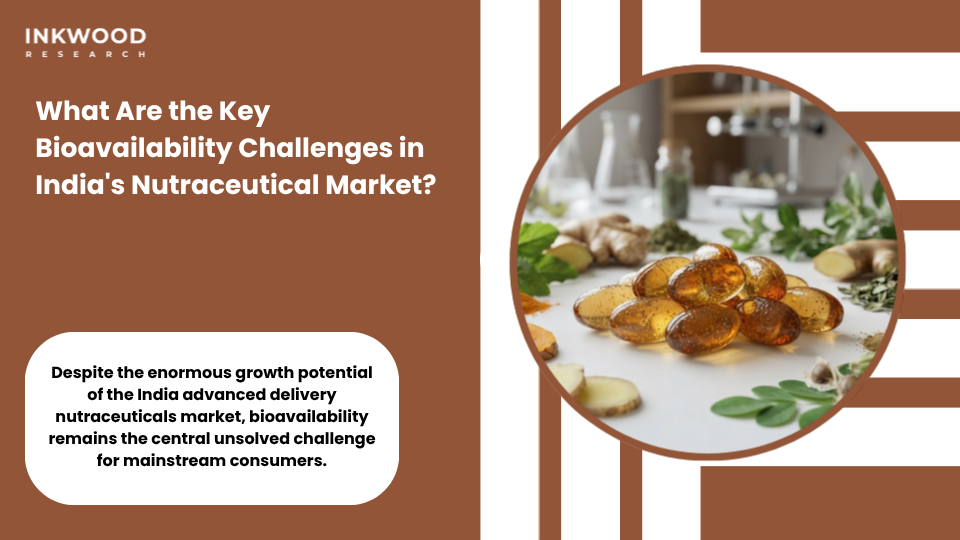
Despite the enormous growth potential of the India advanced delivery nutraceuticals market, bioavailability remains the central unsolved challenge for mainstream consumers. Most nutraceuticals sold in India today are still delivered in conventional tablet or capsule formats, with no meaningful encapsulation or absorption enhancement technology. The gap between ingredient presence and actual bioavailability is, consequently, wide.
Price Sensitivity as the Primary Constraint
Advanced nutraceutical delivery formats, whether liposomal, nanoencapsulated, or phytosome-based, carry higher production costs than conventional supplements. In a market where a significant portion of consumers make purchasing decisions based on price per unit, this creates a real commercialization barrier. However, the picture is more nuanced than it might initially appear.
Several factors are gradually shifting the affordability equation. Domestic manufacturing of advanced delivery ingredients is scaling up, which is reducing input costs for brands. Moreover, consumer education campaigns by leading brands are building willingness to pay for science-backed formats. Furthermore, innovations in microencapsulation nutraceutical applications, which offer good bioavailability at a lower cost than full liposomal systems, are opening a viable middle ground.
Regulatory Clarity and Ingredient Approvals
India’s Food Safety and Standards Authority of India (FSSAI) has been progressively expanding its regulatory framework for novel nutraceutical carriers and advanced delivery ingredients. However, approval timelines for genuinely new delivery systems, particularly those involving nanotechnology in dietary supplements, remain lengthy. This regulatory lag creates uncertainty for companies trying to bring innovative nutraceutical formulations market opportunities to market on competitive timelines.
Consequently, many brands are currently focusing their advanced delivery investments on already-approved platforms like phytosomes, liposomes, and standard microencapsulation, while engaging proactively with FSSAI on emerging technologies. This pragmatic approach is, notably, also helping to build a stronger regulatory evidence base for future approvals.
Which Delivery Technologies Are Gaining Traction in India?
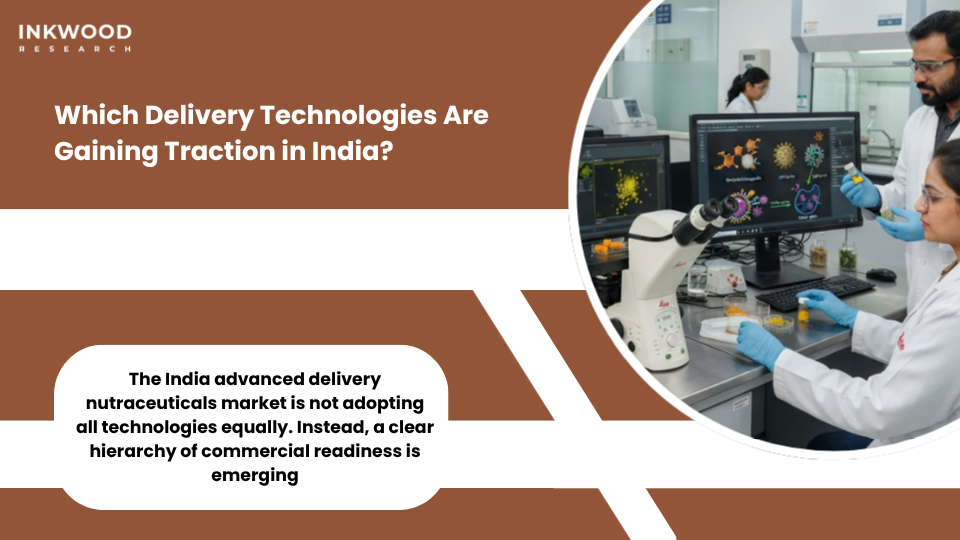
The India advanced delivery nutraceuticals market is not adopting all technologies equally. Instead, a clear hierarchy of commercial readiness is emerging, shaped by cost, regulatory status, and consumer familiarity.
- Phytosome technology nutraceuticals: Leading adoption due to Ayurvedic alignment, strong clinical evidence, and FSSAI-approved ingredient status
- Liposomal nutraceutical delivery systems: Gaining ground in premium urban segments, particularly for vitamins C, D, and glutathione
- Microencapsulation nutraceutical applications: Expanding rapidly in functional food and beverage fortification, driven by cost-effectiveness
- Solid lipid nanoparticles nutraceuticals: Emerging in research-to-market pipelines for Omega-3 and fat-soluble vitamins
- Controlled release nutraceuticals: Growing in the sports nutrition and therapeutic supplement segments where sustained delivery matters
Furthermore, smart nutraceutical delivery platforms that combine digital tracking with personalized dosing recommendations are beginning to appear in India’s premium direct-to-consumer nutrition segment, signaling the early stages of a precision nutrition transition.
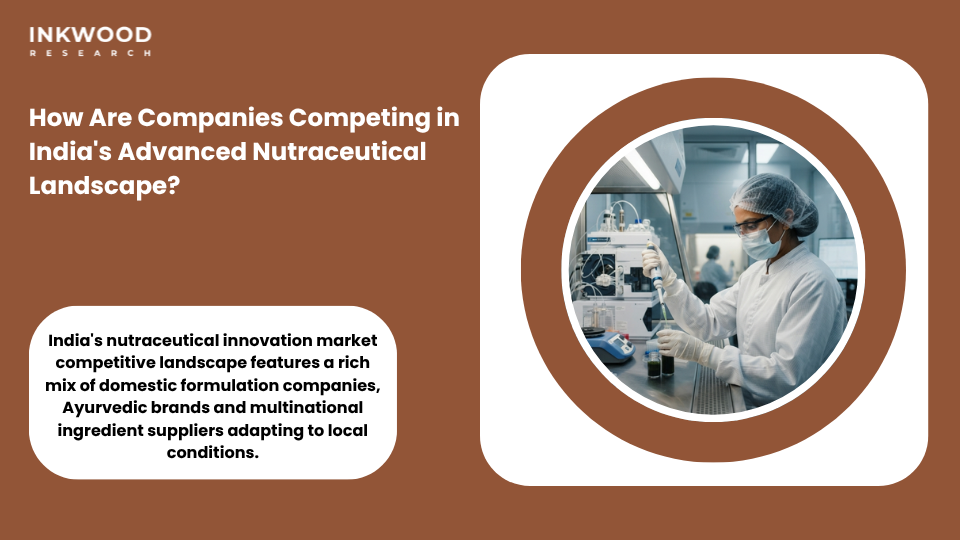
India’s nutraceutical innovation market competitive landscape features a rich mix of domestic formulation companies, Ayurvedic brands modernizing their delivery science, and multinational ingredient suppliers adapting to local conditions. Several companies stand out for how they are navigating the bioavailability challenge:
- Himalaya Wellness Company: Investing in phytosome and lipid-based nutraceutical delivery systems for its herbal active portfolio, bridging Ayurvedic heritage with modern bioavailability enhancement nutraceutical science.
- Sun Pharmaceutical Industries: Leveraging pharmaceutical-grade nanoencapsulation and novel drug delivery capabilities to develop next-generation nutraceutical market products for premium health segments.
- Amway India: Expanding its advanced supplement absorption technologies portfolio, particularly in liposomal vitamins and targeted nutraceutical delivery technologies for direct-to-consumer channels.
- Capsugel (now Lonza): Supplying advanced encapsulation platforms to Indian nutraceutical manufacturers, supporting the scale-up of controlled release nutraceuticals across domestic brands.
- Indena: Leading phytosome technology nutraceutical development, with significant partnerships across Indian botanical ingredient suppliers for Ayurvedic active delivery.
Additionally, a growing cohort of Indian startups is entering the personalized nutraceutical delivery systems market insights space, using AI-powered formulation tools and direct-to-consumer digital models to reach India’s health-aware urban consumer base.
What Does the Regulatory Environment Mean for Delivery Innovation in India?
India’s FSSAI regulatory framework for health supplements and nutraceuticals is evolving in ways that both support and constrain India’s advanced delivery nutraceuticals market. On the supportive side, FSSAI’s expanded approved ingredient lists and clearer labeling guidelines for bioavailability claims are building a more predictable operating environment for brands investing in advanced delivery formats.
Conversely, approval timelines for genuinely novel nutraceutical carriers, particularly those involving nanotechnology in dietary supplements, remain a friction point. Companies developing functional ingredient delivery systems market innovations must therefore plan regulatory engagement well ahead of intended launch timelines.
Nevertheless, the direction of travel is broadly positive. India’s growing participation in international nutraceutical standards bodies, combined with an increasing number of collaborative research programs between industry and government, suggests that the regulatory environment for advanced delivery nutraceuticals will become more enabling over the coming years.
Key Takeaways
- Market size: India advanced delivery nutraceuticals market grows from US$4,298.87 million in 2026 to US$13,413.16 million by 2034 at a 15.28% CAGR, among the fastest globally
- Ayurveda advantage: Phytosome technology nutraceuticals and lipid-based platforms align naturally with India’s botanical heritage, offering a credible bridge to modern bioavailability enhancement nutraceuticals
- Bioavailability gap: Most mainstream Indian supplements still lack meaningful delivery technology, creating significant white space for encapsulated nutraceuticals market entrants
- Tiered strategy: Microencapsulation nutraceutical applications for mass-market segments and liposomal nutraceutical delivery systems for premium urban consumers represent the most viable commercial architecture
- Regulatory navigation: FSSAI compliance planning, particularly for novel nutraceutical carriers, must be built into product development timelines from the outset
- Competitive landscape: Both established domestic companies and multinational ingredient suppliers are actively scaling advanced supplement absorption technologies in India
Conclusion:
India’s advanced delivery nutraceuticals market is, without question, one of the most compelling growth opportunities in the global nutraceutical delivery systems market today. The convergence of Ayurvedic heritage, a rapidly health-conscious consumer base, and maturing delivery science is creating conditions for genuinely transformative innovation. The bioavailability gap is real, but the tools to close it, from phytosome technology and nanoencapsulation to liposomal platforms and smart delivery systems, are available, improving, and increasingly cost-competitive.
Inkwood Research provides the market intelligence and strategic analysis needed to navigate this landscape with confidence.
Connect with our team to explore how our insights can support your positioning in the India advanced delivery nutraceuticals market.
Frequently Asked Questions
How large is the India advanced delivery nutraceuticals market in 2026?
The India advanced delivery nutraceuticals market is valued at US$4,298.87 million in 2026, growing to US$13,413.16 million by 2034 at a 15.28% CAGR.
Which delivery technologies lead the India nutraceutical delivery systems market analysis?
Phytosome technology, liposomal systems, and microencapsulation lead adoption, with nanoencapsulation in nutraceuticals growing rapidly in premium segments.
How does Ayurveda connect to advanced nutraceutical delivery science in India?
Phytosome technology nutraceuticals use phospholipid complexes to enhance absorption of Ayurvedic botanicals like turmeric and ashwagandha, bridging traditional and modern science.
What regulatory body governs advanced nutraceutical delivery in India?
FSSAI oversees health supplements and nutraceuticals in India, with evolving guidelines that increasingly address novel nutraceutical carriers and bioavailability enhancement claims.
Why is bioavailability a challenge in India's nutraceutical market?
Most Indian supplements still use conventional formats without encapsulation, limiting active ingredient absorption and the efficacy of functional nutraceuticals market growth products.
What makes India's advanced nutraceutical market unique compared to other regions?
India’s Ayurvedic ingredient base, price-sensitive tiered demand, and FSSAI regulatory environment create a distinct market structure unlike North America or European nutraceutical delivery systems markets.