Table of Contents
• Europe Material Handling Vehicles Market Overview
• European Green Deal Transforms the Material Handling Equipment Industry
• Germany Leads the Europe Material Handling Vehicles Market Through Innovation
• UK Adapts the Europe Material Handling Vehicles Market Post-Brexit
• E-Commerce Warehouse Automation Drives Europe Material Handling Vehicles Market Growth
• Competitive Dynamics in the Europe Material Handling Vehicles Market
• Latest Innovations Shaping the Europe Material Handling Vehicles Market
TLDR
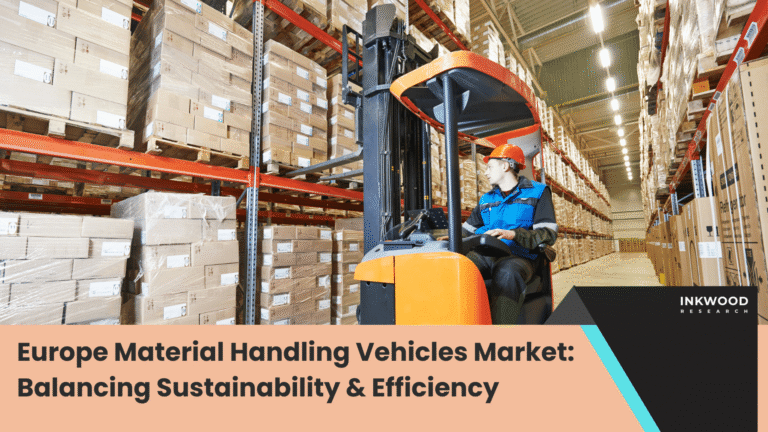
The Europe material handling vehicles market navigates stringent environmental regulations while maintaining operational excellence. Valued at $11.25 billion in 2025, expansion to $14.43 billion by 2032 reflects Europe’s commitment to sustainable logistics. The European Green Deal accelerates electric equipment adoption, while Industry 4.0 principles transform German manufacturing. Cross-border e-commerce growth drives warehouse automation across member states. Meanwhile, labor shortages throughout Western Europe push companies toward automated systems and intelligent equipment integrating advanced technologies.
European logistics directors, sustainability managers, and procurement executives discover regulatory compliance strategies here. German manufacturing leaders, French distribution operators, and UK warehouse managers gain regional insights. Equipment vendors targeting EU markets benefit from policy intelligence. ESG officers navigating carbon reduction mandates access practical guidance. Furthermore, investors evaluating European automation opportunities obtain data-driven market perspectives addressing sustainability requirements.
Europe Material Handling Vehicles Market Overview
The Europe material handling vehicles market prioritizes environmental performance alongside operational efficiency. Material handling vehicles serve critical functions in manufacturing, warehousing, and distribution operations. According to our analysis, the material handling vehicles market size reached $11.25 billion in 2025. Moreover, the material handling equipment industry projects growth to $14.43 billion by 2032 at a 3.62% CAGR. Additionally, automated guided vehicles (AGVs) adoption accelerates across European facilities.
European regulations drive electric material handling equipment adoption faster than global averages. Companies prioritize total cost calculations, incorporating carbon pricing and regulatory compliance costs. Consequently, material handling vehicles feature advanced technologies addressing stringent environmental standards. Furthermore, the machinery & equipment market emphasizes long lifecycles and comprehensive service networks supporting material handling vehicles throughout their operational lifespan.
The EU Emissions Trading System establishes carbon pricing mechanisms affecting industrial operations. Companies purchasing internal combustion equipment face increasing carbon costs. Therefore, electric warehouse vehicles deliver compelling financial advantages beyond environmental benefits. Additionally, workplace safety directives mandate advanced operator protection systems for material handling vehicles.
Regional Market Characteristics
The European material handling vehicles market demonstrates mature characteristics, prioritizing quality over quantity. Businesses invest in durable warehouse automation solutions rather than frequent replacements. This approach aligns with circular economy principles, gaining prominence across member states. Moreover, the logistics automation market growth reflects e-commerce expansion throughout Western and Eastern Europe, requiring advanced warehouse automation solutions.
Distribution center automation investments surge as retailers compete with online platforms. Traditional stores integrate omnichannel capabilities, requiring flexible material handling vehicles. Consequently, smart warehouse technologies enable efficient order fulfillment across multiple channels. Furthermore, industrial material handling systems incorporate IoT connectivity for real-time monitoring of material handling vehicles performance.
European Green Deal Transforms the Material Handling Equipment Industry
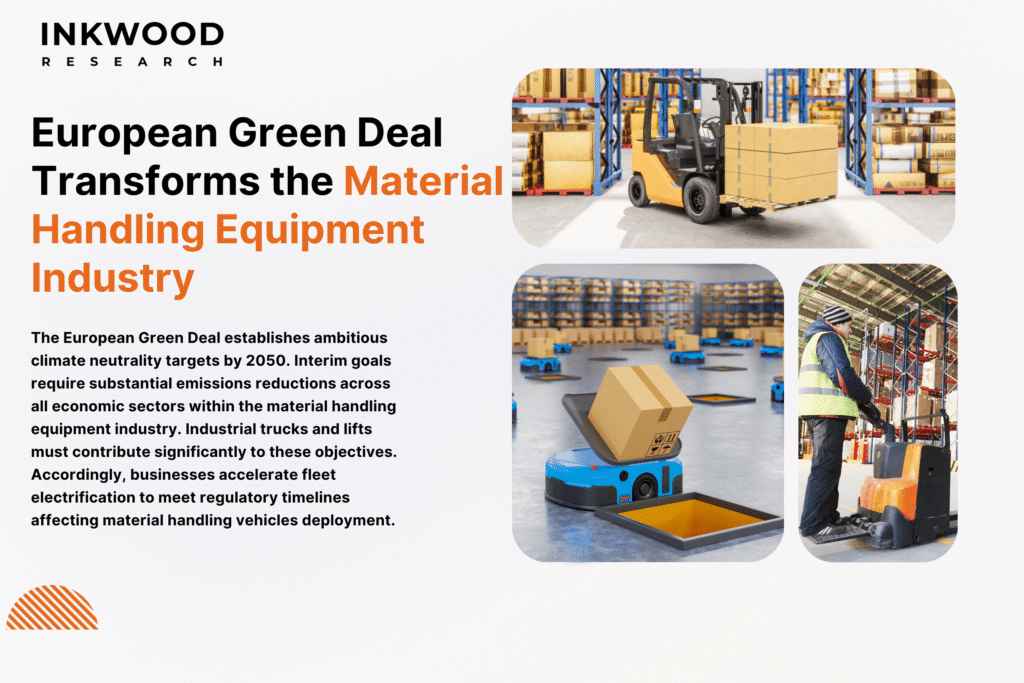
The European Green Deal establishes ambitious climate neutrality targets by 2050. Interim goals require substantial emissions reductions across all economic sectors within the material handling equipment industry. Industrial trucks and lifts must contribute significantly to these objectives. Accordingly, businesses accelerate fleet electrification to meet regulatory timelines affecting material handling vehicles deployment.
The EU ETS expanded coverage to maritime transport in 2024, demonstrating regulatory scope expansion. Similar extensions may affect additional sectors over time. Therefore, companies invest proactively in zero-emission pallet trucks market equipment, anticipating future requirements. This forward-looking approach characterizes the Europe material handling vehicles market dynamics and shapes warehouse automation solutions strategies.
Carbon Pricing Drives Economic Calculations
EU carbon allowances exceeded €100 per tonne in early 2023, making emissions financially significant for material handling equipment industry operations. Internal combustion forklifts operating in covered facilities incur ongoing carbon costs. Conversely, electric material handling equipment alternatives avoid these expenses entirely. Consequently, payback periods for electric material handling equipment shortened substantially across European markets.
Additionally, government incentive programs support clean technology investments in warehouse automation solutions. Germany, France, and the Netherlands offer grants reducing upfront equipment costs for electric warehouse vehicles. These programs complement carbon pricing, creating powerful economic incentives for machinery & equipment market modernization. Moreover, material handling equipment manufacturers develop innovative electric material handling equipment addressing sustainability requirements.
Renewable energy integration enhances electric warehouse vehicles environmental benefits significantly. Facilities with solar installations charge equipment using clean electricity. This combination eliminates operational carbon emissions entirely from material handling vehicles operations. Furthermore, battery recycling programs address end-of-life environmental concerns comprehensively for electric warehouse vehicles.
Hydrogen Fuel Cells for Heavy-Duty Applications
While lithium-ion batteries dominate light-duty segments, hydrogen shows promise for heavy-duty material handling equipment. German companies particularly pioneer hydrogen technology development for material handling vehicles. Pilot programs demonstrate viability for applications requiring extended runtime without recharging material handling vehicles.
However, hydrogen infrastructure remains limited across most European markets. Refueling station networks require substantial investments before widespread adoption becomes practical for material handling vehicles. Nevertheless, technology development continues as part of broader hydrogen economy initiatives. Additionally, autonomous forklifts may eventually utilize hydrogen powertrains for continuous operations within warehouse automation solutions.
Germany Leads the Europe Material Handling Vehicles Market Through Innovation
Germany represents the largest European material handling vehicles market through world-class manufacturing expertise. The country’s automotive sector demands sophisticated industrial material handling systems for production efficiency. Industry 4.0 initiatives integrate IoT technologies and AI-powered analytics across factories nationwide, utilizing warehouse automation solutions. Moreover, warehouse robots market solutions transform traditional operations with automated guided vehicles (AGVs).
German manufacturers emphasize engineering excellence and precision in material handling vehicles. Equipment specifications often exceed standard requirements, ensuring maximum reliability and longevity. This quality focus positions German companies as premium providers serving demanding applications requiring advanced warehouse automation solutions. Furthermore, material handling solutions incorporate advanced automation capabilities supporting material handling vehicles integration.
Smart Factory Concepts Transform Operations
Industry 4.0 principles revolutionize manufacturing environments throughout Germany with warehouse automation solutions. Automated guided vehicles (AGVs) navigate seamlessly between workstations using advanced navigation systems. Real-time data exchange between material handling vehicles optimizes workflows continuously. Additionally, global supply chain automation benefits from German technological leadership in the material handling equipment industry.
Predictive maintenance algorithms prevent unexpected equipment failures in material handling vehicles. Sensor networks monitor performance parameters, identifying potential issues before breakdowns occur. Consequently, production reliability improves while maintenance costs decrease through optimized scheduling of warehouse automation solutions. Moreover, material handling trucks integrate seamlessly with manufacturing execution systems, utilizing electric material handling equipment.
Regional Industrial Concentrations
North Rhine-Westphalia and Bavaria concentrate industrial activities, driving e-commerce warehouse automation demand for material handling vehicles. Logistics hubs serve European distribution networks requiring extensive warehouse automation solutions. Companies like KION Group AG and Jungheinrich AG maintain manufacturing facilities supporting regional markets with material handling vehicles production.
Additionally, automotive supply chains throughout southern Germany utilize sophisticated material transport vehicles for just-in-time delivery. Component manufacturers coordinate closely with assembly plants, requiring precise material handling capabilities through automated guided vehicles (AGVs). Therefore, equipment sophistication exceeds typical warehouse applications significantly for material handling vehicles. Furthermore, smart warehouse technologies enable seamless integration across supply chains, utilizing warehouse automation solutions.
UK Adapts the Europe Material Handling Vehicles Market Post-Brexit
The United Kingdom navigates unique challenges within the Europe material handling vehicles market following Brexit. Major retailers, including Tesco, Sainsbury’s, and Marks & Spencer, invest heavily in distribution center automation, enhancing supply chain resilience through warehouse automation solutions. Online grocery shopping adoption accelerated during pandemic periods, creating lasting demand shifts for material handling vehicles.
Labor shortages intensified following immigration policy changes. Warehouse worker availability decreased substantially in key logistics regions. Consequently, companies accelerate automation investments, addressing workforce constraints through automated guided vehicles (AGVs). Autonomous forklifts and robotic systems reduce dependency on human operators significantly, while warehouse automation solutions improve productivity.
Cold Storage Infrastructure Expansion
Fresh food distribution and pharmaceutical logistics drive cold chain development, requiring specialized material handling vehicles. Temperature-controlled facilities require specialized electric material handling equipment operating reliably in freezing conditions. Electric systems outperform internal combustion alternatives, struggling in extreme cold for warehouse automation solutions. Moreover, warehouse automation solutions address labor challenges in harsh environments using electric warehouse vehicles.
Food safety regulations prohibit combustion emissions in food handling areas. Therefore, electric warehouse vehicles become mandatory rather than optional for these applications within the material handling equipment industry. Market growth in cold storage exceeds general warehouse expansion rates significantly for material handling vehicles. Additionally, material handling vehicles must meet stringent hygiene standards through electric material handling equipment.
Flexible Ownership Models
Rental markets flourish as businesses navigate uncertain economic conditions affecting material handling vehicles procurement. Pallet trucks market rental programs provide temporary capacity without long-term commitments. Equipment leasing converts capital expenditures into operational expenses, improving cash flow management for warehouse automation solutions. Furthermore, material handling equipment manufacturers offer flexible financing options for material handling vehicles.
Short-term rentals support seasonal demand fluctuations effectively for material handling vehicles. Retailers particularly leverage rental solutions during holiday shopping periods requiring additional warehouse automation solutions. This flexibility enables capacity scaling, matching actual requirements rather than peak demand projections for material handling vehicles. Additionally, industrial trucks and lifts rental programs minimize financial risks.
E-Commerce Warehouse Automation Drives Europe Material Handling Vehicles Market Growth
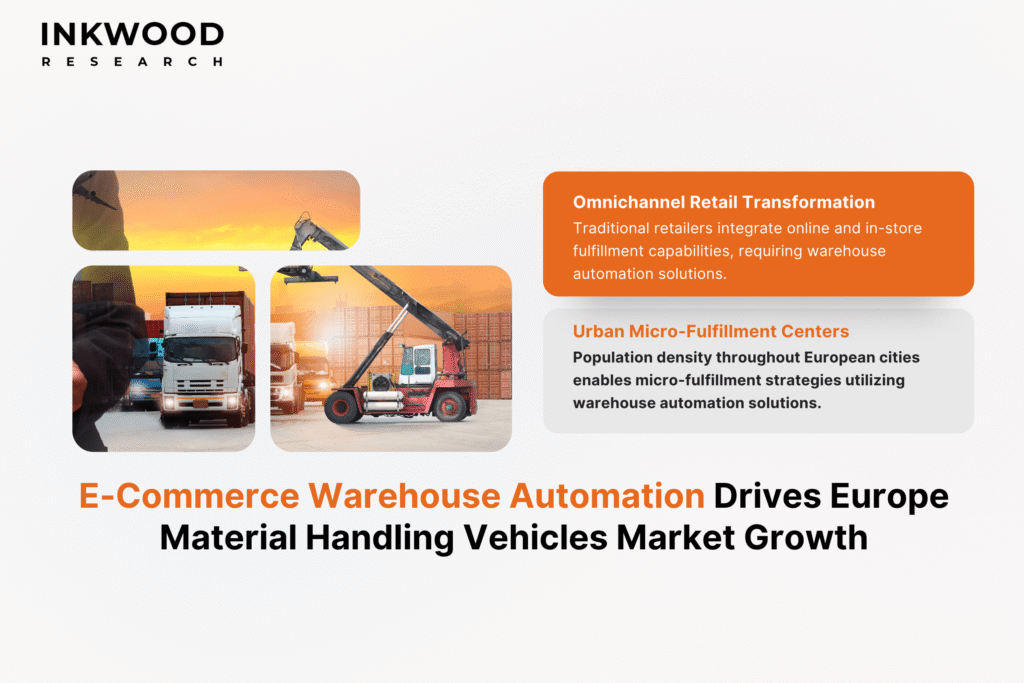
European e-commerce warehouse automation expands as online shopping penetrates all demographics. Amazon, Zalando, and ASOS operate extensive fulfillment networks requiring advanced smart warehouse technologies throughout the region, utilizing warehouse automation solutions. Same-day delivery expectations necessitate strategically located distribution centers near major population centers equipped with material handling vehicles.
Cross-border e-commerce growth creates demand for multilingual equipment interfaces and standardized systems for material handling vehicles. Companies operating across multiple countries prefer consistent equipment platforms utilizing warehouse automation solutions. This standardization simplifies operator training, maintenance procedures, and parts management for material handling vehicles. Moreover, logistics automation market solutions enable seamless cross-border operations with warehouse automation solutions.
Omnichannel Retail Transformation
Traditional retailers integrate online and in-store fulfillment capabilities, requiring warehouse automation solutions. Warehouse operations must support both bulk distribution to retail locations and individual consumer orders using material handling vehicles. This complexity requires flexible material handling solutions accommodating diverse workflows. Furthermore, warehouse robots market technologies optimize picking efficiency through warehouse automation solutions.
Returns processing becomes critical as online shopping grows, requiring efficient material handling vehicles. Reverse logistics capabilities within warehouses demand efficient material handling for inspection, restocking, or disposal, utilizing warehouse automation solutions. Equipment versatility becomes increasingly important for these multifunctional operations within the material handling equipment industry. Additionally, automated warehouse vehicles handle returns processing workflows efficiently through warehouse automation solutions.
Urban Micro-Fulfillment Centers
Population density throughout European cities enables micro-fulfillment strategies utilizing warehouse automation solutions. Small-footprint facilities located near consumers support rapid delivery promises with material handling vehicles. These compact operations utilize specialized material handling trucks optimized for confined spaces. Moreover, global supply chain automation extends to urban environments requiring warehouse automation solutions.
Vertical storage systems maximize limited floor space in expensive urban locations. Narrow-aisle equipment and robotic retrieval systems operate efficiently within constrained environments using warehouse automation solutions. Consequently, equipment specifications differ substantially from large suburban distribution centers for material handling vehicles. Additionally, electric material handling equipment suits urban noise restrictions while warehouse automation solutions optimize space utilization.
Competitive Dynamics in the Europe Material Handling Vehicles Market
KION Group AG, headquartered in Frankfurt, Germany, leads the Europe material handling vehicles market through comprehensive brand portfolios offering warehouse automation solutions. The company operates Linde Material Handling, STILL, and Baoli brands, serving diverse segments with material handling vehicles. KION’s 2024 revenue exceeded €11.5 billion globally, with strong European concentration in the material handling equipment industry.
Linde emphasizes hydraulic technology innovation and premium quality positioning for material handling vehicles. STILL focuses on warehouse automation solutions, including narrow-aisle equipment and automated systems utilizing automated guided vehicles (AGVs). Meanwhile, Baoli targets cost-conscious customers through competitive pricing strategies for material handling vehicles. This multi-brand approach addresses varied market requirements effectively across warehouse automation solutions.
- KION Pioneers Digital Transformation
In January 2025, KION partnered with NVIDIA and Accenture to develop “Physical AI” warehouse solutions utilizing warehouse automation solutions. This collaboration creates digital twins enabling advanced simulations and real-time optimizations for material handling vehicles. Furthermore, the initiative enhances automation efficiency through cutting-edge technology integration in warehouse automation solutions. Additionally, material handling solutions incorporate artificial intelligence capabilities, enhancing material handling vehicles performance.
KION develops hydrogen fuel cell systems for industrial applications within the material handling equipment industry. Production began in 2023 for 24-volt warehouse trucks as alternative material handling vehicles. The company also constructed a hydrogen refueling station supporting pilot programs for material handling vehicles. These investments demonstrate a commitment to alternative energy solutions for warehouse automation solutions. Moreover, heavy-duty material handling equipment may utilize hydrogen powertrains.
- Jungheinrich AG Expands Manufacturing
Jungheinrich AG reported €5.6 billion in 2024 lift truck revenue globally across the material handling equipment industry. The German manufacturer emphasizes warehouse technology leadership through comprehensive automation offerings in warehouse automation solutions. Products range from electric forklifts to sophisticated automated guided vehicles (AGVs) serving diverse applications requiring material handling vehicles.
Jungheinrich commenced operations at its Chomutov production plant in Czechia during June 2023, manufacturing material handling vehicles. This facility manufactures electric reach trucks, expanding European capacity significantly for warehouse automation solutions. Moreover, the company acquired Magazino to elevate automation expertise through advanced robotics capabilities, enhancing material handling vehicles. Additionally, industrial material handling systems incorporate cutting-edge technologies for warehouse automation solutions.
International Presence
- Toyota Industries Corporation serves European markets through established distribution networks offering material handling vehicles. The company’s reputation for reliability and durability resonates with quality-conscious European customers seeking warehouse automation solutions. Toyota equipment particularly dominates automotive manufacturing applications requiring maximum uptime for material handling vehicles. Furthermore, material transport vehicles deliver exceptional performance in warehouse automation solutions.
- Mitsubishi Logisnext Co Ltd operates through multiple brands, including UniCarriers and Cat Lift Trucks, providing material handling vehicles. This diversified approach addresses different customer segments and regional preferences for warehouse automation solutions. European operations benefit from Japanese engineering heritage and manufacturing excellence in the material handling equipment industry. Additionally, warehouse automation solutions incorporate proven technologies for material handling vehicles.
Latest Innovations Shaping the Europe Material Handling Vehicles Market
European material handling equipment manufacturers lead innovation through substantial R&D investments in warehouse automation solutions. Companies develop advanced safety systems, energy-efficient powertrains, and intelligent fleet management platforms for material handling vehicles. These technologies address regional requirements while establishing global benchmarks for warehouse automation solutions. Moreover, distribution center automation benefits from continuous innovation in material handling vehicles.
KION’s Linde brand introduced the X35-X50 electric forklift series in April 2023 as advanced material handling vehicles. These models handle loads up to 3.5 tons while delivering superior energy efficiency through electric material handling equipment. Advanced battery management systems optimize performance and extend service life for material handling vehicles. Additionally, forklifts market innovations reduce operational costs significantly by utilizing warehouse automation solutions.
Battery Technology Advances
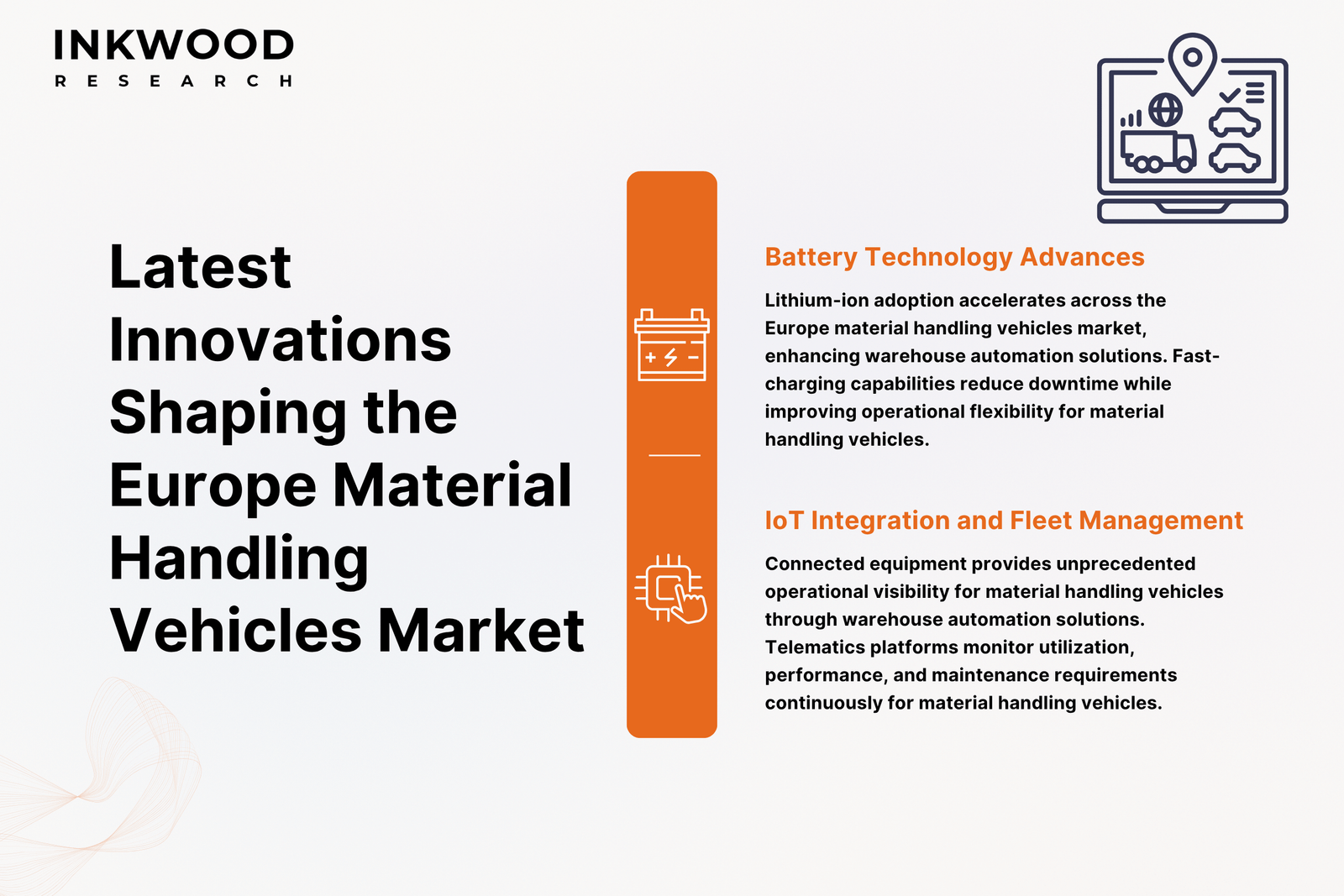
Lithium-ion adoption accelerates across the Europe material handling vehicles market, enhancing warehouse automation solutions. Fast-charging capabilities reduce downtime while improving operational flexibility for material handling vehicles. Opportunity charging during breaks maintains equipment availability without dedicated charging periods for electric material handling equipment. Moreover, electric warehouse vehicles benefit from battery technology improvements supporting warehouse automation solutions.
Battery swapping systems gain traction in high-intensity operations requiring continuous material handling vehicles. Quick-swap stations enable battery changes in minutes rather than hours for electric material handling equipment. This technology addresses productivity concerns for 24/7 operations requiring continuous equipment availability using warehouse automation solutions. Furthermore, material handling vehicles incorporate standardized battery interfaces enabling efficient swapping.
IoT Integration and Fleet Management
Connected equipment provides unprecedented operational visibility for material handling vehicles through warehouse automation solutions. Telematics platforms monitor utilization, performance, and maintenance requirements continuously for material handling vehicles. Managers access real-time data supporting informed decision-making and optimization initiatives utilizing warehouse automation solutions. Additionally, automated warehouse vehicles communicate seamlessly with central systems, enhancing warehouse automation solutions.
Predictive analytics identify potential failures before breakdowns occur in material handling vehicles. Maintenance teams schedule repairs during planned downtime rather than responding to emergencies affecting warehouse automation solutions. Consequently, equipment reliability improves while total maintenance costs decrease for material handling vehicles. Moreover, warehouse robots market solutions leverage IoT connectivity, optimizing warehouse automation solutions.
Key Takeaways
- Regulatory Leadership: European Green Deal and EU ETS establish aggressive carbon reduction targets, driving electric material handling equipment adoption faster than global markets through warehouse automation solutions.
- Market Valuation: The Europe material handling vehicles market grows from $11.25 billion (2025) to $14.43 billion (2032) at a 3.62% CAGR, reflecting strong warehouse automation solutions demand.
- German Dominance: Industry 4.0 initiatives and automotive manufacturing excellence position Germany as the largest market and innovation leader in warehouse automation solutions.
- E-Commerce Impact: Cross-border online retail and omnichannel strategies drive warehouse automation solutions investments across Western and Eastern Europe, requiring material handling vehicles.
- Competitive Dynamics: KION Group AG and Jungheinrich AG lead regional markets through multi-brand portfolios addressing diverse customer requirements for material handling vehicles.
- Technology Focus: Lithium-ion batteries, hydrogen fuel cells, autonomous navigation, and IoT integration represent key innovation areas in warehouse automation solutions.
- Sustainability Priority: Carbon pricing, renewable energy integration, and circular economy principles fundamentally reshape equipment selection criteria for material handling vehicles.
Conclusion
The Europe material handling vehicles market exemplifies sustainability-driven transformation, balancing environmental responsibility with operational excellence through warehouse automation solutions. Regulatory frameworks create powerful incentives for clean technology adoption while driving innovation, benefiting global markets in material handling vehicles.
Companies succeeding in European markets demonstrate commitment to engineering excellence, environmental performance, and long-term customer relationships, utilizing warehouse automation solutions. Equipment decisions increasingly incorporate total lifecycle considerations rather than upfront costs alone for material handling vehicles. Moreover, material handling solutions must address stringent regulatory requirements affecting warehouse automation solutions.
Inkwood Research provides comprehensive market intelligence supporting strategic equipment investments in material handling vehicles.
Our regional analysts track regulatory developments, competitive dynamics, and technology trends impacting operational strategies for warehouse automation solutions.
Ready to navigate European sustainability requirements? Contact our experts for customized analysis addressing your specific challenges.