Table of Contents

This analysis is brought to you by Inkwood Research, a leading market intelligence firm specializing in battery testing standards, global regulatory compliance frameworks, and certification body partnerships. Based on our comprehensive research collaborations with international standards organizations, government regulatory agencies, automotive certification laboratories, and battery manufacturers across North America, Europe, and Asia-Pacific, we deliver strategic insights empowering decision-makers navigating the battery testing equipment market transformation and standardization evolution.
TLDR
The Europe battery testing equipment market leads global sustainability mandates through groundbreaking EU Battery Regulation requirements. Valued at $137.17 million in 2025 and growing toward $187.45 million by 2032, European testing infrastructure supports digital battery passports, carbon footprint verification, and recycled content validation. Manufacturers navigating Europe’s stringent standards face unprecedented compliance complexity requiring comprehensive testing capabilities. According to our analysis, sustainability-focused regulations position the European battery testing equipment market as the world’s most demanding certification landscape.
Battery manufacturers seeking certification pathways, automotive OEM compliance officers, testing laboratory accreditation specialists, and regulatory affairs managers will discover essential implementation guidance. Quality directors establishing validation infrastructure, supply chain professionals managing component qualification, and legal counsel interpreting the battery testing equipment market requirements will gain strategic insights enabling the successful navigation of evolving EV battery testing standards globally.
Understanding the European EV Battery Standards Landscape
Europe leads the world in establishing comprehensive battery sustainability and safety standards. Consequently, the Europe battery testing equipment market responds to unprecedented regulatory frameworks that extend far beyond traditional safety validation. Manufacturers targeting European markets must navigate the most demanding compliance landscape globally, where environmental responsibility carries equal weight to performance and safety.
Why European Standards Set Global Benchmarks
European Union battery regulations establish frameworks that other regions increasingly emulate. Specifically, digital battery passports, carbon footprint declarations, and recycled content verification represent revolutionary concepts reshaping global battery industry practices. Furthermore, standardized testing protocols provide essential functions. These include establishing minimum safety thresholds, enabling performance comparisons, facilitating regulatory compliance, and reducing liability exposure through demonstrated best practices.
According to our research, manufacturers without comprehensive European standards expertise face average market entry delays of 10-14 months. These delays translate directly into competitive disadvantages as early entrants establish positions throughout Germany, France, the United Kingdom, and broader European markets. Consequently, European standards fluency has become a strategic imperative for any manufacturer pursuing global automotive leadership. Indeed, mastering these requirements often determines commercial success across international operations.
Europe’s Multi-Layered Standards Ecosystem
European battery standards originate from multiple authoritative sources working in concert. First, the European Union establishes binding regulations, including the groundbreaking EU Battery Regulation, enforced February 2024. Additionally, international organizations, including IEC and ISO, develop baseline requirements that European markets adopt and enhance. Meanwhile, member states like Germany, France, and the United Kingdom maintain national certification bodies interpreting EU directives. Furthermore, European automotive OEMs, including Volkswagen Group, Stellantis, and BMW, impose proprietary specifications exceeding published standards.
This layered approach creates complexity while simultaneously offering flexibility when properly understood. Manufacturers can often satisfy multiple standards through a single test program when protocols align strategically. However, subtle differences between frameworks occasionally require redundant testing, thereby increasing validation costs and timelines. Nevertheless, a comprehensive understanding enables optimization of testing investments across European markets.
European Market Driving Standards Innovation
The Europe battery testing equipment market reached $137.17 million in 2025, progressing toward $187.45 million by 2032 at a 4.56% CAGR. European standards proliferation constitutes the primary growth driver as manufacturers invest in testing infrastructure, ensuring compliance with the EU Battery Regulation, digital passport requirements, and sustainability mandates. Each new directive introduction creates equipment procurement cycles as laboratories throughout Germany, France, the United Kingdom, Poland, and other member states enhance capabilities supporting expanded protocols.
Germany dominates the European market through unparalleled automotive manufacturing expertise and aggressive electrification commitments. Testing laboratories throughout TÜV SÜD, DEKRA, and other certification bodies expanded capacity significantly to accommodate surging validation demand from gigafactory operations. Meanwhile, France, the United Kingdom, and other nations establish competitive testing capabilities supporting domestic battery manufacturing ambitions.
Transportation Safety Standards and UN 38.3 Compliance
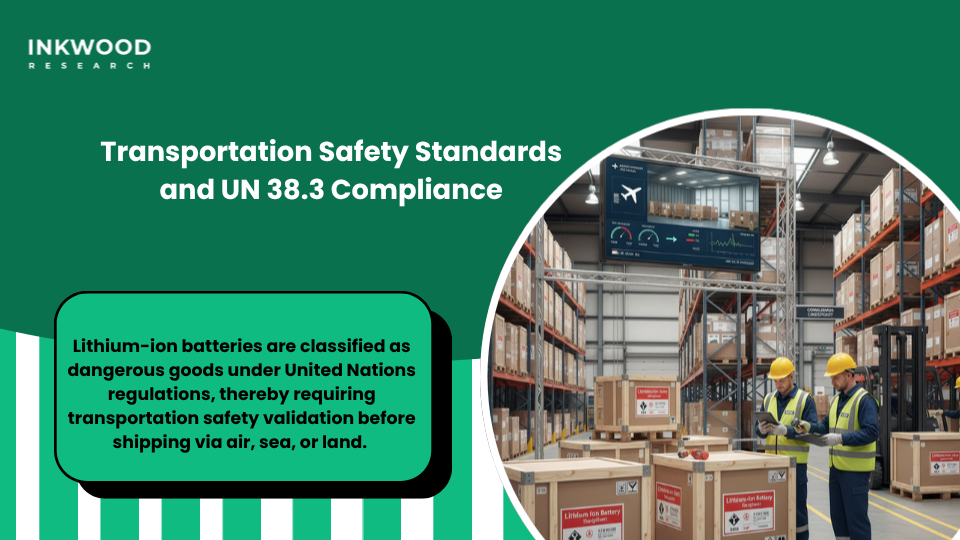
Lithium-ion batteries are classified as dangerous goods under United Nations regulations, thereby requiring transportation safety validation before shipping via air, sea, or land. Consequently, manufacturers throughout the Europe battery testing equipment market must demonstrate compliance with these international protocols as a fundamental prerequisite for market entry.
UN 38.3 Requirements Overview
The UN Manual of Tests and Criteria Section 38.3 specifies eight mandatory tests for lithium batteries. Specifically, these protocols evaluate performance under conditions encountered during transportation: altitude simulation replicating aircraft cargo holds, thermal cycling through temperature extremes, vibration simulating vehicle transport, and shock testing for handling impacts. Additionally, external short circuit, impact/crush for mechanical abuse, overcharge, and forced discharge scenarios complete the comprehensive evaluation suite.
Testing facilities throughout Europe have invested substantially in equipment supporting UN 38.3 protocols. For instance, altitude chambers simulate pressures down to 11.6 kilopascals (equivalent to 15,000 meters elevation), while thermal chambers cycle between +72°C and -40°C. Meanwhile, vibration tables generate sinusoidal waveforms meeting specified frequency ranges across multiple axes simultaneously.
Test Summary Documentation Requirements
UN 38.3 requires comprehensive test summary documentation accompanying battery shipments throughout their journey. This paperwork demonstrates compliance with customs authorities and transportation carriers worldwide, thereby facilitating smooth logistics operations. Furthermore, manufacturers must maintain records for five years, enabling traceability if post-transport incidents occur.
Third-party laboratories, including TÜV SÜD, UL Solutions, and Intertek, provide UN 38.3 testing services, generating internationally recognized documentation. Importantly, these certification bodies maintain accreditations from multiple national authorities, ensuring test results gain acceptance across jurisdictions. Therefore, strategic selection of certification partners streamlines market access across diverse European and global markets.
Lithium Battery Marking Requirements
Compliant batteries must display specific markings indicating UN classification accurately. Moreover, packages exceeding certain thresholds require hazard labels warning handlers about lithium battery contents. Additionally, shipping documentation must reference UN 38.3 compliance, thereby triggering special handling procedures throughout logistics chains.
These requirements impact battery design beyond pure electrochemical considerations in significant ways. Specifically, enclosures must accommodate mandatory markings without compromising aesthetics or functionality. Similarly, packaging must survive drop tests while maintaining label legibility throughout the distribution process. Consequently, UN 38.3 influences industrial design decisions from the earliest product development stages, requiring integration between engineering and compliance teams.
Performance Testing Standards for European Traction Batteries
Beyond safety validation, EV batteries operating throughout Europe must demonstrate consistent performance justifying range claims and warranty commitments. Performance standards establish evaluation methodologies enabling objective comparisons across competing products. Consequently, manufacturers investing in the Europe battery testing equipment market require comprehensive platforms supporting these diverse protocols.
IEC 62660 Series for Lithium-Ion Cells
The IEC 62660 series specifically addresses secondary lithium-ion cells for electric road vehicle propulsion. Notably, Part 1 defines performance testing, including capacity verification, energy measurement, power capability assessment, and self-discharge evaluation. Meanwhile, Part 2 establishes reliability and abuse testing protocols encompassing high-temperature endurance, temperature cycling, vibration, shock, crush, electrical short circuit, and forced discharge scenarios.
Testing equipment within the Europe battery testing equipment market must provide measurement resolution supporting IEC 62660 accuracy requirements rigorously. Specifically, current measurement within 0.5% and voltage measurement within 0.1% constitute typical specifications demanded by European testing laboratories. Furthermore, environmental chambers maintain temperature stability within ±2°C during extended endurance testing, ensuring data reliability across long-duration protocols.
ISO 12405 for Battery Packs and Systems
While IEC 62660 addresses individual cells, the ISO 12405 series evaluates complete battery packs and systems as installed in vehicles. These standards define environmental conditions and testing procedures for assembled traction battery systems comprehensively. Specifically, Part 1 covers high-power applications in hybrid vehicles, Part 2 addresses high-energy applications in battery electric vehicles, and Part 3 establishes safety requirements.
According to our analysis, ISO 12405 testing requires substantially larger infrastructure than cell-level evaluation. Indeed, pack-level testing chambers must accommodate assemblies weighing hundreds of kilograms and measuring cubic meters in volume. Consequently, facilities supporting ISO 12405 represent major capital investments, distinguishing comprehensive testing laboratories from basic certification services across European markets.
SAE Performance Standards Integration
SAE International publishes recommended practices addressing specific performance aspects that European manufacturers increasingly adopt. For example, SAE J2464 defines rechargeable energy storage system abuse testing for electric and hybrid vehicles. Additionally, SAE J2801 establishes comprehensive life testing for 12V automotive storage batteries.
Similarly, SAE J3060 covers vibration testing procedures in detail. These documents complement international standards effectively, providing detailed methodologies that industry practitioners reference during test program development.
Many automotive OEMs operating in Europe incorporate SAE recommendations into supplier quality agreements strategically. This approach effectively makes voluntary standards mandatory for their supply chains. Therefore, equipment suppliers serving European automotive markets ensure platforms support SAE-specified protocols alongside formal regulatory requirements, maximizing versatility and market applicability.
Safety and Abuse Testing Requirements in European Markets
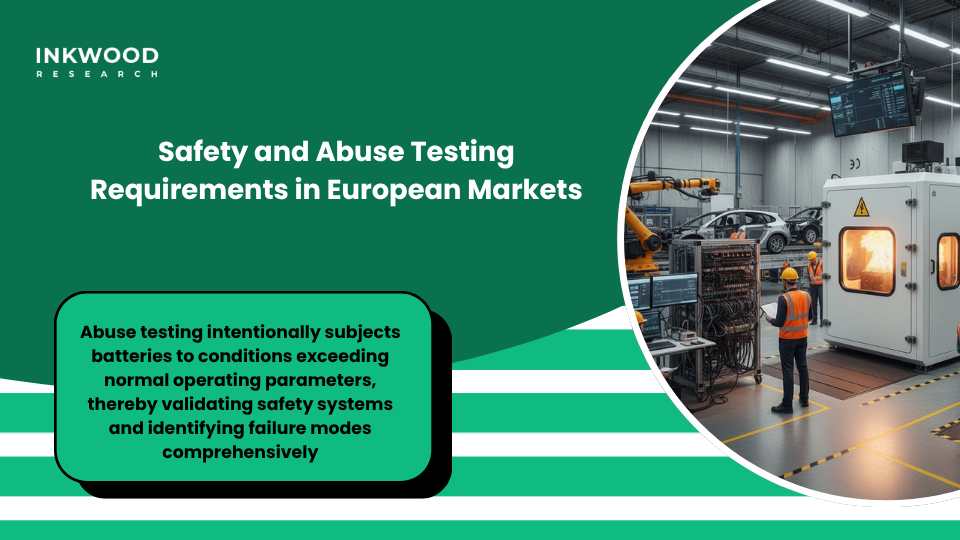
Abuse testing intentionally subjects batteries to conditions exceeding normal operating parameters, thereby validating safety systems and identifying failure modes comprehensively. These protocols constitute the most demanding evaluations batteries undergo within the Europe battery testing equipment market. Moreover, European regulators place particular emphasis on these tests given the continent’s dense population and commitment to consumer protection.
Mechanical Abuse Protocols
Mechanical abuse testing simulates vehicle crashes and handling accidents under controlled laboratory conditions. Specifically, crush tests apply specified forces to battery enclosures, ensuring electrical isolation is maintained even when components deform significantly. Additionally, impact testing drops batteries or propels projectiles into assemblies, validating structural integrity under extreme mechanical stress. Furthermore, vibration protocols subject batteries to frequencies and amplitudes simulating years of road stress compressed into hours or days.
According to testing equipment specifications, mechanical abuse fixtures must generate precisely controlled forces while monitoring electrical parameters continuously. Consequently, high-speed data acquisition captures voltage, current, and temperature at millisecond intervals, enabling forensic analysis when failures occur. This comprehensive data collection proves essential for understanding failure mechanisms and improving next-generation designs.
Thermal Abuse Validation
Thermal abuse testing evaluates battery response to heating beyond design limits systematically. For instance, external fire exposure simulates vehicle fires engulfing battery compartments during accident scenarios. Meanwhile, oven testing maintains elevated temperatures for extended durations, assessing thermal runaway propagation risks across cell arrays. Similarly, thermal shock subjects batteries to rapid temperature transitions, stressing materials and interfaces.
Testing facilities throughout the Europe battery testing equipment market have invested heavily in containment systems to manage thermal abuse events safely. Specifically, blast chambers isolate failures while enabling observation and data collection through reinforced viewing windows. Additionally, exhaust systems evacuate toxic fumes generated during cell venting, protecting personnel and laboratory infrastructure. These safety features have become mandatory as European regulators scrutinize laboratory safety protocols increasingly rigorously.
Electrical Abuse Scenarios
Electrical abuse testing includes overcharge beyond voltage limits, forced discharge into voltage reversal, and external short circuits through low-resistance paths. These scenarios simulate controller malfunctions, wiring faults, and user errors potentially occurring in field service across diverse European climates and usage patterns.
Battery management systems undergo simultaneous evaluation during electrical abuse testing procedures. Specifically, protective algorithms should prevent overcharge by terminating charging when voltage limits are approached. Similarly, short-circuit detection should disconnect loads within milliseconds, limiting current to safe levels. Testing validates that safety systems function reliably across component tolerance variations and aging conditions, ensuring long-term protection throughout battery lifecycles.
European Regulatory Leadership and Compliance Frameworks

The European Union establishes the world’s most comprehensive battery regulations, setting sustainability and safety standards that influence global industry practices. Understanding these European requirements proves essential for manufacturers pursuing market access across member states.
EU Battery Regulation – Revolutionary Framework
The EU Battery Regulation, enforced in February 2024, revolutionizes battery lifecycle management throughout Europe. This groundbreaking legislation mandates digital battery passports for all electric vehicles exceeding 2 kWh capacity by February 2027, creating unprecedented traceability requirements throughout supply chains.
Manufacturers must declare carbon footprints by February 2025, requiring third-party verification through site-specific and batch-level testing data. This requirement drives substantial investment in testing infrastructure throughout the Europe battery testing equipment market as facilities establish capabilities generating required documentation. According to our analysis, passport compliance represents the single largest driver of European testing equipment demand through 2027.
Sustainability and Recycled Content Mandates
Minimum recycled content thresholds necessitate validated testing protocols verifying cobalt, lithium, nickel, and lead composition. These unprecedented sustainability requirements position Europe as a global leader in circular economy implementation. Testing laboratories must invest in analytical equipment, including X-ray fluorescence spectrometry and inductively coupled plasma mass spectrometry, supporting compositional analysis.
Germany’s Testing Infrastructure Leadership
Germany establishes itself as Europe’s dominant testing market through unparalleled automotive manufacturing expertise and aggressive electrification commitments. The country hosts major production facilities from Volkswagen Group, BMW, Mercedes-Benz, and international battery manufacturers, including CATL and Samsung SDI.
According to TÜV SÜD, German testing laboratories expanded capacity significantly in 2024 to accommodate surging validation demand from gigafactory operations. In June 2024, TÜV SÜD opened a state-of-the-art laboratory dedicated to new energy vehicle component testing, enhancing capabilities for battery safety and performance certification under EU standards.
Furthermore, Germany’s implementation of the EU Battery Regulation establishes particularly stringent enforcement mechanisms, compelling manufacturers to demonstrate compliance through comprehensive testing documentation. Research institutions, including Fraunhofer ISE and RWTH Aachen University, conduct pioneering battery research requiring sophisticated analytical equipment supporting both academic and commercial validation needs.
United Kingdom Post-Brexit Standards
The United Kingdom positions itself as a strategic hub for battery testing innovation despite post-Brexit regulatory adjustments. British automotive manufacturers, including Jaguar Land Rover and Nissan, commit substantial resources toward electrification programs requiring comprehensive battery validation capabilities.
The UK’s Zero Emission Vehicle mandate targets 100% electric vehicle sales for new cars by 2035, creating long-term visibility for testing equipment investments. Testing laboratories throughout the country enhance capabilities to perform CE marking assessments aligned with retained EU regulations, ensuring market access for British manufacturers across European markets.
France, Italy, and Broader European Markets
France advances battery testing capabilities, supporting domestic gigafactory development and automotive manufacturing leadership. French certification bodies implement EU Battery Regulation requirements while supporting national industrial policy objectives promoting European battery sovereignty.
Italy, Spain, Belgium, and Poland establish regional testing capabilities as battery manufacturing capacity expands throughout these markets. Gigafactory announcements across Poland, Hungary, and Spain drive equipment procurement supporting inline production testing and quality assurance protocols mandated by EU regulations.
Certification Pathways and European Testing Laboratories
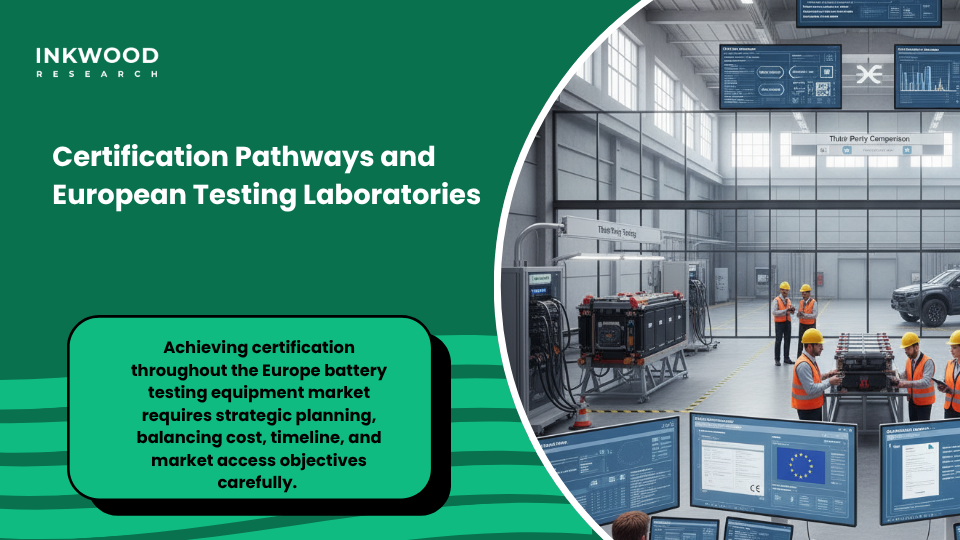
Achieving certification throughout the Europe battery testing equipment market requires strategic planning, balancing cost, timeline, and market access objectives carefully. Understanding available pathways helps manufacturers optimize validation programs across diverse European member states. Moreover, selecting appropriate certification strategies can significantly reduce time-to-market while ensuring comprehensive compliance.
Third-Party Certification Bodies in Europe
Independent testing laboratories provide certification services recognized across multiple jurisdictions throughout Europe and beyond. Organizations like UL Solutions, TÜV SÜD, Intertek, and SGS maintain accreditations from national authorities worldwide. Importantly, these certifications enable manufacturers to demonstrate compliance without conducting redundant testing for each target market within the European Union.
In May 2025, UL Solutions opened its Europe Advanced Battery Testing Laboratory in Aachen, Germany, significantly expanding capacity for electric vehicle batteries and large-scale energy storage systems. Similarly, SGS expanded its European testing capabilities, reflecting growing certification demand within the market. These strategic investments demonstrate sustained confidence in European market growth and regulatory stability.
OEM-Specific Requirements in European Markets
Major European automotive manufacturers often impose proprietary testing requirements exceeding published standards substantially. Volkswagen Group, Stellantis, BMW Group, and Mercedes-Benz maintain detailed supplier quality manuals specifying validation protocols meticulously. Notably, these requirements typically reference international standards while adding company-specific provisions addressing past field experience and stringent risk tolerance.
Battery suppliers pursuing automotive contracts throughout Europe must therefore demonstrate compliance with both regulatory standards and customer specifications simultaneously. This dual compliance creates complexity but also differentiation opportunities strategically. Specifically, suppliers demonstrating capability meeting stringent OEM requirements establish competitive advantages within the Europe battery testing equipment market that translate into preferred supplier status.
Self-Certification versus Third-Party Validation
Some European jurisdictions permit manufacturers to self-certify compliance through internal testing programs under specific conditions. However, third-party certification often provides significant advantages despite additional costs incurred. Independent validation enhances customer confidence substantially, reduces liability exposure through shared responsibility, and streamlines regulatory acceptance when authorities question compliance.
Many manufacturers adopt hybrid approaches strategically, conducting extensive internal testing during development while engaging third-party laboratories for final certification before market launch. This strategy balances cost efficiency with validation credibility effectively, accelerating time-to-market without compromising quality assurance thoroughness. Additionally, this approach enables iterative design improvements internally before formal certification submissions.
Major Testing Equipment Providers Serving European Markets
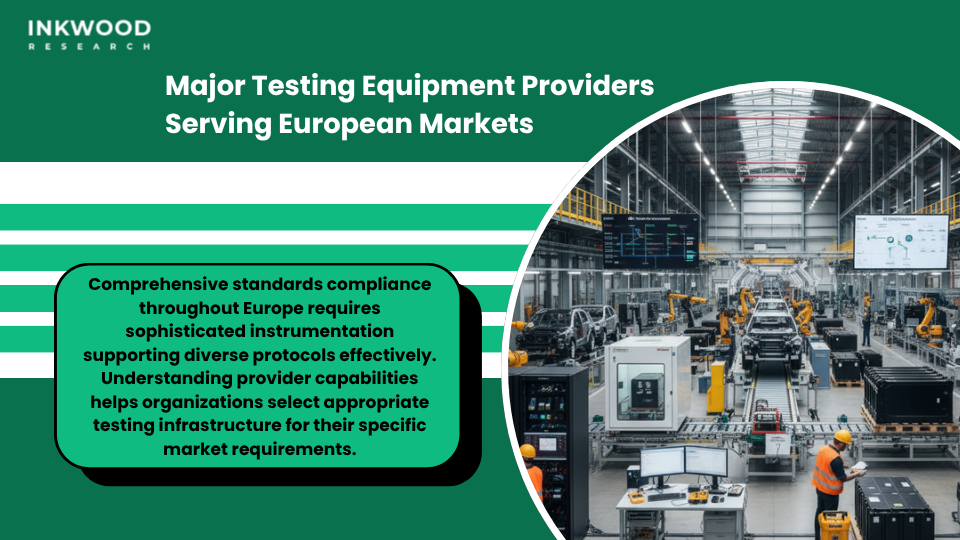
Comprehensive standards compliance throughout Europe requires sophisticated instrumentation supporting diverse protocols effectively. Understanding provider capabilities helps organizations select appropriate testing infrastructure for their specific market requirements. Furthermore, strategic equipment selection can significantly impact validation timelines and certification success rates.
- Arbin Instruments Global Reach
Headquartered in College Station, Texas, Arbin Instruments maintains a strong European presence through its Munich, Germany office serving continental markets. The company provides high-precision battery test equipment serving applications from nano-ampere electrochemistry research to megawatt-scale grid storage validation. Notably, the Laboratory Battery Tester (LBT) series delivers measurement resolution down to 100 parts per million, addressing rigorous accuracy requirements mandated by European standards.
Additionally, Arbin’s Regenerative Battery Tester (RBT) lineup provides high-power solutions for electric vehicle pack testing, offering voltage capabilities up to 1,500 volts and current ranges exceeding 1,000 amperes. Moreover, energy recovery through bidirectional power conversion reduces facility electricity costs while supporting extended test protocols required for comprehensive standards validation throughout European testing laboratories.
- Chroma Systems Solutions European Integration
Chroma Systems Solutions specializes in modular testing platforms serving applications from cell-level validation through complete pack evaluation across European markets. Importantly, systems integrate seamlessly with environmental chambers, battery management system emulators, and safety monitoring equipment. Furthermore, software platforms automate test sequence execution, ensuring consistent protocol implementation across product generations.
Chroma’s solutions address multiple European standards simultaneously, thereby enabling manufacturers to conduct comprehensive validation programs efficiently. Specifically, programmable test sequences incorporate requirements from UN 38.3, IEC 62660, ISO 12405, and EU Battery Regulation, streamlining compliance workflows while ensuring thorough evaluation meeting stringent European requirements.
- Chauvin Arnoux French Manufacturing Excellence
French manufacturer Chauvin Arnoux brings over a century of electrical measurement expertise to European battery testing markets. The company operates three production facilities in Normandy, handling complete manufacturing processes from mechanical component production through final calibration. Consequently, this vertical integration ensures quality control and rapid response to European customer requirements.
While Chauvin Arnoux emphasizes portable testing instruments enabling field deployment, they also provide laboratory-grade equipment supporting comprehensive validation programs. Their European manufacturing base positions the company advantageously to serve regional customers requiring compliance with EU standards and regulations without international logistics complexity.
- Megger Group European Solutions
Megger Group Limited emphasizes portable testing instruments enabling field deployment for battery health assessment and quality verification throughout European industrial applications. Specifically, conductance testing technology provides rapid evaluation without full discharge cycles, supporting high-throughput production testing and field service applications.
While portable instruments cannot replace comprehensive laboratory equipment for full standards validation, they provide valuable supplementary capabilities strategically. European production facilities utilize portable testers for incoming inspection and end-of-line quality checks, complementing detailed characterization conducted during design validation phases at certified testing laboratories.
- BioLogic Research Leadership
BioLogic specializes in high-precision electrochemical test equipment serving European research applications and fundamental battery development. The company’s BCS series provides modular architectures scalable from benchtop research systems to production testing installations effectively.
Importantly, real-time electrochemical impedance spectroscopy capabilities enable detailed degradation studies supporting standards development activities throughout Europe. Research institutions, including Fraunhofer ISE and RWTH Aachen University, utilize BioLogic platforms to investigate failure mechanisms and validate new testing methodologies, eventually incorporated into formal European standards.
Emerging Standards and Future European Requirements
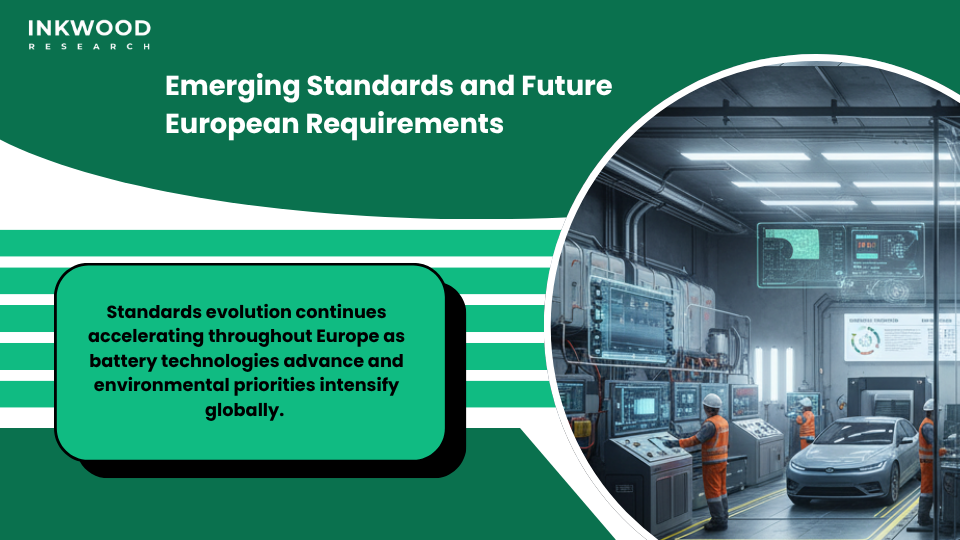
Standards evolution continues accelerating throughout Europe as battery technologies advance and environmental priorities intensify globally. Understanding emerging requirements helps manufacturers prepare for future compliance obligations strategically. Moreover, proactive engagement with evolving standards enables competitive advantages through early adoption and influence on final specifications.
Solid-State Battery Standards Development
Solid-state batteries utilizing ceramic or polymer electrolytes instead of liquid solutions require entirely different testing approaches compared to conventional lithium-ion systems. Traditional evaluation methods cannot accurately assess interface resistances or dendrite formation mechanisms unique to solid electrolytes. Consequently, European standards organizations are developing specialized protocols addressing these emerging technologies collaboratively.
According to our research, equipment manufacturers throughout the Europe battery testing equipment market face substantial R&D investments creating versatile platforms capable of handling diverse battery architectures. This technical complexity temporarily restrains market growth as testing providers develop capabilities supporting next-generation chemistries. Nevertheless, early investment positions European laboratories advantageously for upcoming technology transitions.
Sustainability and Circular Economy Standards
The EU Battery Regulation exemplifies growing emphasis on environmental responsibility throughout battery lifecycles comprehensively. Future European standards will likely mandate detailed material composition disclosure, recycled content verification, and end-of-life recycling capability demonstration. Furthermore, these requirements necessitate analytical testing capabilities beyond traditional performance and safety validation protocols.
Testing laboratories throughout Europe are investing strategically in compositional analysis equipment, including X-ray fluorescence spectrometry and inductively coupled plasma mass spectrometry. These sophisticated instruments enable material identification and quantification, supporting sustainability claims and regulatory compliance. Additionally, European research institutions develop methodologies quantifying environmental impacts throughout battery production and disposal processes.
Second-Life Battery Standards Evolution
As first-generation electric vehicles reach end-of-primary-life across European markets, substantial battery inventories become available for repurposing in less-demanding applications. However, standards governing second-life battery screening, grading, and system integration remain nascent throughout the continent. Industry consortia are developing recommended practices addressing safety, performance, and warranty considerations unique to repurposed batteries.
Equipment providers have introduced rapid State of Health assessment technologies specifically targeting second-life applications within European circular economy frameworks. These innovations predict remaining useful life within minutes rather than hours, thereby enabling the economic viability of battery repurposing programs. Consequently, European leadership in circular economy initiatives drives innovation in testing methodologies supporting sustainable battery lifecycles.
Fast-Charging Safety Standards Development
Electric vehicle charging capabilities continue increasing throughout Europe, with systems now supporting 350+ kilowatt power levels at highway charging stations. These extreme charging rates stress battery systems in ways earlier standards did not adequately anticipate. Therefore, new protocols specifically addressing thermal management adequacy, lithium plating prevention, and accelerated aging under fast-charging duty cycles are under active development.
Testing equipment must evolve to support these high-power evaluations across European testing laboratories. Bidirectional power supplies capable of 500+ kilowatt operation with regenerative energy recovery are entering the Europe battery testing equipment market, enabling comprehensive fast-charging validation without prohibitive electricity costs. Moreover, European utilities collaborate with testing providers, ensuring grid infrastructure supports high-power testing requirements.
Key Takeaways
- EV battery standards constitute complex multi-layered frameworks encompassing international, regional, and industry-specific requirements
- UN 38.3 provides baseline transportation safety requirements applicable globally before batteries can ship via air, sea, or land
- IEC 62660 and ISO 12405 series establish performance and safety testing protocols for traction battery cells, modules, and packs
- Regional regulations including FMVSS No. 305a (North America) and EU Battery Regulation (Europe) impose jurisdiction-specific mandates
- Third-party certification laboratories including UL Solutions, TÜV SÜD, and SGS provide internationally recognized validation services
- Emerging standards addressing solid-state batteries, sustainability requirements, and second-life applications will drive continued equipment evolution
- Strategic standards compliance planning balances cost, timeline, and market access objectives through optimized testing program design
Conclusion
EV battery testing standards represent essential frameworks ensuring safety, reliability, and sustainability throughout global electric vehicle ecosystems. As manufacturers navigate increasingly complex compliance landscapes, comprehensive standards expertise becomes a strategic competitive advantage. The battery testing equipment market responds with sophisticated platforms supporting diverse protocols efficiently.
Organizations developing electric vehicle batteries must invest proactively in standards knowledge and testing infrastructure. Whether pursuing initial market entry or expanding into new regions, a thorough understanding of applicable requirements prevents costly delays and ensures successful product launches. Standards evolution continues to accelerate, requiring sustained engagement with regulatory developments and industry best practices.
Inkwood Research provides strategic intelligence supporting decision-making throughout battery standards compliance journeys. Our analysis helps manufacturers, testing laboratories, and certification bodies understand regulatory evolution, competitive dynamics, and technology trends. Contact our team to discuss how customized research deliverables can inform your EV battery testing standards strategy and equipment procurement decisions.
Frequently Asked Questions
Which battery testing standards are mandatory versus voluntary?
UN 38.3 is mandatory for shipping lithium batteries via any transportation mode. Regional regulations like FMVSS No. 305a (North America) and EU Battery Regulation (Europe) are mandatory for vehicles sold in those jurisdictions. IEC, ISO, and SAE standards are technically voluntary but often become mandatory through OEM supplier requirements or regulatory references.
How long does comprehensive automotive battery testing take?
Complete certification programs typically cost $50,000-$500,000, depending on battery complexity, number of variants, and target markets. Cell-level testing costs less than complete pack validation. Testing supporting multiple markets simultaneously reduces per-market costs through shared protocols. Timeline typically extends 3-6 months for straightforward certifications, longer for novel technologies.
Can internal testing replace third-party certification?
Some jurisdictions permit self-certification through internal testing, but third-party validation provides significant advantages. Independent certification enhances customer confidence, reduces liability exposure, and streamlines regulatory acceptance. Most manufacturers conduct extensive internal testing during development while engaging third-party laboratories for final market-entry certification, balancing cost efficiency with validation credibility.