Table of Contents
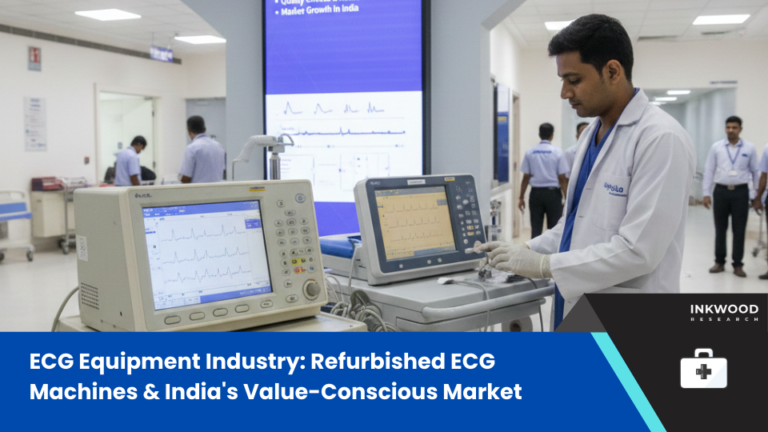
This analysis is brought to you by Inkwood Research, a leading market intelligence firm specializing in Asia-Pacific healthcare economics, medical device refurbishment markets, and value-segment diagnostic equipment ecosystems. Our research team combines extensive experience analyzing electrocardiography procurement patterns, healthcare infrastructure development, and equipment lifecycle management across India, South Asia, and emerging economies. Based on our proprietary research methodologies and strategic partnerships with Indian hospitals, refurbishment specialists, government health programs, and medical device distributors, we deliver actionable insights that empower strategic decision-making for organizations navigating India’s value-conscious ECG equipment landscape.
TLDR
India’s refurbished ECG equipment market emerges as a strategic solution for budget-constrained healthcare facilities. The India ECG equipment market, valued at US$404.73 million in 2026, will reach US$847.68 million by 2034 at a 9.68% CAGR—Asia-Pacific’s fastest growth rate. Refurbished devices deliver 50-60% cost savings without compromising diagnostic quality. With government initiatives expanding rural healthcare access and improving refurbishment technologies, value-conscious providers increasingly choose certified pre-owned ECG systems over new equipment.
Hospital administrators managing limited capital budgets will discover cost-effective procurement strategies. Medical equipment refurbishers exploring Indian markets will identify growth opportunities. Healthcare investors analyzing value segment dynamics will gain market intelligence. Government health officials implementing Ayushman Bharat will understand equipment access solutions. Diagnostic center operators in tier-2 and tier-3 cities will learn how refurbished ECG machines enable service expansion.
Understanding India’s Value-Conscious Healthcare Landscape
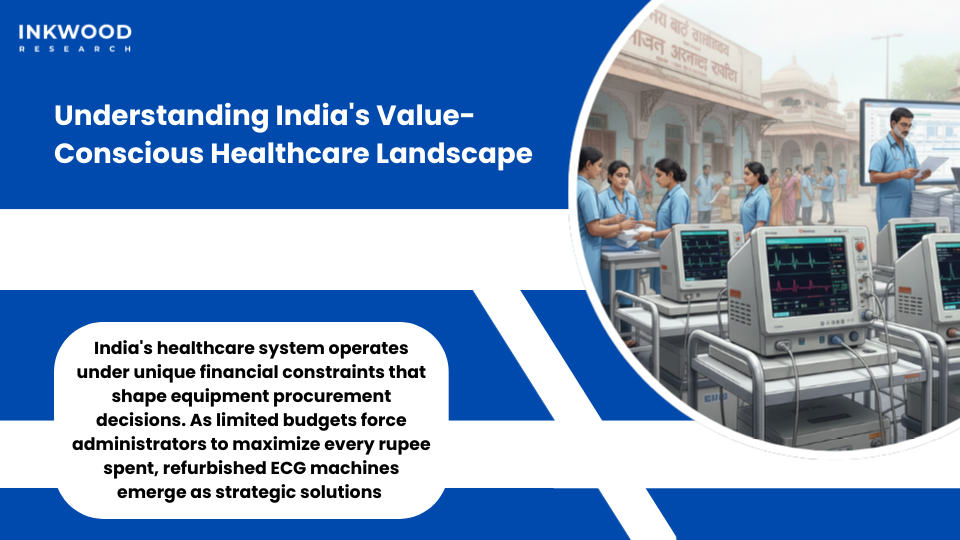
India’s healthcare system operates under unique financial constraints that shape equipment procurement decisions. As limited budgets force administrators to maximize every rupee spent, refurbished ECG machines emerge as strategic solutions enabling quality cardiac care within tight financial parameters.
Budget Constraints Shape Procurement Strategies
Indian healthcare providers face perpetual resource limitations. Public hospitals particularly struggle with inadequate funding. According to government reports, the average ECG machine cost ranges from INR 50,000 to INR 2,00,000. This expenditure strains already-limited budgets significantly.
Tier-2 and tier-3 city hospitals operate under especially tight constraints. They serve large patient populations with minimal resources. Meanwhile, rural primary health centers lack even basic diagnostic equipment. These facilities require affordable solutions that don’t compromise diagnostic capabilities.
The India ECG equipment market demonstrates remarkable growth potential. Our projections show expansion from US$404.73 million in 2026 to US$847.68 million by 2034. This represents 9.68% CAGR—the fastest growth rate across Asia-Pacific markets. Refurbished equipment plays a crucial role in sustaining this expansion.
Rising Healthcare Demand Increases Equipment Needs
India’s population exceeds 1.4 billion people, with growing healthcare awareness. Cardiovascular diseases represent the leading causes of mortality, while heart attacks account for 28% of all deaths. Plus, the prevalence of heart attacks reaches 7.6%, with males experiencing higher rates than females.
AS a result, healthcare infrastructure struggles to meet mounting diagnostic demands. The National Health Mission allocated INR 2,000 crores for enhancing facilities. However, needs far exceed available resources. Refurbished equipment helps bridge this critical gap.
Ayushman Bharat Creates Equipment Opportunities
India’s ambitious universal health coverage program transforms healthcare delivery. In this regard, Ayushman Bharat aims to cover vulnerable populations comprehensively. The initiative drives hospital infrastructure development nationwide. Consequently, diagnostic equipment demands surge dramatically.
Public hospitals participating in Ayushman Bharat require ECG capabilities and must handle increased patient volumes efficiently. New equipment purchases would exhaust budgets quickly. Here, refurbished alternatives enable sustainable capacity expansion.
The Economics of Refurbished ECG Equipment
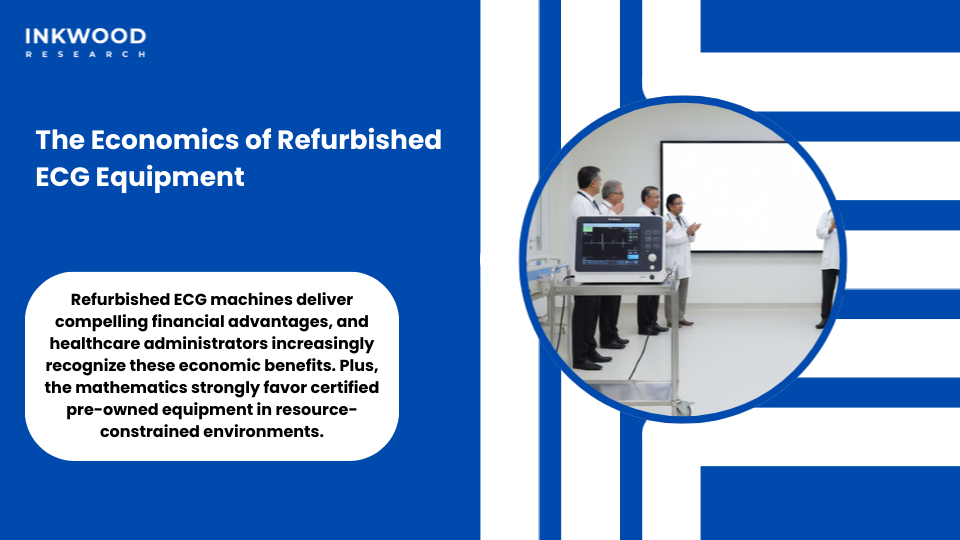
Refurbished ECG machines deliver compelling financial advantages, and healthcare administrators increasingly recognize these economic benefits. Plus, the mathematics strongly favor certified pre-owned equipment in resource-constrained environments.
Dramatic Cost Savings Enable Access
Refurbished equipment costs 50-60% less than new equivalents, and this pricing differential makes cardiac diagnostics accessible to previously underserved facilities. A new ECG machine costing INR 2,00,000 becomes available for INR 80,000-1,00,000 when refurbished. These savings prove transformative for budget-limited organizations.
Healthcare providers redirect saved capital toward other critical needs. They purchase multiple refurbished units instead of single new machines. Alternatively, savings fund staffing expansion or facility upgrades, and this flexibility optimizes limited resources effectively.
Total Cost of Ownership Considerations
Savvy administrators evaluate total ownership costs beyond initial purchase prices. Refurbished equipment sometimes requires more frequent maintenance. However, reputable refurbishers provide comprehensive service agreements. These contracts include parts, labor, and preventive maintenance.
Extended warranties mitigate performance uncertainty concerns. Many refurbished ECG systems include 12-24 month warranties. Moreover, these guarantees match or exceed new equipment coverage. Risk profiles become comparable despite age differences.
Rapid Return on Investment
ECG examinations generate revenue for healthcare facilities. Providers charge patients or insurance programs for diagnostic services. Plus, refurbished equipment’s lower capital investment accelerates payback periods and facilities recoup costs through fewer billable procedures.
This rapid ROI enables aggressive expansion strategies, while diagnostic centers can establish multiple locations simultaneously. Each facility requires cardiac diagnostic capabilities. Additionally, refurbished equipment makes multi-site strategies financially viable.
Quality Assurance in Refurbishment Processes
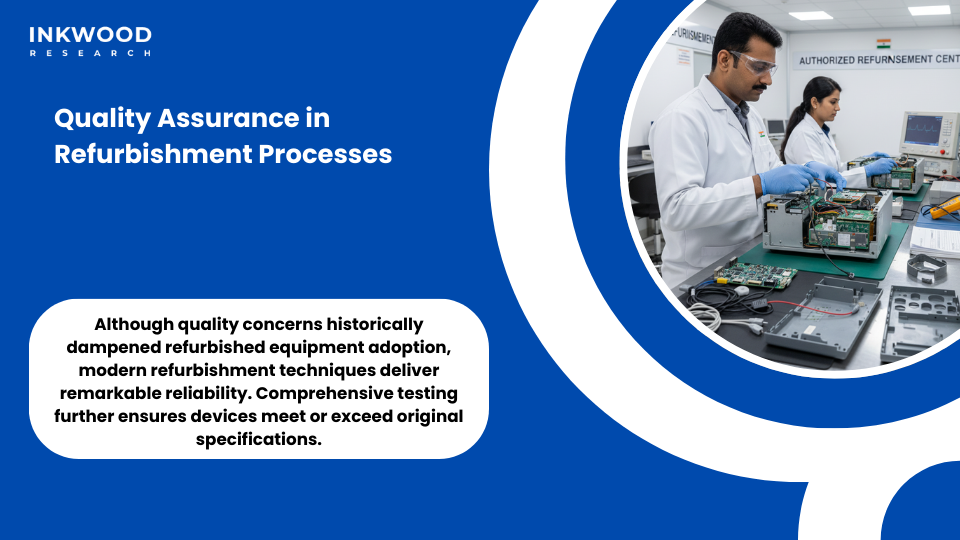
Although quality concerns historically dampened refurbished equipment adoption, modern refurbishment techniques deliver remarkable reliability. Comprehensive testing further ensures devices meet or exceed original specifications.
Rigorous Reconditioning Standards
Professional refurbishers follow systematic reconditioning protocols. They completely disassemble equipment for inspection. Technicians replace worn components with OEM or equivalent parts. Subsequently, devices undergo calibration using certified test equipment.
On the other hand, current refurbishment techniques involve extensive testing and calibration. Equipment must satisfy or surpass original manufacturer standards, and this focus on quality assurance increases healthcare professionals’ acceptance.
Biomedical engineers verify electrical safety comprehensively. They test insulation resistance, ground continuity, and leakage currents. Additionally, these safety verifications protect patients and operators. Documentation proves compliance with applicable standards.
Software Updates and Feature Enhancements
Modern refurbishment exceeds simple mechanical restoration. Technicians install the latest software versions when available, while these updates often add functionality absent from original configurations. Subsequently, refurbished equipment sometimes outperforms newer base models.
Manufacturers occasionally release algorithm improvements post-purchase, while refurbishers incorporate these enhancements during reconditioning. Customers benefit from cumulative improvements developed over equipment lifespans, and this value-add differentiates premium refurbishers.
Certification and Compliance Documentation
Reputable refurbishers provide detailed certification documentation. These records prove the equipment meets regulatory requirements. Further, the Central Drugs Standard Control Organization governs medical device standards, which refurbished ECG systems must fully comply with.
Certification gives healthcare providers confidence in diagnostic accuracy. They can trust refurbished equipment for clinical decision-making. Moreover, while documentation also satisfies insurance and accreditation auditors, comprehensive records demonstrate due diligence.
Government Initiatives Driving Refurbished Equipment Adoption
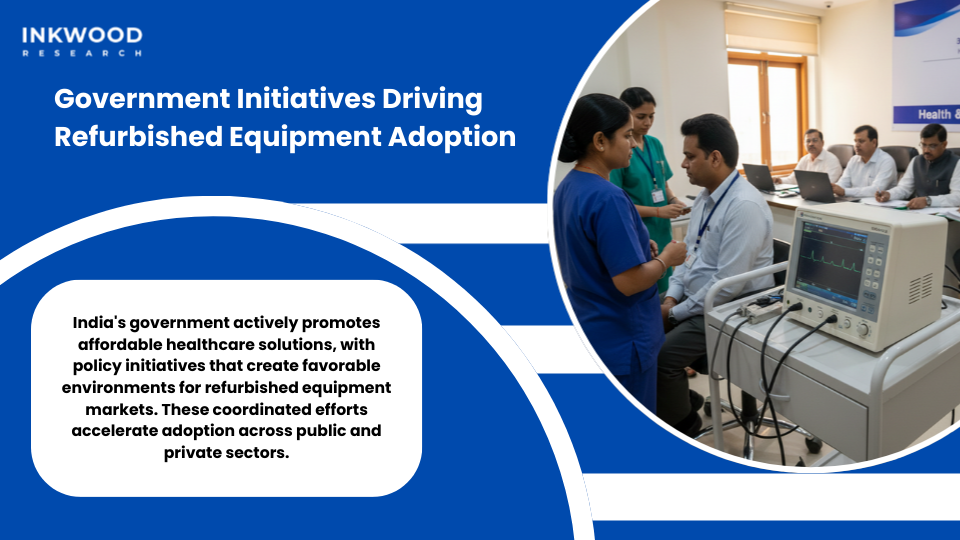
India’s government actively promotes affordable healthcare solutions, with policy initiatives that create favorable environments for refurbished equipment markets. These coordinated efforts accelerate adoption across public and private sectors.
Ayushman Bharat Infrastructure Development
The Ayushman Bharat program stands as India’s most ambitious health initiative. It seeks to create Health and Wellness Centers across the nation. These centers need essential diagnostic tools, including ECG equipment. Moreover, refurbished devices offer a cost-effective way to set them up.
Government procurement policies now emphasize value-driven solutions. For instance, bidding processes evaluate the total cost of ownership. Refurbished equipment frequently secures contracts due to better economics. Consequently, this shift establishes refurbishment as a standard choice.
National Health Mission Equipment Programs
The National Health Mission targets improvements in rural healthcare. Based on government allocation data, INR 2,000 crores supported facility enhancements in recent years. Diagnostic equipment emerges as a key investment priority.
State governments supply medical devices to underserved areas. They handle large-scale procurement through centralized buying. Refurbished ECG machines help maximize limited budgets. As a result, more facilities gain equipment within budget constraints.
Regulatory Framework Development
The Indian government launched discussions via inter-departmental committees. According to regulatory reform reports, August 2025 featured talks on rules for refurbished device imports and use. These initiatives focus on standardizing quality and protecting patient safety.
Furthermore, regulatory changes create organized frameworks that build market trust. They promote investments and drive ongoing growth. Clear rules assist manufacturers and buyers in meeting compliance needs. Ultimately, standardization strengthens the whole ecosystem.
Refurbished vs. New: Making Strategic Decisions
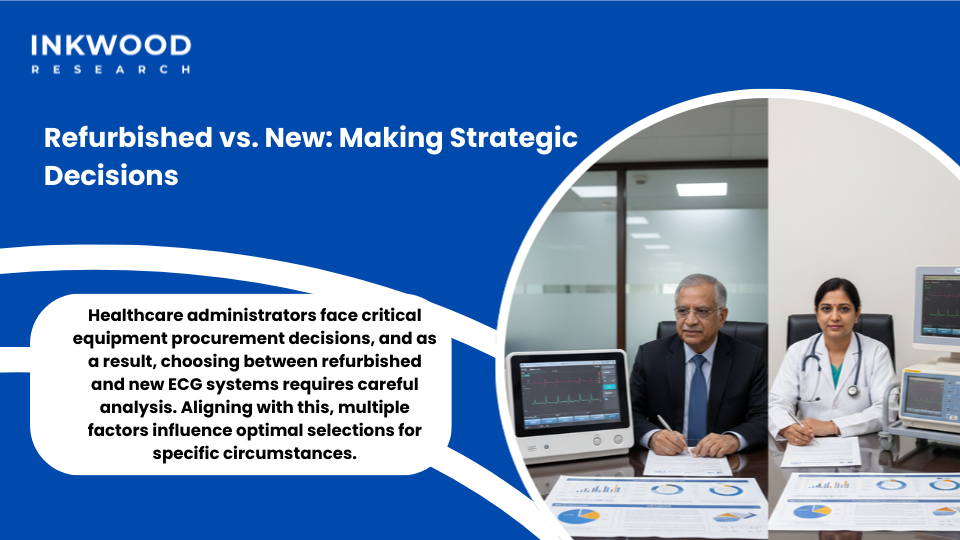
Healthcare administrators face critical equipment procurement decisions, and as a result, choosing between refurbished and new ECG systems requires careful analysis. Aligning with this, multiple factors influence optimal selections for specific circumstances.
When Refurbished Equipment Makes Sense
Refurbished ECG machines deliver exceptional value in specific settings. Budget-limited facilities gain the most significant advantages. They acquire vital diagnostic tools that might otherwise remain out of reach. Rural health centers, for example, often fall into this group.
High-volume diagnostic centers also turn to refurbished options wisely. They run several ECG stations at once. Buying multiple refurbished units proves far cheaper than fewer new ones. Consequently, expanded capacity boosts revenue, even with slightly older technology.
Start-up diagnostic centers, meanwhile, reduce early capital needs effectively. They test market viability before investing in top-tier devices. Refurbished systems offer reliable professional performance during initial growth. Subsequently, facilities upgrade once steady profits emerge.
Situations Favoring New Equipment Purchases
Certain scenarios clearly warrant new equipment investments.
- Tertiary care hospitals managing complex cases demand the latest innovations. Advanced AI-driven interpretation features provide clear diagnostic edges. These institutions often serve as key regional referral hubs.
- Research facilities running clinical trials prioritize standardized tools. They need unwavering performance over long durations. New machines reduce variables that could skew results. Moreover, comprehensive warranty coverage supports extended studies reliably.
- Private hospitals focusing on premium branding select new systems deliberately. They highlight cutting-edge technology to attract high-end patients. Modern ECG units with intuitive touchscreen designs improve overall experiences. Accordingly, premium pricing models easily absorb the higher upfront costs.
Hybrid Procurement Strategies
Savvy administrators increasingly adopt blended approaches. They acquire new equipment for mission-critical areas. At the same time, they deploy refurbished units for standard screenings. This balanced method optimizes budget use across varied needs.
Emergency departments, for instance, receive new ECG systems. Their high-stakes role requires absolute dependability. In contrast, outpatient clinics handle routine checks effectively with refurbished devices. Diagnostic precision stays sufficient for non-urgent evaluations.
Major Players in India's Refurbished ECG Market
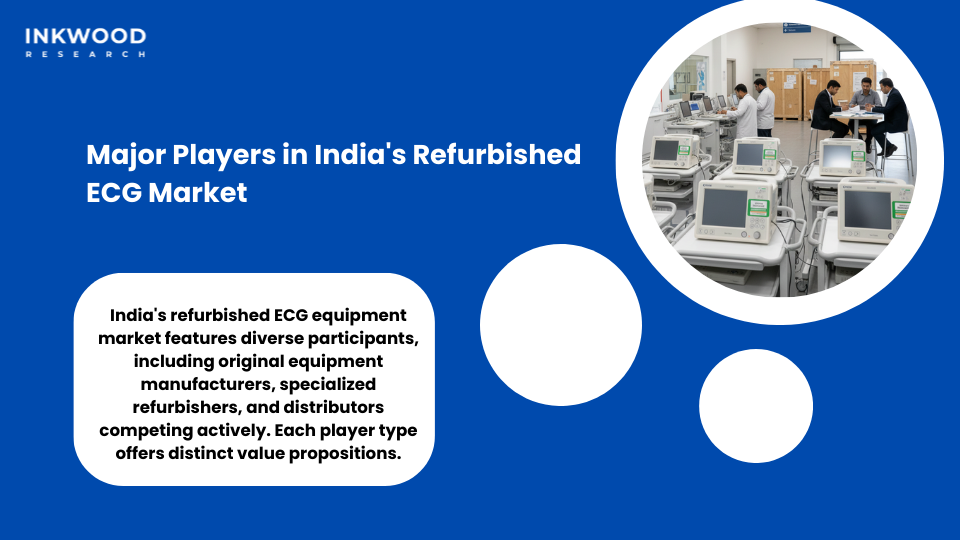
India’s refurbished ECG equipment market features diverse participants, including original equipment manufacturers, specialized refurbishers, and distributors competing actively. Each player type offers distinct value propositions.
Original Equipment Manufacturer Programs
Major manufacturers run certified refurbishment initiatives. GE Healthcare, Philips, and Siemens Healthineers operate dedicated programs. These efforts restore equipment to original specifications. Additionally, they include warranties comparable to new devices.
OEM-certified options carry higher prices. However, buyers prioritize factory-backed assurance. Manufacturers possess deep product knowledge. Consequently, this expertise reassures cautious purchasers facing potential risks.
BPL Medical Technologies stands out among Indian players. The firm serves local markets comprehensively. Extensive service networks cover both urban and rural regions. As a result, quick support reaches diverse facilities effectively.
Independent Refurbishment Specialists
Specialized firms concentrate solely on pre-owned devices. They build extensive knowledge of particular brands. Enterprises like EverX and Zigma Meditech lead operations nationwide. These providers deliver attractive pricing versus OEM channels.
On the other hand, independent specialists acquire devices worldwide. They import used units from advanced economies. Subsequently, thorough reconditioning occurs locally. This approach generates significant savings for budget-focused buyers.
Quality differs widely across independents. Trusted experts uphold strict protocols. Nevertheless, some providers compromise safety shortcuts. Purchasers should scrutinize certifications thoroughly prior to commitments.
Rural Healthcare Expansion Opportunities
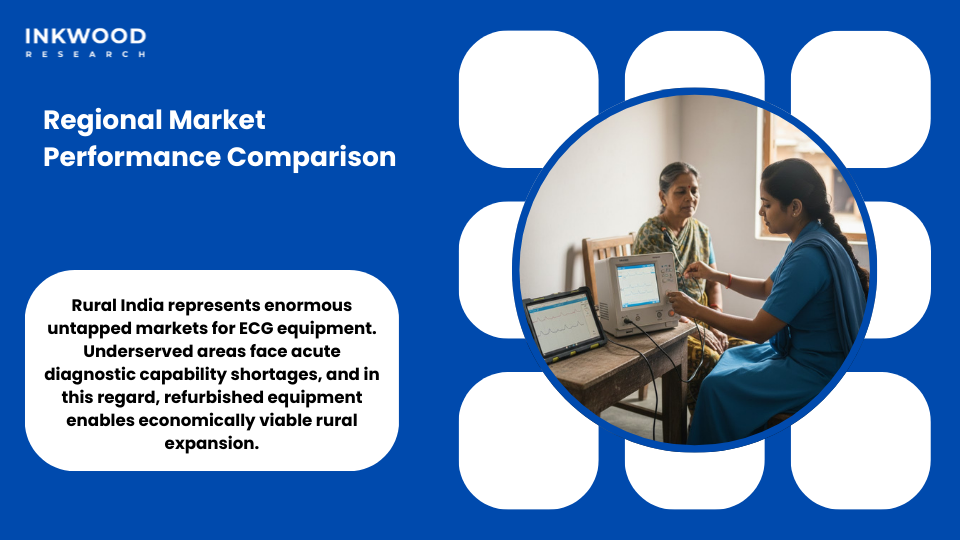
Rural India represents enormous untapped markets for ECG equipment. Underserved areas face acute diagnostic capability shortages, and in this regard, refurbished equipment enables economically viable rural expansion.
Addressing Rural Healthcare Deficits
India’s rural population stands at approximately 63% of total residents. However, healthcare facilities cluster mainly in cities. Consequently, rural dwellers often journey for hours for simple cardiac tests. This disparity leads to avoidable deaths and illnesses.
Government programs emphasize rural health advancements. Community centers need better diagnostic tools urgently. Based on official data, the Ministry of Health reports show public sites face strict budgets. Therefore, refurbished gear matches these fiscal limits ideally.
Mobile Diagnostic Solutions
Portable refurbished ECG units support mobile health efforts effectively. Medical groups visit distant villages regularly. They perform heart screenings with battery-operated devices. As a result, this approach delivers tests directly to communities.
NGOs and charitable groups set up mobile units actively. Our research indicates substantial growth in refurbished equipment adoption during 2024. These efforts boosted diagnostic access in Asia and Africa notably. Furthermore, mobile labs expanded significantly, aiding areas with poor infrastructure.
Telemedicine Integration
Rural ECG devices link to telemedicine systems seamlessly. Local staff follow set procedures for exams. Then, they send results to city specialists digitally. This setup uses expert knowledge resourcefully.
The National Health Mission launched plans to strengthen rural telehealth. Allocations reached around INR 37,227 crore for health improvements in 2025-26. Accordingly, telemedicine funding enhances equipment rollout in remote zones.
Regulatory Landscape and Quality Standards
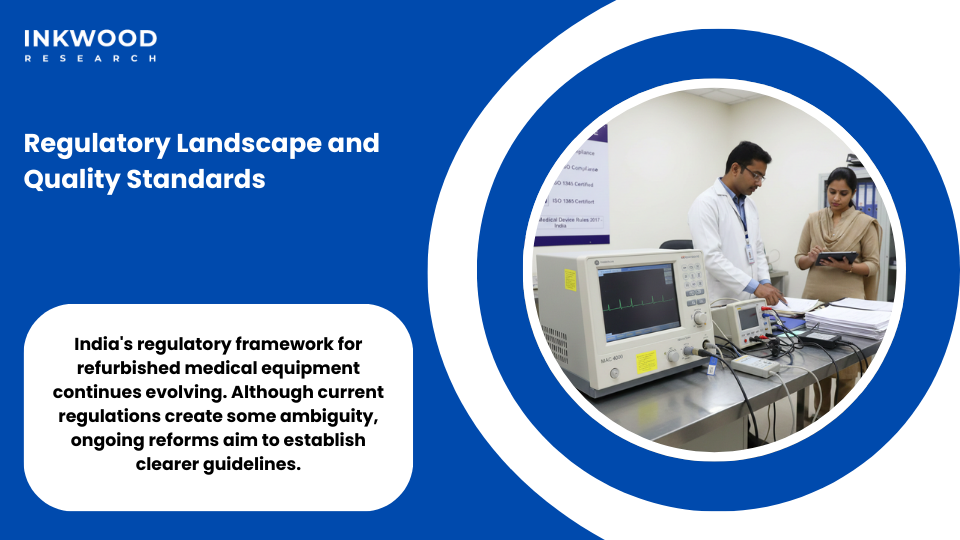
India’s regulatory framework for refurbished medical equipment continues evolving. Although current regulations create some ambiguity, ongoing reforms aim to establish clearer guidelines.
Current Regulatory Environment
The Central Drugs Standard Control Organization manages medical device rules. The Medical Device Rules, 2017, control equipment applications. ECG systems qualify as Class C devices. They demand rigorous oversight. Manufacturers secure CDSCO licenses before marketing.
Refurbished gear occupies uncertain regulatory spaces. In the past, India allowed refurbished device imports. Regulatory reviews confirm that no outright ban existed earlier. This included both premium OEM-refurbished and variable-quality used items. Such flexibility spurred market expansion. However, it raised serious quality issues.
Further, emerging frameworks establish clear compliance routes. They specify refurbishment criteria precisely. Documentation verifies thorough reconditioning processes. Consequently, these changes enhance market trust. At the same time, they safeguard end-users effectively.
Quality Certification Systems
Independent certification initiatives bolster refurbished equipment reliability. Specialized bodies create performance testing procedures. Approved devices earn widely accepted quality labels.
Global benchmarks like ISO 13485 guide refurbishment practices. As adherence signals robust quality systems, buyers now insist on certified operations from vendors. As a result, compliance drives competitive advantages.
Key Takeaways
- India’s refurbished ECG equipment market experiences rapid growth driven by economic realities. Healthcare facilities achieve 50-60% cost savings without sacrificing diagnostic quality. The India ECG equipment market will expand from US$404.73 million in 2026 to US$847.68 million by 2034 at 9.68% CAGR—Asia-Pacific’s fastest rate.
- Government initiatives like Ayushman Bharat and National Health Mission drive adoption. They prioritize affordable solutions for expanding healthcare access. Improved refurbishment technologies ensure equipment meets clinical standards. Rigorous testing, calibration, and certification processes verify performance.
- Rural healthcare expansion creates significant opportunities. Portable refurbished ECG systems enable mobile diagnostics. Telemedicine integration extends specialist expertise to underserved areas. Original equipment manufacturers, specialized refurbishers, and distributors compete actively.
- Regulatory frameworks continue evolving toward standardization. Inter-departmental committees develop comprehensive guidelines. These reforms will boost market confidence while ensuring patient safety. Strategic procurement decisions balance cost savings against clinical requirements.
Conclusion:
Refurbished ECG equipment represents a strategic enabler for India’s healthcare expansion. Value-conscious providers access essential cardiac diagnostic capabilities within tight budgets. The market’s remarkable 9.68% CAGR reflects sustained momentum as healthcare infrastructure develops nationwide.
Quality refurbishment processes deliver reliable performance matching clinical needs. Government support through Ayushman Bharat and regulatory reform accelerates adoption. Rural expansion opportunities particularly benefit from affordable refurbished solutions. Mobile diagnostics and telemedicine integration extend services to previously unreachable populations.
The journey from US$404.73 million in 2026 to US$847.68 million by 2034 signifies millions of Indians gaining cardiac diagnostic access. Organizations navigating this dynamic market require comprehensive intelligence and strategic guidance.
Contact Inkwood Research to explore detailed insights into India’s ECG equipment market and identify optimal positioning strategies for refurbished equipment opportunities.
Frequently Asked Questions
How reliable are refurbished ECG machines compared to new equipment?
Professionally refurbished ECG equipment undergoes comprehensive testing, calibration, and component replacement. Reputable refurbishers ensure devices meet or exceed original manufacturer specifications. Extended warranties from certified refurbishers provide risk protection comparable to new equipment. Diagnostic accuracy remains clinically acceptable for routine cardiac assessments. However, cutting-edge features available in the latest models may be absent from older refurbished systems.
What cost savings can Indian hospitals expect from refurbished ECG equipment?
Refurbished ECG machines typically cost 50-60% less than new equivalents. A new ECG system priced at INR 2,00,000 becomes available for INR 80,000-1,00,000 when refurbished. These savings enable hospitals to purchase multiple units or redirect capital toward other critical needs. Total ownership costs, including maintenance, remain competitive with new equipment when comprehensive service agreements are included.
Which healthcare facilities benefit most from refurbished ECG equipment?
Budget-constrained public hospitals and rural health centers gain maximum benefit from refurbished ECG systems. Tier-2 and tier-3 city diagnostic centers optimize limited capital through refurbished equipment. Start-up facilities testing market demand, minimize financial risk. High-volume screening centers multiply capacity by deploying several refurbished units instead of fewer new machines. Government health programs like Ayushman Bharat leverage refurbished equipment to expand access economically.