Table of Contents

TLDR
Understanding how anti-aging products undergo rigorous clinical testing is crucial for consumers navigating the $34.8 billion North American market. The FDA’s regulatory framework distinguishes between cosmetics and drugs, requiring extensive clinical trials for products claiming to alter skin structure. From initial safety assessments to Phase III efficacy studies, anti-aging products testing involves stringent protocols examining everything from skin aging biomarkers to hyaluronic acid formulations. This comprehensive testing ensures older adults receive safe, effective treatments.
This blog serves healthcare professionals, clinical researchers, anti-aging product developers, regulatory affairs specialists, and educated consumers interested in understanding the science behind anti-aging claims. Industry professionals developing skin care products, dermatologists recommending treatments, and older adults seeking evidence-based anti-aging solutions will find valuable insights into the clinical testing landscape that validates product efficacy.
Understanding the Clinical Trial Landscape for the Anti-Aging Products Market
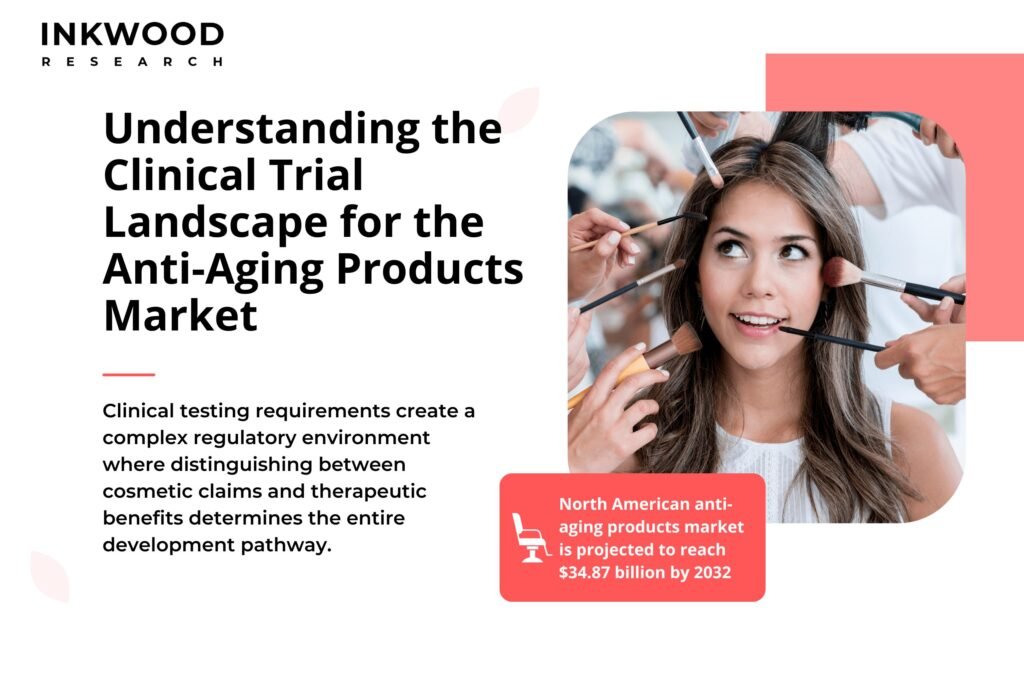
The anti-aging products market faces unprecedented scrutiny as clinical trials become the cornerstone of product validation. According to our analysis from Inkwood Research, the North American anti-aging products market is projected to reach $34.87 billion by 2032, driven by demographic transitions and sophisticated consumer demand for evidence-based solutions.
Clinical testing requirements create a complex regulatory environment where distinguishing between cosmetic claims and therapeutic benefits determines the entire development pathway. The FDA’s position remains clear: products intended to affect skin structure require drug-level clinical evidence, while moisturizing and appearance-enhancing formulations follow cosmetic regulations.
This fundamental distinction shapes how companies approach clinical trials, particularly when developing innovative formulations containing active ingredients like retinoids, peptides, and hyaluronic acid that target skin aging at the cellular level. The skin care industry must navigate these regulatory complexities while meeting growing consumer expectations for scientifically validated anti-aging solutions.
The FDA’s Regulatory Framework: Cosmetics vs. Drugs
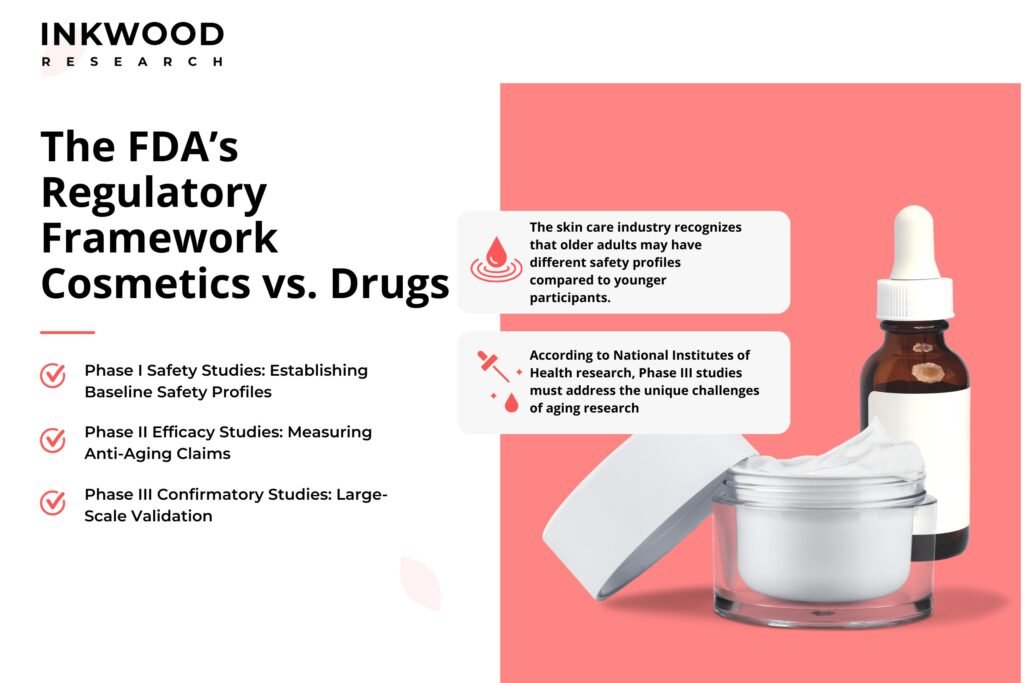
The Food and Drug Administration maintains strict boundaries between cosmetic and drug classifications that directly impact clinical testing requirements. Products marketed as cosmetics must demonstrate safety under normal use conditions, whereas those claiming to alter skin structure face comprehensive drug development protocols.
According to FDA guidance, moisturizing represents a cosmetic claim, while removing wrinkles or increasing collagen production triggers drug classification. This regulatory distinction fundamentally shapes the clinical trial strategy for anti-aging products.
The FDA’s concern about drug claims made for products marketed as cosmetics has intensified enforcement actions. Moreover, companies making anti-aging claims involving supposed effects on skin structure must navigate the complex drug approval pathway, including Investigational New Drug (IND) applications and comprehensive clinical testing protocols.
Understanding these distinctions helps consumers make informed decisions about anti-aging product efficacy and safety claims. The regulatory landscape affects how anti-aging creams and skin care products are formulated and marketed to older adults.
Phase I Safety Studies: Establishing Baseline Safety Profiles
Phase I clinical trials for anti-aging products focus primarily on safety assessment rather than efficacy measurement. These studies typically involve 20-100 healthy volunteers and older adults to establish initial safety profiles and determine appropriate dosing regimens for topical formulations.
Research protocols examine skin irritation, sensitization potential, and systemic absorption of active ingredients. For anti-aging creams containing novel peptides or growth factors, Phase I studies must demonstrate that topical application doesn’t produce adverse systemic effects or unexpected skin reactions during clinical testing.
Safety endpoints include clinical evaluation of erythema, edema, and barrier function disruption. In this regard, biomarker analysis through skin biopsy samples provides molecular-level insight into how active ingredients interact with aging skin at the cellular level. This comprehensive approach ensures that anti-aging products meet safety standards before advancing to efficacy testing.
The skin care industry recognizes that older adults may have different safety profiles compared to younger participants. Accordingly, Phase I studies specifically evaluate how aging skin responds to new formulations, particularly those containing potent active ingredients or innovative delivery systems.
Phase II Efficacy Studies: Measuring Anti-Aging Claims
Phase II clinical trials represent the critical efficacy evaluation stage where anti-aging products must demonstrate measurable improvements in skin aging parameters. These studies typically involve 100-300 participants over 12-24 week periods to capture meaningful changes in skin appearance and function.
Primary endpoints often include objective measurements of fine lines, skin elasticity, and hydration levels using standardized imaging techniques. Moreover, advanced protocols incorporate biomarker analysis, examining collagen synthesis, hyaluronic acid production, and inflammatory markers that correlate with visible aging improvements and validate anti-aging claims.
Phase II studies establish dose-response relationships for active ingredients. In this regard, clinical testing protocols evaluate how different concentrations of retinoids, alpha-hydroxy acids, or antioxidants impact efficacy while maintaining acceptable safety profiles in older adults with varying skin types.
The anti-aging products market demands rigorous evidence for efficacy claims, particularly as consumers become more sophisticated about ingredient science. As a result, Phase II studies must demonstrate statistically significant improvements in both clinical assessments and patient-reported outcomes to support marketing claims.
Phase III Confirmatory Studies: Large-Scale Validation
Phase III clinical trials provide the definitive evidence required for regulatory approval of anti-aging products making therapeutic claims. These large-scale studies involve 500-3,000 participants across multiple clinical sites to demonstrate consistent efficacy and safety across diverse populations.
Further, study designs incorporate sophisticated outcome measures including digital photography analysis, dermatologist assessments, and patient-reported outcomes. Additionally, advanced imaging techniques quantify changes in skin texture, pigmentation, and wrinkle depth with sub-millimeter precision, validating anti-aging claims with unprecedented accuracy.
According to National Institutes of Health research, Phase III studies must address the unique challenges of aging research, including extended study durations and complex endpoint selection that captures both healthspan and appearance-related benefits. Studies must account for the physiological changes that occur in older adults during extended treatment periods.
The skin care industry increasingly relies on Phase III data to differentiate products in the competitive anti-aging products market. Accordingly, these studies often include head-to-head comparisons with existing treatments and long-term safety follow-up that extends beyond the primary efficacy assessment period.
Specialized Testing for Different Anti-Aging Modalities
Clinical testing protocols vary significantly depending on the anti-aging modality under investigation. Injectable treatments like dermal fillers and botulinum toxin require specialized safety monitoring and efficacy assessment protocols that differ markedly from topical skin care products.
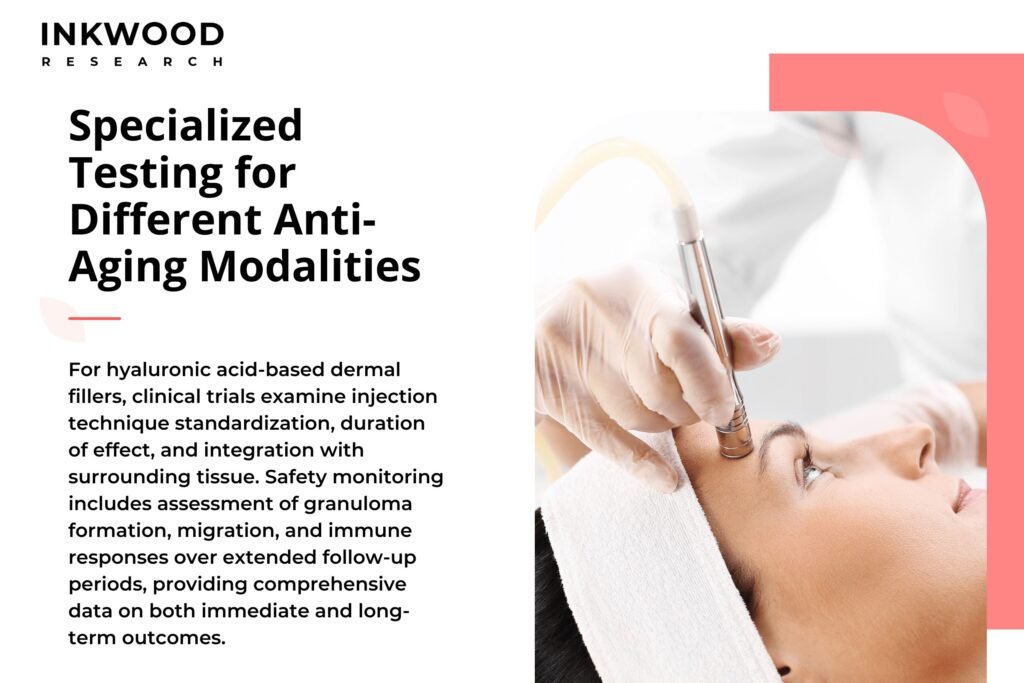
For hyaluronic acid-based dermal fillers, clinical trials examine injection technique standardization, duration of effect, and integration with surrounding tissue. Safety monitoring includes assessment of granuloma formation, migration, and immune responses over extended follow-up periods, providing comprehensive data on both immediate and long-term outcomes.
Additionally, topical anti-aging products undergo different testing paradigms focusing on penetration studies, ingredient stability, and long-term use safety. Clinical protocols must demonstrate that active ingredients maintain efficacy throughout product shelf life while avoiding sensitization in repeated-use scenarios common with daily skin care routines.
The anti-aging products market encompasses diverse treatment modalities, each requiring specialized clinical testing approaches. Thus, regulatory agencies have developed specific guidance documents that address the unique requirements for different product categories, ensuring appropriate safety and efficacy evaluation.
Biomarker Development: Measuring Skin Aging at the Molecular Level
- Advanced clinical trials increasingly incorporate molecular biomarkers that provide objective measures of skin aging beyond visible appearance changes. These biomarkers enable researchers to detect early treatment effects and optimize formulation development based on biological mechanisms.
- Collagen synthesis markers, including procollagen peptides and hydroxyproline levels, provide quantitative measures of anti-aging product efficacy. Elastin degradation products and advanced glycation end products serve as additional biomarkers reflecting skin aging processes at the molecular level, offering more precise assessment of treatment effects than traditional visual evaluation methods.
- Gene expression analysis through skin biopsy samples reveals how anti-aging treatments modulate cellular pathways involved in skin aging. This approach enables identification of optimal treatment durations and provides mechanistic insight into why certain formulations outperform others in clinical testing.
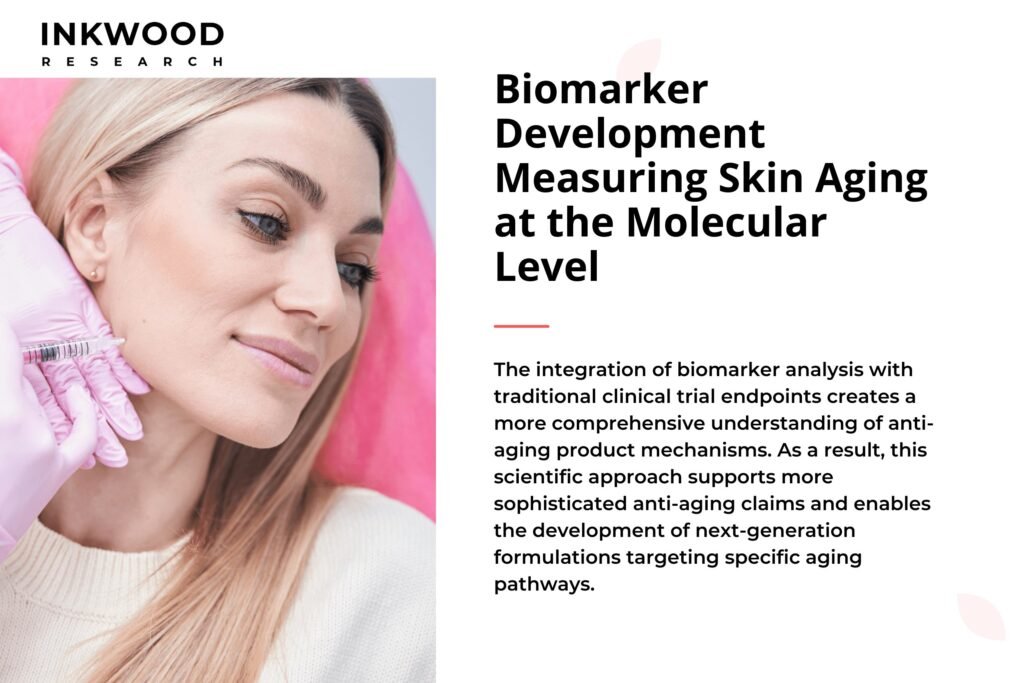
The integration of biomarker analysis with traditional clinical trial endpoints creates a more comprehensive understanding of anti-aging product mechanisms. As a result, this scientific approach supports more sophisticated anti-aging claims and enables the development of next-generation formulations targeting specific aging pathways.
Regulatory Challenges: The Aging-as-Disease Debate
The clinical testing landscape faces significant regulatory uncertainty as the scientific community debates whether aging should be classified as a treatable indication. Currently, the FDA does not recognize aging as a disease, creating challenges for companies developing comprehensive anti-aging therapies.
The landmark TAME (Targeting Aging with Metformin) trial represents a pivotal effort to establish aging as a valid therapeutic target. This double-blind, placebo-controlled study involving over 3,000 participants aims to demonstrate that age-related diseases can serve as surrogate endpoints for aging itself.
Furthermore, successful completion of TAME could revolutionize clinical testing requirements for anti-aging products, potentially creating new regulatory pathways that address aging as a treatable condition rather than requiring disease-specific indications.
The anti-aging products market awaits these regulatory developments, which could significantly expand the scope of allowable anti-aging claims. Moreover, companies are strategically positioning their research programs to capitalize on potential regulatory changes while maintaining compliance with current requirements.
Patient Recruitment and Demographic Considerations
Clinical trials for anti-aging products face unique recruitment challenges, particularly when targeting older adults with diverse health conditions and medication regimens. In addition, FDA guidance emphasizes the importance of including adequate representation of older adults, especially those over 75 years, in clinical studies.
Recruitment strategies must balance the need for healthy participants with the reality that many older adults have comorbid conditions that could affect study outcomes. Inclusion criteria typically exclude individuals with active skin diseases while allowing participants with well-controlled systemic conditions common in aging populations.
Additionally, study protocols must accommodate the physiological changes associated with aging, including decreased liver and kidney function that could affect drug metabolism and safety profiles. These considerations directly impact study design, dose selection, and safety monitoring protocols for anti-aging products.
Key Takeaways
- Regulatory Classification Matters: The distinction between cosmetic and drug classification fundamentally determines clinical testing requirements and development costs for anti-aging products.
- Comprehensive Testing Required: Safe and effective anti-aging products undergo rigorous Phase I-III clinical trials that can span several years and involve thousands of participants.
- Biomarkers Enable Precision: Molecular biomarkers provide objective measures of skin aging that enable more precise evaluation of treatment efficacy beyond visible changes.
- Age-Inclusive Research: FDA guidance emphasizes including older adults in clinical trials to ensure safety and efficacy data reflect the primary user population.
- Regulatory Evolution: The ongoing TAME trial and aging-as-disease debate could transform how anti-aging products are tested and approved in the future.
In conclusion, the skin care industry recognizes that aging skin has unique characteristics that must be considered during clinical testing. Protocols often include stratification by age groups, skin type, and baseline aging severity to ensure that results are applicable to the intended user population.
At Inkwood Research, our team of expert analysts provides comprehensive market intelligence and strategic insights into the evolving beauty and personal care industry. We specialize in identifying emerging trends, technological innovations, and growth opportunities that shape the future of skincare and anti-aging markets.
For personalized consultation on market entry strategies and competitive analysis, contact our team to discuss your specific business objectives.
Frequently Asked Questions (FAQs)
Clinical trials for anti-aging products typically span 2-7 years, depending on the product type and regulatory pathway. Phase I safety studies last 3-6 months, while Phase II efficacy trials require 6-18 months. Phase III confirmatory studies can extend 1-3 years, particularly for products targeting older adults, where long-term safety data is essential for regulatory approval.
Cosmetic anti-aging products require safety testing under normal use conditions, while drug-classified products must undergo comprehensive clinical trials, including Phase I-III studies. Products claiming to alter skin structure or function (like increasing collagen or removing wrinkles) face drug-level testing requirements, significantly increasing development time and costs.
Yes, older adults can safely participate in clinical trials for anti-aging products when proper safety protocols are followed. FDA guidance specifically encourages inclusion of participants over 65, as this population represents the primary users of anti-aging treatments. However, screening procedures ensure participants are healthy enough for study participation while accounting for age-related physiological changes.