Table of Contents

This analysis is brought to you by Inkwood Research, a leading market intelligence firm specializing in Asia-Pacific renewable energy transformations, biogas technology ecosystems, and hydrogen economy development pathways. Our research team combines extensive experience analyzing China biogas market dynamics, biomethane upgrading innovations, and clean energy transition strategies. Based on our proprietary research methodologies and strategic partnerships with Chinese renewable energy enterprises, government environmental agencies, and biogas technology providers, we deliver actionable insights empowering strategic decision-making for global organizations navigating China’s biogas sector evolution and emerging hydrogen economy opportunities.
TLDR
Across the Asia-Pacific gamified corporate training platforms market, three distinct markets are emerging as standout growth stories. Japan is growing from US$112.18 million in 2026 to US$677.52 million by 2034, India from US$115.85 million to US$549.09 million, and Australia from US$71.20 million to US$395.78 million over the same period. Each market brings a unique adoption story shaped by local workforce culture, industry structure, and the specific pressures that are making gamified learning platforms for businesses an increasingly strategic enterprise priority.
This blog is directly relevant for HR technology directors, L&D strategists, and enterprise training buyers operating across Japan, India, and Australia. Additionally, EdTech investors tracking the Asia-Pacific gamified corporate training platforms market, regional HR technology distributors, and product teams developing gamified corporate training platforms market solutions for APAC enterprise clients will find grounded, strategically useful intelligence here.
China Biogas Market Foundation and Hydrogen Economy Convergence
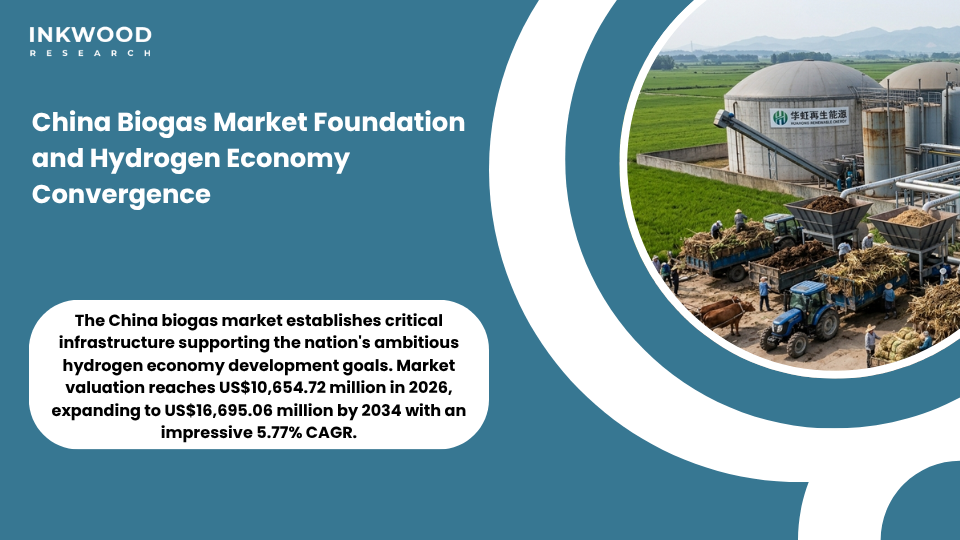
The China biogas market establishes critical infrastructure supporting the nation’s ambitious hydrogen economy development goals. Market valuation reaches US$10,654.72 million in 2026, expanding to US$16,695.06 million by 2034 with an impressive 5.77% CAGR. Consequently, biogas technologies create foundational capabilities for green hydrogen production systems.
Rural communities benefit from renewable energy access while contributing to national decarbonization targets. Moreover, upgraded biogas facilities demonstrate operational expertise transferable to hydrogen infrastructure development.
Market Scale and Strategic Significance
China’s biogas sector operates at an unprecedented scale, addressing both energy security and environmental objectives.
- Agricultural waste streams from livestock operations provide abundant organic feedstock supporting distributed biogas production.
- Meanwhile, municipal waste treatment facilities increasingly incorporate anaerobic digestion technologies, generating renewable energy from urban organic materials.
This dual approach serves rural and urban communities simultaneously. According to the National Energy Administration, renewable energy capacity continues to expand rapidly across all technology categories, creating favorable conditions for biogas market growth.
Hydrogen Economy Integration Rationale
Biogas infrastructure provides practical stepping stones toward comprehensive hydrogen economy deployment. Operators develop expertise in gas purification, compression, storage, and distribution systems directly applicable to hydrogen applications.
Furthermore, existing biogas plants can integrate hydrogen co-production capabilities, leveraging shared infrastructure investments. This convergence reduces capital requirements for hydrogen economy development. Therefore, policymakers increasingly recognize biogas as a strategic bridge technology.
Technology Pathways Connecting Biogas to Hydrogen Production
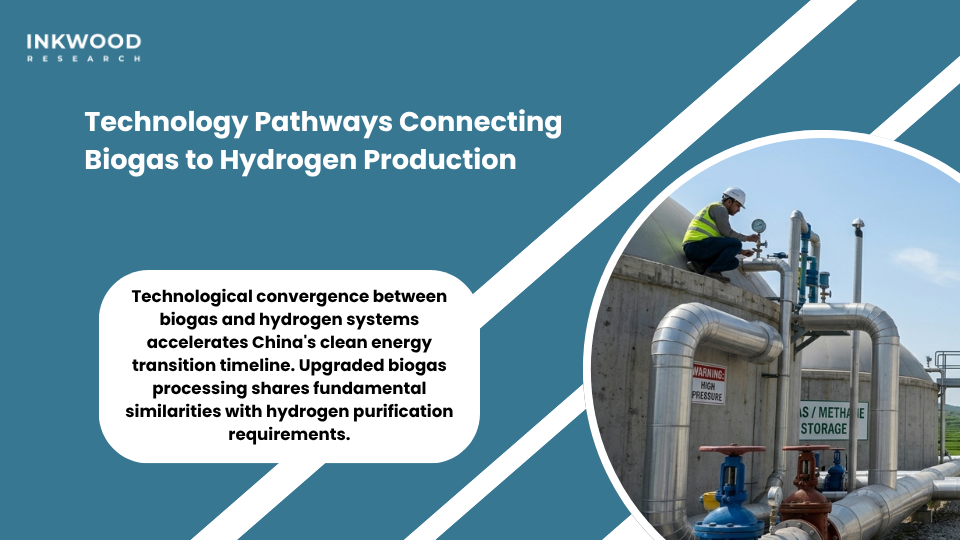
Technological convergence between biogas and hydrogen systems accelerates China’s clean energy transition timeline. Upgraded biogas processing shares fundamental similarities with hydrogen purification requirements.
Similarly, compression and storage technologies developed for biomethane adapt readily to hydrogen applications. Consequently, companies like Air Liquide Planet and PlanET Biogas advance integrated solutions serving both markets. These synergies reduce technology development costs while accelerating deployment schedules.
Gas Purification Technology Transfer
Biogas upgrading technologies remove carbon dioxide, hydrogen sulfide, and moisture, achieving pipeline-quality biomethane. These separation processes mirror hydrogen purification requirements for fuel cell applications.
Membrane systems, pressure swing adsorption, and chemical scrubbing technologies apply across both gas streams. Moreover, operators gain valuable experience managing gas quality specifications and safety protocols. This expertise foundation accelerates hydrogen infrastructure readiness significantly.
Biomethane Reforming for Hydrogen Production
Advanced facilities integrate steam methane reforming systems, converting upgraded biogas into hydrogen and carbon dioxide. This pathway produces renewable hydrogen from organic waste feedstocks. Additionally, carbon capture capabilities reduce emissions from reforming processes.
Consequently, biogas-derived hydrogen achieves lower carbon footprints than conventional gray hydrogen production. Therefore, reforming technologies create direct bridges connecting biogas and hydrogen value chains.
Electrolysis Integration Opportunities
Biogas facilities generating electricity can power electrolysis systems producing green hydrogen from water. This integration optimizes renewable energy utilization while diversifying revenue streams.
Meanwhile, waste heat from biogas-powered generators improves electrolyzer efficiency. These synergistic configurations maximize overall system performance. Furthermore, operators manage multiple revenue streams across electricity, upgraded biogas, and hydrogen production.
Rural Energy Transformation Supporting National Clean Energy Goals
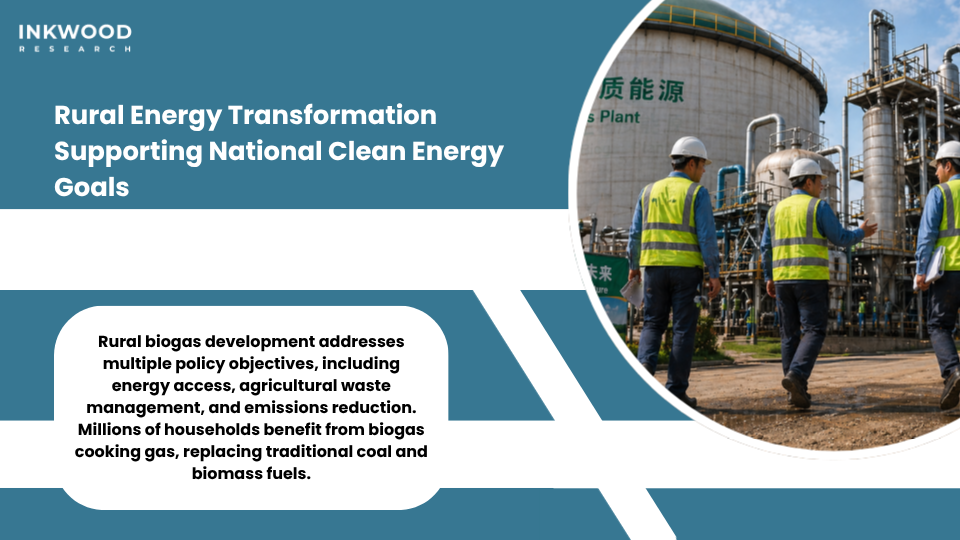
Rural biogas development addresses multiple policy objectives, including energy access, agricultural waste management, and emissions reduction. Millions of households benefit from biogas cooking gas, replacing traditional coal and biomass fuels. Consequently, indoor air quality improves dramatically, reducing respiratory health risks.
Moreover, agricultural communities generate income from waste materials previously considered environmental liabilities. This transformation demonstrates renewable energy’s capacity to improve rural living standards.
· Household Biogas Systems and Cooking Applications
Small-scale digesters serve individual farming households, converting livestock manure into cooking gas and organic fertilizer. These systems eliminate traditional fuel collection labor while providing reliable energy access.
Additionally, digestate outputs enhance soil fertility, supporting sustainable agricultural practices. Government subsidy programs accelerate adoption by reducing upfront investment barriers. Therefore, household biogas penetration continues to expand across rural regions.
· Community-Scale Energy Projects
Larger installations serve multiple households or entire villages through centralized biogas production and distribution systems. These projects achieve economies of scale, improving economic viability.
Furthermore, professional operations ensure consistent gas quality and system reliability. Village cooperatives manage facilities, creating local employment opportunities. Meanwhile, combined heat and power configurations provide electricity alongside cooking gas services.
· Environmental Benefits Beyond Energy Access
Biogas systems reduce emissions through multiple pathways, benefiting both local and global environments. Methane capture from manure management prevents potent greenhouse gas releases.
Similarly, displaced coal consumption decreases particulate matter and sulfur dioxide emissions. Water quality improvements result from better manure handling, reducing agricultural runoff. These cumulative environmental benefits align with China’s ambitious climate commitments.
Competitive Dynamics and International Collaboration
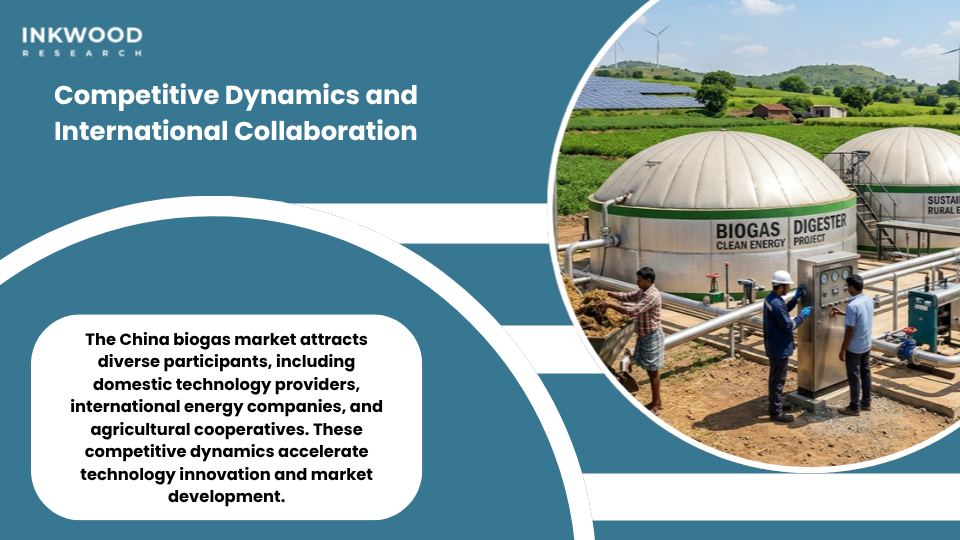
The China biogas market attracts diverse participants, including domestic technology providers, international energy companies, and agricultural cooperatives. Biogas Fuels International expands operations, leveraging global expertise in waste-to-energy systems. Similarly, Air Liquide brings advanced gas processing technologies to Chinese market applications.
Meanwhile, PlanET Biogas focuses on distributed rural energy solutions adapted to local conditions. These competitive dynamics accelerate technology innovation and market development.
International Technology Transfer Initiatives
European and North American biogas companies share proven technologies adapted for the Chinese market conditions. These partnerships combine international engineering expertise with local manufacturing capabilities.
Consequently, production costs decrease while quality standards improve. Joint ventures facilitate knowledge transfer, accelerating domestic industry development. Therefore, international collaboration benefits all stakeholders through shared innovation and market expansion.
Domestic Innovation and Manufacturing Capacity
Chinese manufacturers are increasingly developing proprietary biogas technologies, reducing dependency on imported equipment. This indigenous innovation addresses specific market requirements, including diverse feedstock characteristics and varying climate conditions.
Furthermore, local production reduces project costs, improving economic competitiveness. Government research funding supports technology advancement across anaerobic digestion, upgrading systems, and utilization applications. These investments strengthen China’s position within the global biogas market.
Regional Market Leadership
Provincial governments establish regional biogas development targets, creating competitive dynamics between jurisdictions. Leading provinces demonstrate successful models attracting additional investment and technology partnerships.
Meanwhile, lagging regions implement policies to accelerate adoption, matching national development timelines. This competitive federalism approach accelerates overall market growth. Consequently, best practices diffuse rapidly across provincial boundaries.
Infrastructure Development Bridging Biogas and Hydrogen Systems
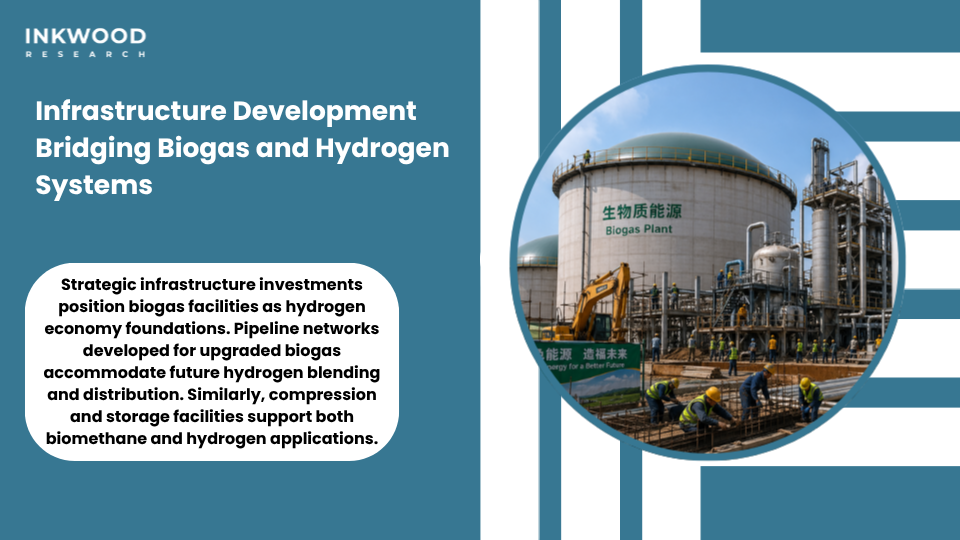
Strategic infrastructure investments position biogas facilities as hydrogen economy foundations. Pipeline networks developed for upgraded biogas accommodate future hydrogen blending and distribution. Similarly, compression and storage facilities support both biomethane and hydrogen applications.
Consequently, incremental infrastructure additions enable hydrogen integration without wholesale replacement. This phased approach reduces capital requirements while accelerating clean energy deployment timelines.
Gas Grid Integration and Blending Strategies
Natural gas pipeline operators increasingly accept upgraded biogas injections meeting quality specifications. These networks facilitate biomethane distribution to urban markets far from production sites.
Moreover, pipeline infrastructure accommodates hydrogen blending up to specified volume percentages. This capability creates pathways for gradual hydrogen introduction without disrupting existing gas supplies. Therefore, grid integration strategies support both biogas and hydrogen economy objectives.
Transportation Fuel Infrastructure Convergence
Biomethane refueling stations serve compressed natural gas vehicles while establishing a foundation for future hydrogen dispensing. Station operators gain experience managing alternative fuel safety protocols and customer service requirements.
Additionally, site infrastructure, including compression, storage, and dispensing equipment, adapts to hydrogen applications through component upgrades. These multi-fuel capabilities maximize infrastructure utilization while reducing investment risks.
Industrial Energy System Integration
Manufacturing facilities adopt biogas-powered combined heat and power systems, reducing fossil fuel consumption. These installations establish operational expertise applicable to hydrogen fuel cell systems.
Furthermore, industrial parks develop distributed energy networks integrating multiple renewable sources. Consequently, hydrogen integration becomes an incremental addition rather than a disruptive replacement. This evolutionary approach accelerates industrial decarbonization while managing technical and financial risks.
Strategic Opportunities in China's Energy Transition
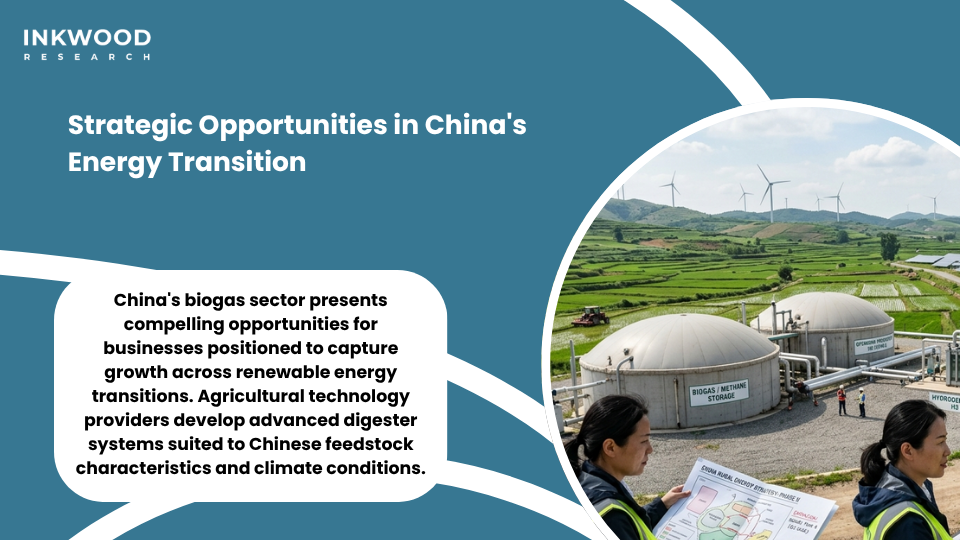
China’s biogas sector presents compelling opportunities for businesses positioned to capture growth across renewable energy transitions. Agricultural technology providers develop advanced digester systems suited to Chinese feedstock characteristics and climate conditions.
Meanwhile, gas processing companies supply upgrading equipment, achieving specifications for cooking gas, fuel, electricity, and heat applications. International corporations contribute expertise while accessing the world’s largest renewable energy market. These diverse opportunities attract varied stakeholder participation.
Agricultural Sector Integration
Large-scale livestock operations develop biogas facilities, converting waste management costs into revenue-generating assets. These integrated systems improve farm economics while reducing environmental impacts.
Furthermore, digestate fertilizer outputs reduce chemical fertilizer requirements, supporting sustainable agriculture objectives. Cooperative models enable smaller farms to access biogas benefits through shared infrastructure investments. Therefore, agricultural biogas adoption continues to accelerate across diverse farming operations.
Municipal Waste Management Solutions
Urban waste treatment facilities incorporate anaerobic digestion technologies, addressing organic waste disposal while generating renewable energy. These projects reduce landfill requirements and associated methane emissions.
Additionally, electricity and heat production offset facility operating costs. Municipal governments increasingly mandate organic waste separation, supporting biogas production expansion. Consequently, urban biogas markets complement rural agricultural applications.
Technology Provider Market Entry
Equipment manufacturers and engineering firms benefit from sustained biogas infrastructure expansion. Upgrading technology providers to capture growing demand for pipeline-quality biomethane. Similarly, combined heat and power system suppliers serve industrial and community-scale applications.
These equipment segments demonstrate strong growth potential as market maturity increases. Therefore, technology providers establish competitive positions through innovation and local manufacturing partnerships.
Financial Investment Opportunities
Renewable energy project finance attracts institutional investors seeking stable returns from policy-supported infrastructure. Biogas facilities generate predictable cash flows through long-term offtake agreements and government incentives.
Meanwhile, hydrogen economy convergence creates additional value creation pathways, enhancing investment returns. These financial characteristics appeal to infrastructure funds, development banks, and corporate sustainability investors. Consequently, capital availability supports market expansion.
Key Takeaways
- The China biogas market establishes foundations for hydrogen economy development while delivering immediate renewable energy benefits. Market valuation reaches US$10,654.72 million in 2026, expanding to US$16,695.06 million by 2034 with a robust 5.77% CAGR.
- Upgraded biogas technologies create expertise directly transferable to hydrogen production and distribution systems. Consequently, biogas infrastructure investments serve dual purposes, supporting current energy needs while preparing for future hydrogen economy deployment.
- Rural energy transformation improves agricultural community living standards while contributing to national decarbonization goals. Cooking gas, fuel electricity, and heat applications demonstrate biogas versatility across residential, commercial, and industrial sectors.
- Meanwhile, companies including Biogas Fuels International, Air Liquide, and PlanET Biogas advance technology innovation through international collaboration and domestic development. These partnerships accelerate market maturity while reducing technology costs.
- Infrastructure development strategies increasingly recognize biogas-hydrogen convergence opportunities. Pipeline networks, compression facilities, and storage systems accommodate both gases through shared infrastructure investments.
- This integrated approach reduces capital requirements for hydrogen economy deployment. Therefore, businesses positioning for hydrogen opportunities should evaluate biogas market participation as strategic entry pathways.
- Strategic opportunities span agricultural integration, municipal waste management, technology provision, and financial investment. Success requires understanding regional policy variations, feedstock characteristics, and technology selection criteria.
- International partnerships combine global expertise with local market knowledge, accelerating project development. Consequently, market participants must develop comprehensive strategies addressing technical, regulatory, and commercial dimensions while preparing for hydrogen economy convergence.
Conclusion:
China’s biogas sector demonstrates how renewable energy infrastructure creates pathways toward advanced clean energy economies. The market’s impressive growth trajectory reflects government commitment, technology advancement, and diverse application development. Consequently, biogas serves immediate energy access needs while building capabilities essential for hydrogen economy deployment.
Technology convergence between biogas and hydrogen systems reduces capital requirements and accelerates transition timelines. Operators developing expertise in gas purification, compression, and distribution position themselves advantageously for hydrogen market opportunities. Meanwhile, rural energy transformation demonstrates renewable energy’s capacity to improve living standards while addressing environmental challenges.
Looking forward, the China biogas market will continue evolving as policy frameworks strengthen and technology costs decline. Hydrogen economy integration creates additional value streams, enhancing project economics. International collaboration will accelerate knowledge transfer while domestic innovation reduces technology dependencies. These dynamics position China as a global leader in renewable energy transitions.
For organizations seeking deeper insights into the China biogas market or hydrogen economy opportunities, Inkwood Research offers comprehensive market intelligence and consulting services. Contact our team to explore how these transformative trends align with your strategic objectives and support your clean energy commitments.
Frequently Asked Questions
How does biogas infrastructure support hydrogen economy development?
Biogas plants build capabilities in gas upgrading, compression, storage, and pipeline distribution that directly transfer to hydrogen infrastructure, lowering capital costs and accelerating large scale hydrogen deployment
What drives rapid growth in China’s biogas market?
Strong government subsidies, rural energy programs, agricultural waste utilization policies, and carbon reduction targets are driving biomethane production growth across power generation, transport fuel, and industrial heating applications
What are the key applications of biogas in China?
Biogas in China is widely used for rural cooking fuel, electricity generation, industrial heat, and upgraded biomethane for vehicle fuel, supporting energy security and emissions reduction goals
How is China integrating biogas into its clean energy strategy?
China integrates biogas into its renewable energy mix through waste to energy projects, biomethane grid injection, and alignment with carbon neutrality targets to decarbonize agriculture and industry
What opportunities exist for international companies in China’s biogas sector?
International firms can enter through technology partnerships, advanced biogas upgrading equipment supply, engineering services, and project financing to support expanding biomethane and renewable gas infrastructure
What challenges affect biogas project development in China?
Key challenges include feedstock supply consistency, grid connection constraints, regulatory approvals, project financing risks, and competition from low cost fossil fuels in certain provinces