Table of Contents
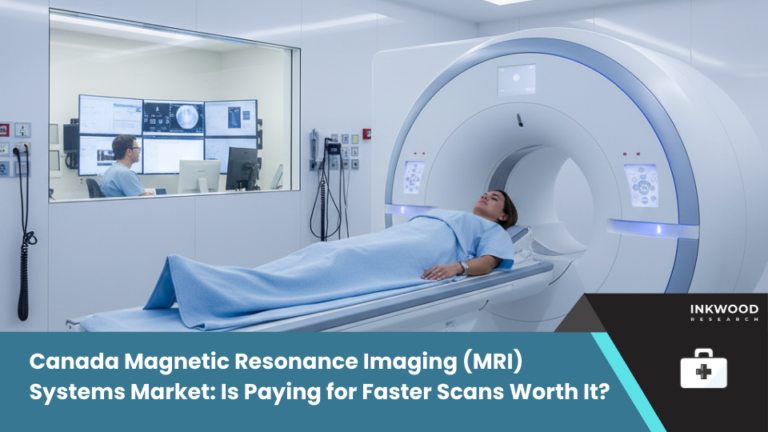
This analysis is brought to you by Inkwood Research, a leading market intelligence firm specializing in North American healthcare systems, diagnostic imaging market dynamics, and magnetic resonance imaging (MRI) systems accessibility. Our research team combines extensive experience analyzing Canadian healthcare policy, public-private healthcare delivery models, and wait time management strategies across provinces and territories. Based on our proprietary research methodologies and strategic partnerships with Canadian healthcare providers, provincial health authorities, private diagnostic imaging facilities, and medical equipment manufacturers, we deliver actionable insights that empower strategic decision-making for stakeholders navigating Canada’s evolving diagnostic imaging landscape and magnetic resonance imaging (MRI) systems market transformation.
TLDR
Canada’s magnetic resonance imaging (MRI) systems market faces unprecedented wait time challenges, with median waits reaching 16.2 weeks in 2024. Furthermore, Canada’s MRI systems market will grow from US$297.69 million in 2026 to US$497.58 million by 2034 at a CAGR of 6.63%. Meanwhile, private MRI facilities offer scans within days, creating ethical debates. Consequently, patients increasingly face difficult decisions about paying out-of-pocket versus waiting in public queues.
Healthcare administrators, policy makers, and hospital executives across Canada will find critical insights here. Additionally, insurance providers, diagnostic imaging center operators, and healthcare investors evaluating public-private partnerships benefit substantially. Patients considering private MRI options, medical device manufacturers, and health economists studying wait time impacts also gain valuable strategic intelligence from this comprehensive analysis.
Mobile Imaging Services: Canada’s MRI Wait Time Crisis
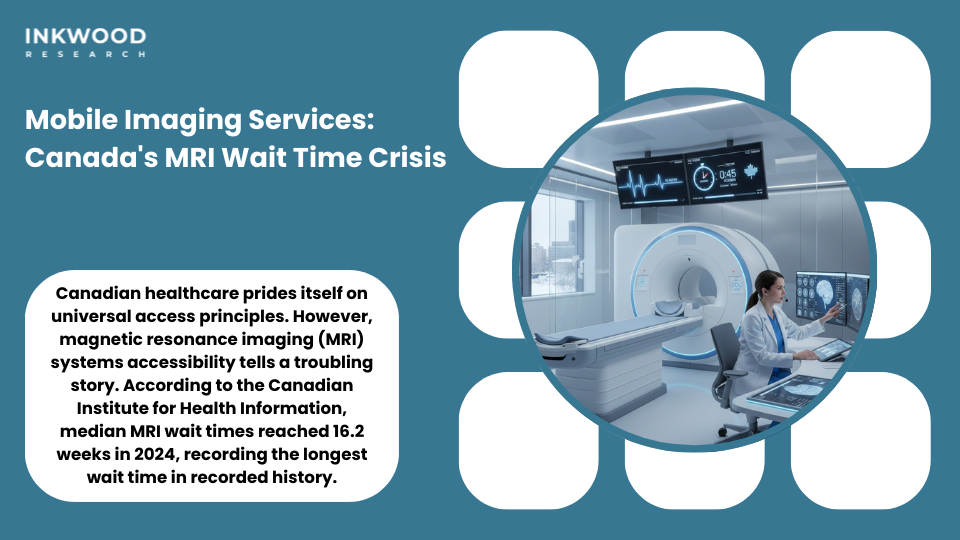
Canadian healthcare prides itself on universal access principles. However, magnetic resonance imaging (MRI) systems accessibility tells a troubling story. According to the Canadian Institute for Health Information, median MRI wait times reached 16.2 weeks in 2024, recording the longest wait time in recorded history.
Patients face agonizing decisions daily. Should they endure potentially dangerous delays for free scans? Alternatively, should they pay thousands for immediate private access? These questions challenge Canada’s healthcare identity fundamentally.
Private MRI clinics have proliferated across provinces recently. Moreover, wait times at these facilities are measured in days, not months. Nevertheless, ethical concerns persist about two-tier healthcare development. Subsequently, debate intensifies about equitable access versus timely diagnostics.
The Canadian magnetic resonance imaging (MRI) systems market demonstrates paradoxical growth amid access challenges. Meanwhile, provincial governments struggle to balance budgets against patient needs. Therefore, innovative solutions become increasingly urgent.
The Canadian MRI Wait Time Reality: Numbers That Shock
Record-Breaking Wait Times
The 2024 data reveal alarming trends across Canada’s healthcare system. National median waits reached 18.1 weeks for MRI scans currently. Conversely, CT scans average 8.8 weeks nationwide. These figures represent significant increases from previous years.
Some provinces experience even more extreme delays. Prince Edward Island patients wait a median of 52.0 weeks for MRI access. This translates to one full year for diagnostic imaging. Meanwhile, Ontario patients wait 12.0 weeks on average. Subsequently, health outcomes vary dramatically by location.
Historical Perspective
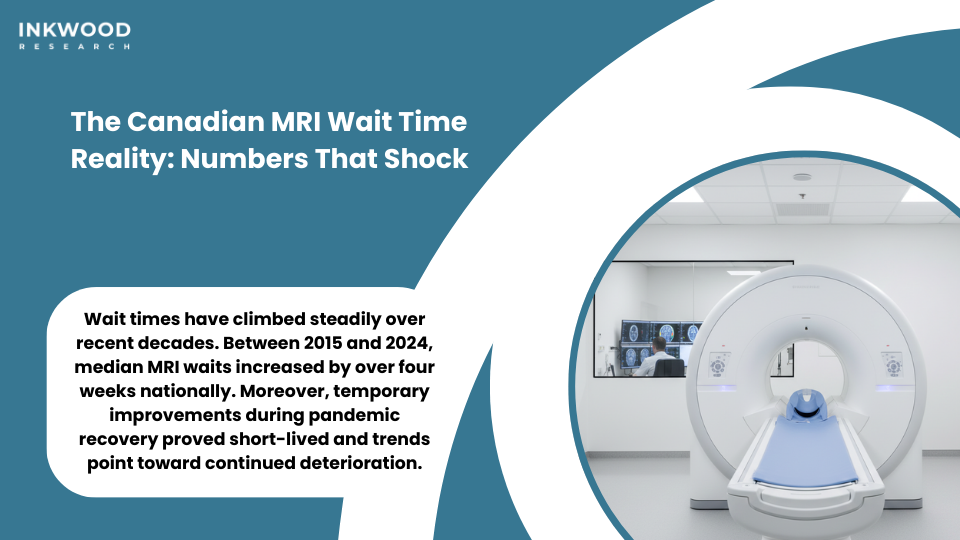
Wait times have climbed steadily over recent decades. Between 2015 and 2024, median MRI waits increased by over four weeks nationally. Moreover, temporary improvements during pandemic recovery proved short-lived and trends point toward continued deterioration.
Canada operates significantly fewer MRI machines per capita compared to peer nations. Specifically, Canada reports 10.6 MRI machines per million population, while Germany operates 32.5 machines per million people. This disparity explains capacity constraints fundamentally.
The Human Cost
Behind these statistics lie profound human consequences. Patients endure pain while awaiting diagnostic clarity, and additionally, diseases progress untreated during lengthy wait periods. Furthermore, anxiety compounds as weeks stretch into months.
Further, economic impacts extend beyond healthcare spending. Lost productivity from delayed diagnoses costs billions annually, with some patients becoming unable to work while awaiting scans. Therefore, societal costs far exceed direct healthcare expenditures.
Public System Challenges: Why the Waits Keep Growing
Equipment Capacity Constraints
Canada’s public healthcare system faces severe equipment shortages. The Canadian Institute for Health Information data confirms insufficient capacity nationwide. Moreover, aging equipment requires replacement, but budget constraints delay acquisitions. Subsequently, operational hours cannot expand despite growing demand.
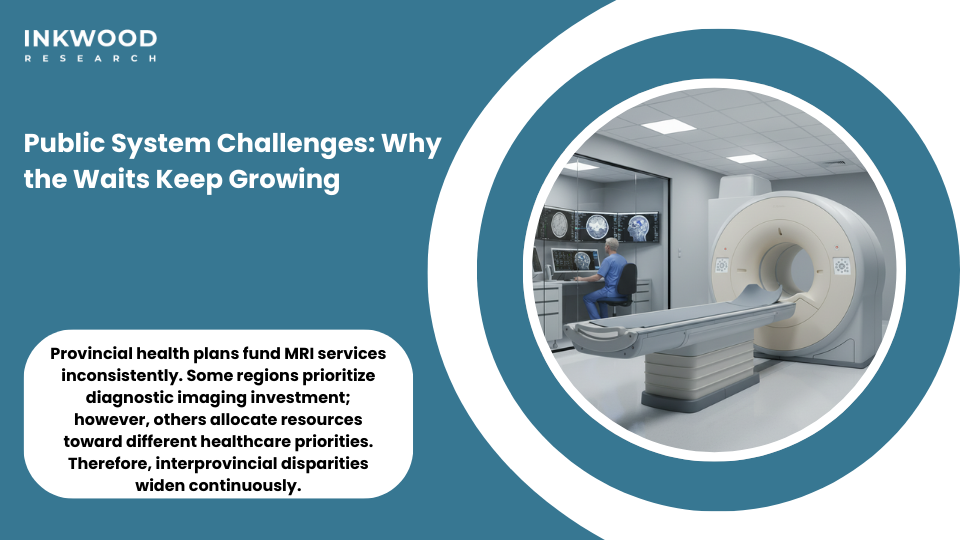
Provincial health plans fund MRI services inconsistently. Some regions prioritize diagnostic imaging investment; however, others allocate resources toward different healthcare priorities. Therefore, interprovincial disparities widen continuously.
Workforce Limitations
Even where equipment exists, workforce shortages limit utilization. Radiologists, MRI technologists, and support staff remain in short supply. Additionally, training new professionals requires years, while demand continues to escalate rapidly.
Rural areas suffer particularly acute workforce challenges, with specialists concentrating in urban centers predominantly. Consequently, rural facilities operate below potential capacity as recruitment incentives prove insufficient currently.
Triaging Complexities
Research on MRI wait list management reveals concerning inconsistencies. While 96% of facilities employ some triaging method, only 42% maintain documented guidelines. Moreover, no centers implement quality assurance for prioritization decisions. Subsequently, wait time management remains highly variable.
Priority categories vary widely between facilities. Urgent cases receive faster access generally. However, definitions of “urgent” differ substantially. Additionally, semi-urgent and routine cases face extremely long waits. Therefore, patients with serious but non-emergency conditions suffer the most.
Funding and Policy Constraints
Government healthcare budgets face competing pressures constantly, as MRI equipment represents a significant capital investment. Furthermore, operational costs continue to rise annually. Meanwhile, other healthcare needs demand resources simultaneously.
Political considerations further influence funding decisions, inevitably. Short-term budget cycles discourage long-term infrastructure planning. Additionally, public perception focuses on immediate service provision, and subsequently, preventive diagnostic capacity receives insufficient priority.
Private MRI Landscape: Speed Comes at a Price
Rapid Access Reality
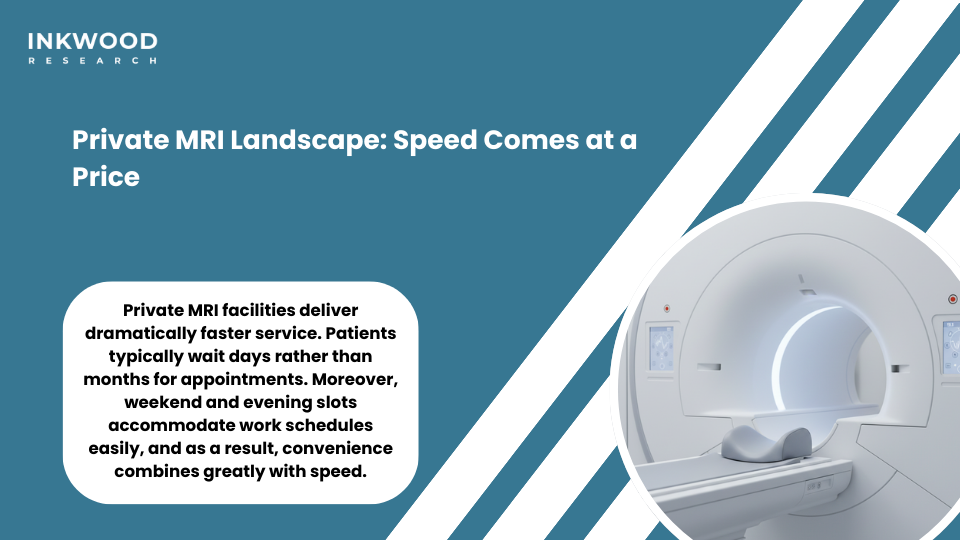
Private MRI facilities deliver dramatically faster service. Patients typically wait days rather than months for appointments. Moreover, weekend and evening slots accommodate work schedules easily, and as a result, convenience combines greatly with speed.
These facilities operate outside provincial health insurance systems, and consequently, patients pay entirely out-of-pocket for services. However, speed justifies costs for many Canadians. Therefore, private clinics proliferate across major metropolitan areas.
Pricing Structures
MRI scan costs vary by body region and complexity. Basic scans typically cost $800-$1,200 at private facilities. Meanwhile, comprehensive examinations reach $2,000-$3,000 or higher. Additionally, contrast-enhanced studies incur extra charges.
Payment must occur up front, generally. Private clinics accept credit cards, debit cards, or cash. Furthermore, some extended health insurance plans provide partial reimbursement. However, coverage varies dramatically between policies.
Quality and Accreditation
Private clinics typically maintain high quality standards, with equipment that matches or exceeds specifications found in public facilities and staff credentials that strictly meet regulatory requirements.
Further, accreditation frameworks, oversight by provincial health authorities, and professional colleges ensure consistent service quality, and since many radiologists practice in both public and private sectors, clinical quality differences between the two remain minimal.
Capacity Utilization
Research comparing public and private facilities reveals interesting patterns. Private centers operate fewer hours than public facilities. However, they maintain shorter wait times consistently, suggesting unused capacity at private clinics.
Volume at private facilities remains relatively low. The majority of MRI examinations occur in public settings. Nevertheless, private clinics serve important niche markets. Specifically, they accommodate patients willing and able to pay.
Provincial Variations: A Tale of Stark Differences
Prince Edward Island: The Longest Waits
Prince Edward Island faces Canada’s most severe challenges. Recent CBC reporting documents shocking statistics. Average routine MRI wait times reached 524 days between July and September 2024. This represents 75 weeks of waiting.
Recently, one in ten Islanders waited more than two years for an MRI, with current referrals facing expected wait times of around 24 months, far exceeding Health P.E.I.’s 12-week target. The province operates only a single MRI machine at Queen Elizabeth Hospital in Charlottetown, resulting in severely constrained capacity, as P.E.I. conducts just 33 MRI scans per 1,000 population compared with the national average of 55.6.
Ontario: Moderate Waits
Ontario performs better than some provinces, with median MRI wait times of about 12.0 weeks, supported by sustained government investment in capacity expansion. The province has committed $125 million to add 50 new MRI machines across 43 hospitals and launch four new community surgical and diagnostic centers, enabling an additional 20,000 procedures annually and supporting a gradual reduction in wait times.
Regional Success Stories
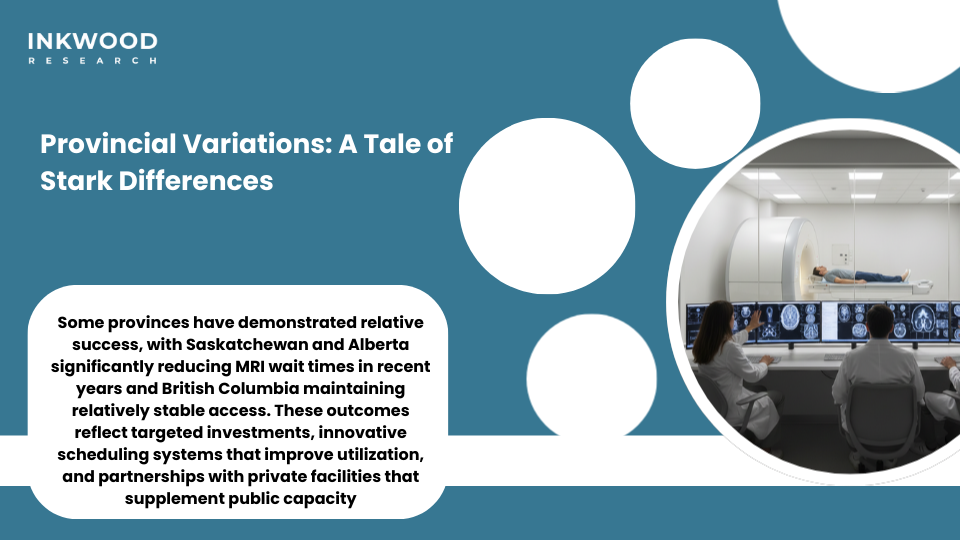
Some provinces have demonstrated relative success, with Saskatchewan and Alberta significantly reducing MRI wait times in recent years and British Columbia maintaining relatively stable access. These outcomes reflect targeted investments, innovative scheduling systems that improve utilization, and partnerships with private facilities that supplement public capacity, making these approaches worth closer study.
The True Cost Analysis: Beyond the Price
Direct Financial Costs
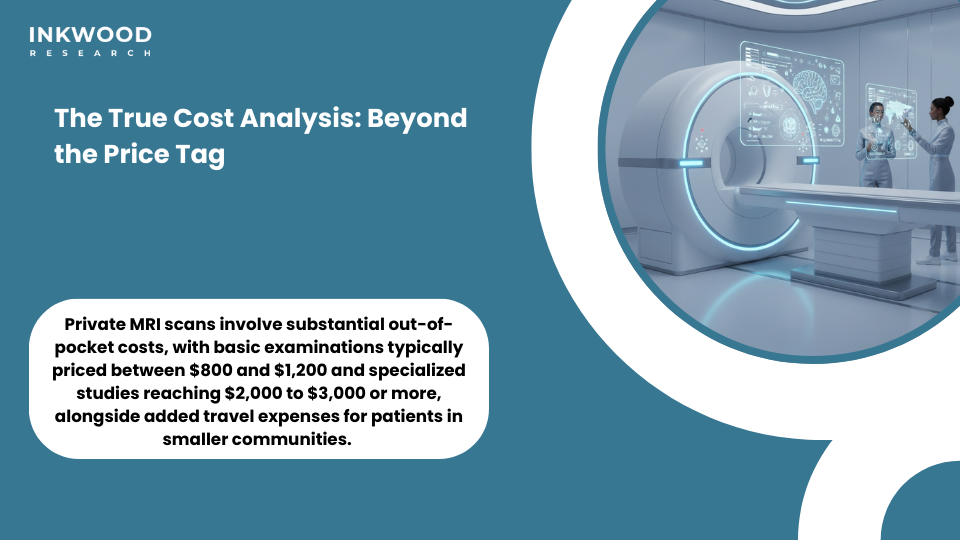
Private MRI scans involve substantial out-of-pocket costs, with basic examinations typically priced between $800 and $1,200 and specialized studies reaching $2,000 to $3,000 or more, alongside added travel expenses for patients in smaller communities.
While public system scans appear free at the point of care, they are ultimately tax-funded, and long wait times create indirect economic costs, meaning the true financial impact requires a more comprehensive assessment.
Opportunity Costs
Waiting months for a diagnosis carries substantial costs. Patients unable to work lose income during delays. Additionally, disease progression during waits worsens outcomes, while on the other hand, anxiety and uncertainty reduce quality of life.
The Fraser Institute estimates significant economic impacts, with the cost per waiting patient reaching approximately $3,364 in 2024. This assumes only normal working hours represent “lost” time. However, considering all waking hours, costs reach $10,266 per patient.
Health Outcome Implications
Delayed diagnosis affects treatment effectiveness fundamentally. While early intervention improves outcomes for most conditions, delayed treatment allows disease progression. Subsequently, long-term health impacts worsen significantly.
Cancer detection represents a critical example. Timely MRI identifies tumors at earlier, more treatable stages. However, months-long delays allow cancers to advance, and as a result, survival rates correlate with diagnostic speed.
Equity Considerations
Private MRI access effectively creates a two-tier healthcare system, as wealthier Canadians can bypass public queues by paying. However, lower-income patients continue to endure lengthy waits, which fundamentally contradicts universal healthcare principles.
Meanwhile, geographic disparities compound these equity concerns, since urban residents can more easily access private clinics. On the other hand, rural patients face limited options and higher travel costs, causing multiple barriers to intersect.
Major MRI Manufacturers: Technology Driving Both Sectors
Market Leadership: Siemens and GE
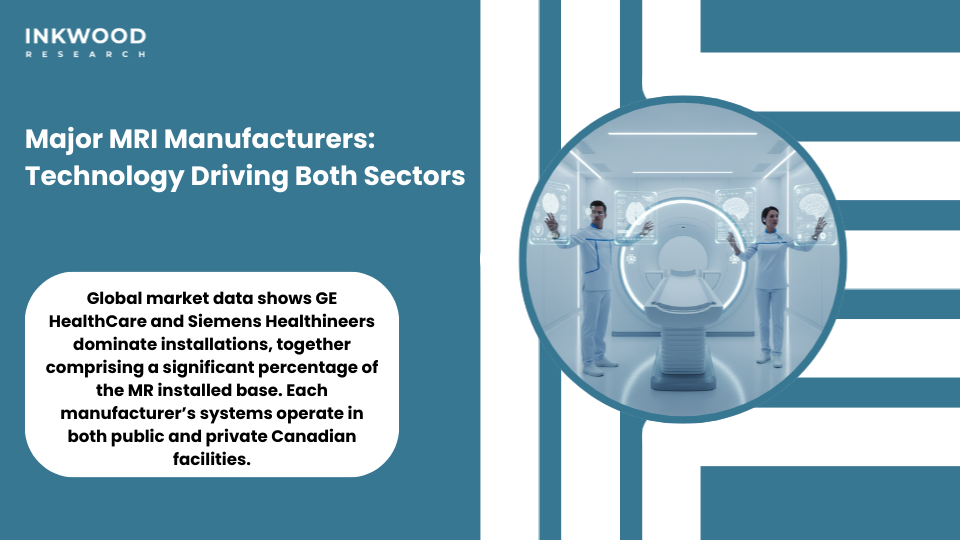
Global market data shows GE HealthCare and Siemens Healthineers dominate installations, together comprising a significant percentage of the MR installed base. Each manufacturer’s systems operate in both public and private Canadian facilities.
Siemens offers comprehensive MRI portfolios, from entry-level to premium systems; their range serves diverse needs. Moreover, service networks extend nationwide and thus, maintenance and support remain accessible.
GE Healthcare maintains a strong Canadian presence with its systems delivering reliable performance consistently. Additionally, parts availability ensures minimal downtime. Furthermore, while engineers receive extensive training, subsequently, operational efficiency stays high.
Philips: Innovation Leader
Philips holds a notable share of the global MR installed base. Moreover, its BlueSeal technology is reshaping MRI economics by using just seven liters of helium compared with 1,500 liters or more in traditional magnets.
As a result, Canadian facilities benefit from lower operating costs, no need for helium refills over the magnet’s lifespan. In addition, it provides improved environmental sustainability, significantly reducing the total cost of ownership.
Canon and Fujifilm: Growing Competitors
Canon Medical Systems and Fujifilm manufacturers target specific market segments strategically. Moreover, competitive pricing attracts cost-conscious buyers, but service network density remains less comprehensive.
Canadian facilities consider multiple factors when selecting equipment. Price represents one consideration among many. Additionally, service quality and uptime matter critically, with technological capabilities influencing decisions substantially.
Emerging Players
United Imaging challenges established manufacturers increasingly. Their competitive pricing appeals to budget-constrained facilities. While the company’s technological capabilities advance rapidly, Canadian market penetration remains limited currently.
Innovation continues across the industry. Artificial intelligence integration accelerates imaging workflows. Furthermore, portable MRI systems reimagine accessibility, and as a result, technology evolution promises continued improvement.
Innovation and Solutions: Bridging the Public-Private Divide
Public-Private Partnerships
Some provinces explore hybrid models successfully with public-private partnerships, leveraging private sector efficiency. Meanwhile, maintain universal access principles. Subsequently, wait times decrease without creating complete two-tier systems.
These arrangements vary in structure. Some involve governments purchasing capacity at private facilities, and others create joint ventures between sectors. Additionally, innovative contracts align incentives effectively. Therefore, multiple approaches merit consideration.
Extended Operating Hours
Maximizing utilization of existing MRI equipment is a clear low-hanging opportunity, as many public units operate for limited hours. Besides, extending schedules into evenings and weekends can significantly increase capacity with minimal capital investment.
Although workforce constraints and premium wages for extended shifts pose challenges, the resulting operational costs remain far lower than those associated with purchasing new equipment.
AI and Workflow Optimization
Artificial intelligence promises significant efficiency gains. AI-powered reconstruction reduces scan times substantially. Moreover, automated image analysis accelerates interpretation, and as a result, more patients receive scans daily.
Major manufacturers like Philips and Siemens lead AI integration efforts. Their SmartSpeed and GO technologies demonstrate clear benefits. Additionally, Canadian facilities adopt these innovations increasingly, with technology contributing to capacity expansion.
Portable and Point-of-Care MRI
Hyperfine has introduced a revolutionary bedside MRI technology designed for use in emergency departments and intensive care units, where portability and rapid access are critical.
While image quality differs from high-field systems, Canadian hospitals, particularly in rural settings, are actively evaluating these lower-cost solutions. This is primarily because point-of-care imaging reduces patient transport needs and improves both safety and convenience.
Telemedicine Integration
Remote image interpretation effectively expands radiologist capacity by allowing specialists to review scans from any location. Meanwhile, artificial intelligence supports initial screening and frees radiologists’ time for complex cases.
This model is especially valuable for addressing workforce shortages, enabling rural facilities to access urban expertise. Further, it also supports around-the-clock interpretation and significantly reduces result turnaround times.
Key Takeaways
- Canada’s magnetic resonance imaging (MRI) systems face unprecedented access challenges with 16.2-week median waits in 2024.
- Moreover, the Canadian magnetic resonance imaging (MRI) systems market will grow to US$497.58 million by 2034 at a 6.63% CAGR.
- Private MRI facilities offer rapid access at $800-$3,000 per scan, creating ethical dilemmas. Additionally, provincial variations demonstrate waits from 12 weeks in Ontario to 52 weeks in Prince Edward Island.
- Economic costs of waiting reach $3,364-$10,266 per patient annually. Furthermore, major manufacturers like Siemens, GE Healthcare, and Philips dominate equipment markets.
- Innovative solutions, including public-private partnerships, AI integration, and extended hours, show promise. Subsequently, balancing universal access with timely diagnostics remains Canada’s critical healthcare challenge.
Conclusion:
The debate over public versus private MRI in Canada transcends simple cost-benefit analysis. Fundamental healthcare values collide with practical realities. Moreover, solutions require nuanced approaches respecting both equity and efficiency.
Patients facing lengthy waits confront impossible choices. Should they endure potentially harmful delays? Alternatively, should they pay thousands for immediate access? These decisions burden families financially and emotionally.
The Canada magnetic resonance imaging (MRI) systems market demonstrates strong growth potential. However, investment must prioritize accessibility improvements. Additionally, innovative partnerships between public and private sectors offer promise. Furthermore, technological advances provide tools for efficiency gains.
Provincial governments must act decisively. Capital investment in equipment and workforce development remains essential. Moreover, policy frameworks enabling public-private collaboration merit exploration. Subsequently, Canadian healthcare can preserve universal principles while improving access.
Struggling with diagnostic imaging capacity planning in your Canadian healthcare facility?
Contact Inkwood Research today for comprehensive market analysis and strategic recommendations. Our team delivers actionable insights that help healthcare leaders navigate complex public-private dynamics and optimize imaging investments.
Frequently Asked Questions
How much does a private MRI cost in Canada compared to public options?
Private MRI scans cost $800-$3,000 depending on complexity and body region examined. Public system scans are free at the point of service, but median wait times reach 16.2 weeks nationally. Therefore, patients trade money for time essentially.
Can Canadians claim private MRI costs on health insurance?
Some extended health insurance plans provide partial reimbursement for private MRI costs. However, coverage varies dramatically between policies. Provincial health insurance does not reimburse private diagnostic imaging expenses. Therefore, patients should verify insurance details before paying.
Which Canadian provinces have the shortest MRI wait times?
Ontario averages 12-week waits currently, among the shortest nationally. Saskatchewan and Alberta have also reduced wait times significantly through targeted investments. Conversely, Prince Edward Island faces 52-week median waits. Subsequently, interprovincial variations remain substantial.