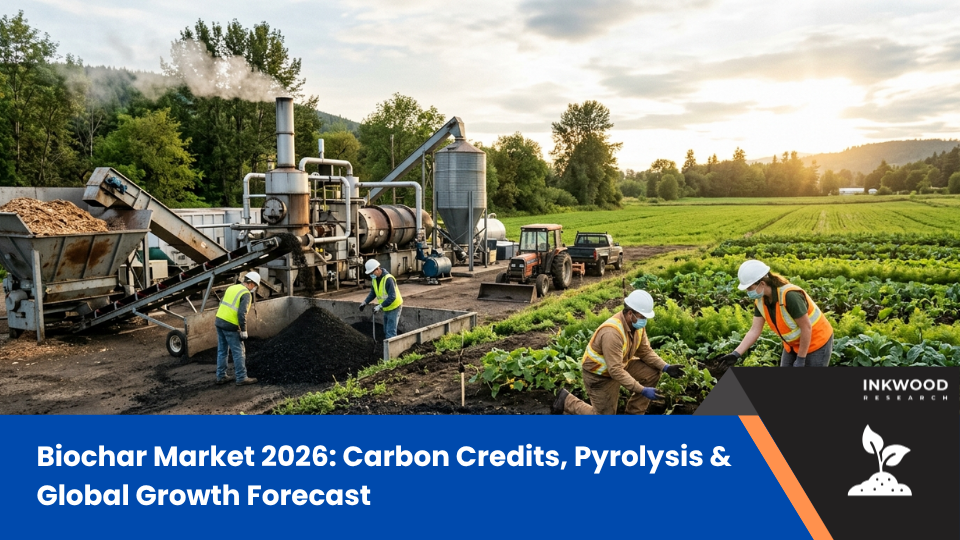
Biochar Market Size & Growth Projections
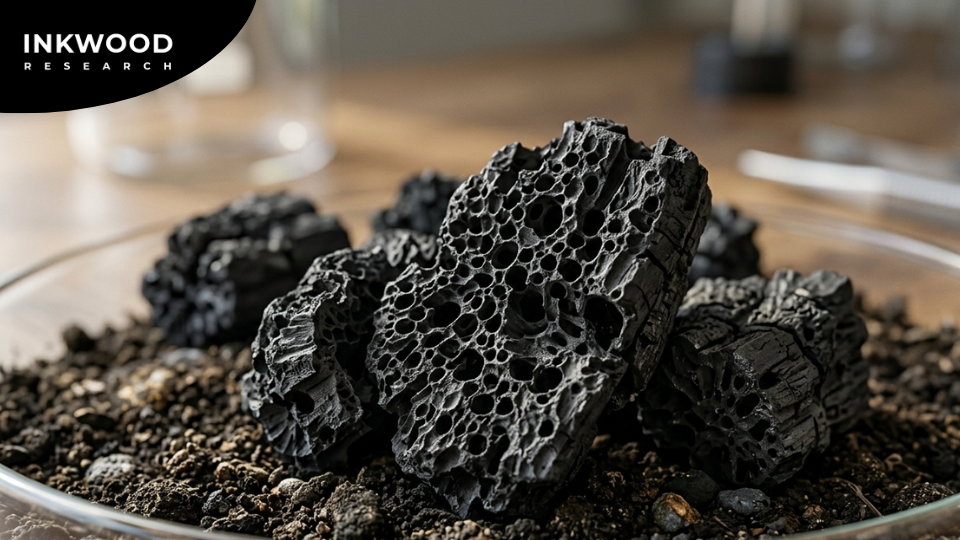
The biochar market demonstrates strong momentum across all major geographies, underpinned by accelerating biochar demand and supply dynamics.
Our analysis reveals the following regional biochar market growth forecasts:
- North America Biochar Market: US$388.38M (2026) → US$977.90M (2034) | CAGR: 12.24%
- Asia-Pacific Biochar Market: US$164.98M (2026) → US$572.59M (2034) | CAGR: 16.83%
- Europe Biochar Market: US$155.81M (2026) → US$399.10M (2034) | CAGR: 12.48%
- United States Biochar Market: US$326.74M (2026) → US$810.88M (2034) | CAGR: 12.03%
- China Biochar Market: US$73.05M (2026) → US$241.98M (2034) | CAGR: 16.15%
- India Biochar Market: US$27.42M (2026) → US$106.05M (2034) | CAGR: 18.42%
- Germany Biochar Market: US$33.91M (2026) → US$82.81M (2034) | CAGR: 11.81%
- Kenya Biochar Market: US$10.99M (2026) → US$30.94M (2034) | CAGR: 13.81%
These biochar market growth rate CAGR figures reflect a decisive global shift. Consequently, biochar investment opportunities are expanding rapidly across agriculture, construction, energy, and water treatment. The India biochar market, at 18.42% CAGR, represents the fastest-growing country market globally, driven by government agricultural initiatives and a biochar-in-steel task force established in March 2024.
Pyrolysis Phases & Thermal Decomposition | Biochar Market
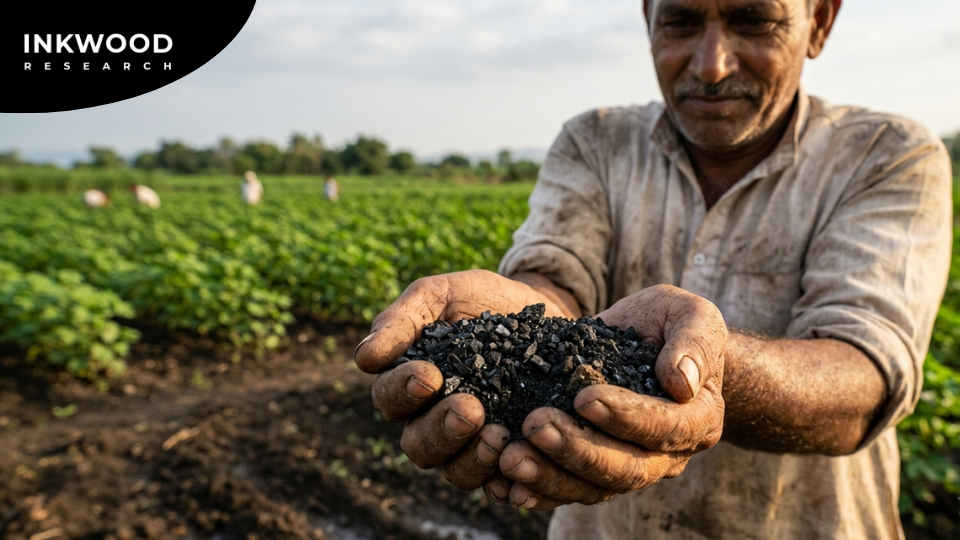
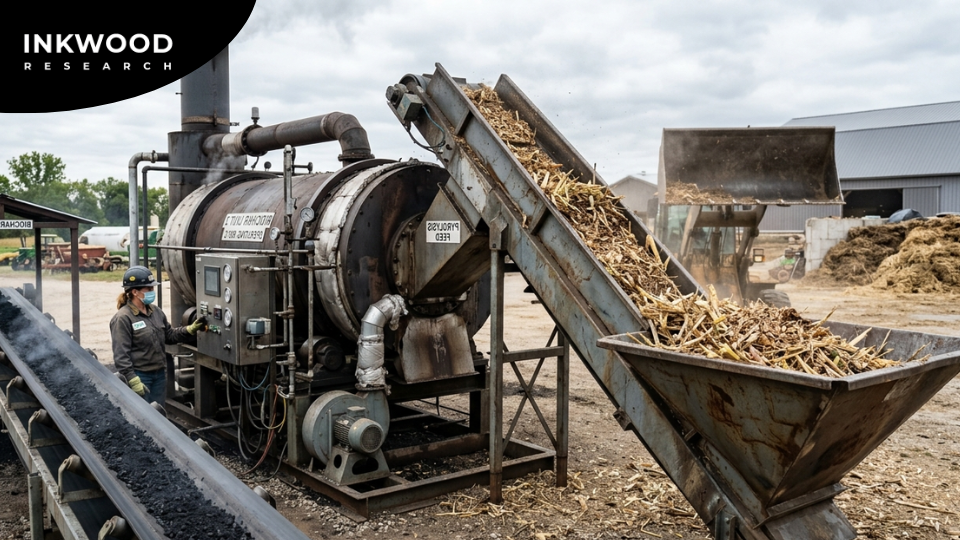
Pyrolysis, a thermal decomposition process defined by controlled heat application within specific temperature ranges, is foundational to biochar production technology. This process is widely adopted in Europe (Germany, Sweden, the Netherlands), the United States, Australia, and across Southeast Asia.
The primary mechanism initiates thermal decomposition, producing benzene rings, solid char, and releasing volatile compounds critical for biochar formation. Furthermore, the subsequent secondary mechanism encompasses cracking and recombination, shaping the molecular composition of the final by-products. Personalized biochar outcomes are achieved by fine-tuning temperatures, involving gradual heating below 450°C, intermediate heating, and high-temperature pyrolysis at 800°C.
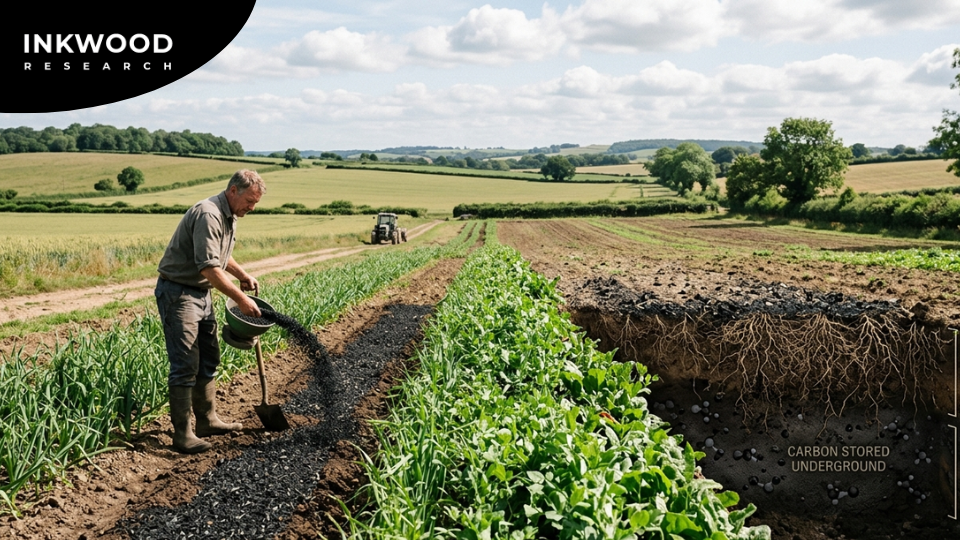
Moreover, pyrolysis significantly enhances soil health by improving nutrient retention and water-holding capacity. It also fosters beneficial microbial activity, offering a sustainable solution for resilient biochar soil amendment in agriculture. These carbon sequestration biochar benefits make the pyrolysis process central to the global biochar carbon removal market.
Operating Conditions & Biochar Production through Pyrolysis
Biochar production through pyrolysis involves heating biomass in the absence of oxygen, converting it into a stable, carbon-rich material. Operating conditions, including temperature, residence time, and heating rate, significantly influence the quality and characteristics of the produced biochar. Subsequently, these parameters determine its efficacy across biochar agriculture applications, water treatment, and industrial use cases.
- Slow Pyrolysis
Slow pyrolysis, also known as conventional pyrolysis, emerged in the early 1900s. This biomass-to-biochar conversion method transforms wood into methanol, ethanol, acetic acid, and coal through a 24-hour industrial process. Operating above 400°C with adjustable heating rates, charcoal systems gradually heat organic matter in an oxygen-deprived setting.
Furthermore, temperatures ranging from 400 to 650°C and residence times of 5 to 30 minutes to several days foster the cracking and recombination of volatile organic compounds. This slow pyrolysis vs fast pyrolysis biochar approach prioritizes high-quality char production while minimizing liquid and gaseous by-products.
Institutions like Cornell University in the United States are exploring slow pyrolysis for biochar applications, emphasizing agriculture and environmental benefits.
- Intermediate Pyrolysis
Intermediate pyrolysis operates at moderate temperatures, typically between 450–600°C. Balancing thermal decomposition, it efficiently produces both char and liquid bio-oil. Furthermore, its versatile biochar feedstock types compatibility positions this temperature-regulated method for diverse industrial applications and strategic commercial scale-up.
- Fast Pyrolysis
Fast pyrolysis operates at 600–650°C with rapid heating, efficiently decomposing organic matter into vapors and aerosols. This scalable and economically feasible biochar production technology uses diverse feedstocks for industrial fuel production. Advantages include easy storage, transportation flexibility, and compatibility across multiple biochar reactor systems.
Institutions like Iowa State University and initiatives such as the US Biochar Initiative are actively exploring fast pyrolysis for biochar and bio-oil production. Additionally, R&D consortia in Japan and Germany are piloting microwave-assisted pyrolysis, promising higher energy efficiency and reduced residence times.
- Hydrothermal Carbonization
Hydrothermal carbonization (HTC) transforms wet biomass into hydrochar through an environmentally controlled process at elevated temperatures (180–250°C) and high pressure in water. HTC is particularly effective for wet biochar feedstock types such as sewage sludge and agricultural residues. The carbon-rich material produced finds applications in soil improvement, energy production, and as a precursor for activated carbon, reinforcing biochar’s relevance as a biochar waste management solution.
Biochar Carbon Credits & the Voluntary Carbon Market
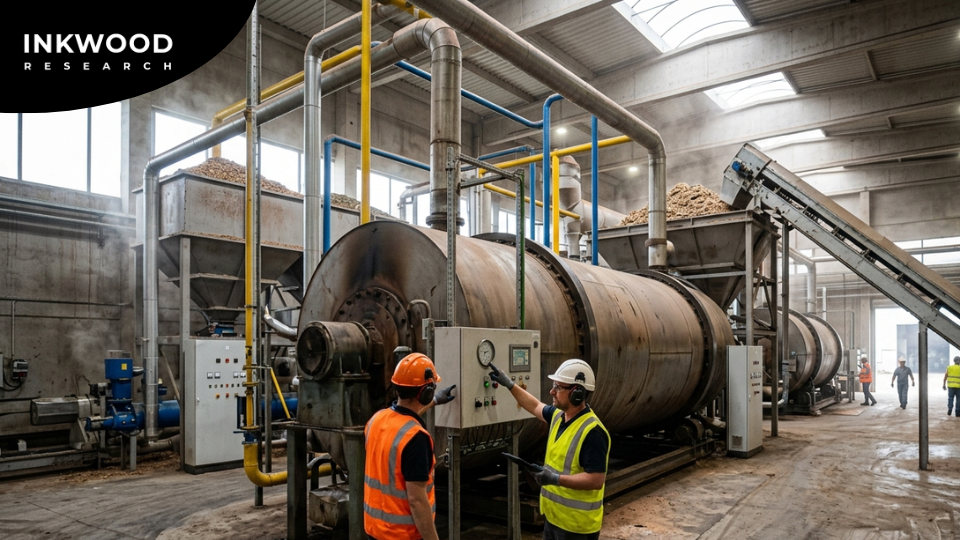
The voluntary carbon market biochar segment is undergoing rapid maturation. Based on our analysis, biochar carbon removal credits have stabilized at approximately $150 per tonne CO₂e, commanding significant premiums over conventional offsets. Biochar currently accounts for approximately 90% of all delivered carbon removal (CDR) volume globally, a dominant share reflecting its scalability and proven permanence.
Furthermore, biochar retains 70–80% of its carbon content when applied to soil, making it one of the most durable negative emissions technologies. This characteristic directly fuels demand from corporate buyers seeking high-integrity biochar ESG investments aligned with net-zero commitments.
Key Biochar Carbon Credit Developments 2025–2026
- The biochar carbon removal market witnessed landmark corporate commitments in 2025 and 2026. In January 2025, Google partnered with Indian startup Varaha to purchase 100,000 tonnes of biochar carbon credits by 2030, marking the largest single biochar transaction in history at that time. This deal directly validates the scalability of biochar carbon sequestration market projects in emerging economies.
- Subsequently, in May 2025, Microsoft executed a 1.24 million-tonne biochar carbon removal offtake agreement with Exomad Green, setting a new record for corporate biochar investment. This agreement contributed to a record-breaking 1.6 million tonnes contracted in H1 2025 alone across the biochar CDR segment.
- Also in January 2025, UK-based CapChar launched a public consultation for its Biochar Carbon Code, introducing integrated end-to-end standards combining pyrolysis technology and digital MRV software, specifically designed for UK agriculture and diverse feedstock compatibility.
- Furthermore, the Carbonity joint venture, formed by Airex Energy, Groupe Rémabec, and SUEZ, achieved Puro.earth certification and began delivering credits to Microsoft in 2024. At full capacity, the facility produces 30,000 tonnes of premium biochar annually, permanently removing 75,000 tonnes of CO₂ from the atmosphere each year.
- Additionally, in February 2026, Varaha ClimateAg launched its Industrial Partners Program (VIPP), enabling biomass processing plants worldwide to access sustainable feedstock networks. These milestones collectively signal a maturing biochar competitive landscape where carbon credit revenue potential rivals traditional agricultural income streams.
Biochar Market Trends & Industry Opportunities
- Biochar Soil Amendment & Agriculture Applications
Agriculture dominates the global biochar market segmentation, accounting for over 58% of total demand in 2025. Biochar soil amendment applications drive this leadership, as biochar improves soil water retention capacity by nearly 30% and enhances nutrient retention efficiency by over 25%. Consequently, adoption in organic farming systems has increased by approximately 40%, as restrictions on synthetic soil amendments push growers toward biochar-based alternatives.
Moreover, biochar livestock feed additive applications represent approximately 12% of total biochar demand. These applications demonstrably reduce ammonia emissions in animal farming by over 35%, offering measurable agricultural productivity gains. In Kenya, projects supported by the World Agroforestry Centre (ICRAF) demonstrate yield improvements of 20–40% when biochar is integrated with organic compost, highlighting strong potential in the African biochar market.
- Biochar Water Treatment & Industrial Expansion
Beyond agriculture, biochar water treatment applications demonstrate over 60% pollutant removal efficiency for heavy metals and organic contaminants in filtration systems. Additionally, biochar construction materials market applications are gaining traction within green building standards, supporting biochar’s inclusion in environmental certification frameworks.
- Government Policies & Biochar ESG Investments
Government support through the U.S. Department of Agriculture (USDA) is actively catalyzing biochar market growth by integrating it into established conservation programs. The Natural Resources Conservation Service (NRCS) maintains Conservation Practice Standard Code 336 (Soil Carbon Amendment), formerly known as the interim Code 808. This standard explicitly recognizes biochar, produced by heating biomass to temperatures exceeding 350°C under controlled, oxygen-limited conditions (pyrolysis or gasification), as an eligible carbon-based amendment when it meets quality criteria, such as those outlined by the International Biochar Initiative (IBI) or equivalent laboratory testing.
The standard enables eligible agricultural producers, ranchers, and forest landowners to receive financial assistance through the Environmental Quality Incentives Program (EQIP) and Conservation Stewardship Program (CSP) for applying verified biochar (or biochar blended with other amendments) to address resource concerns, including increasing soil organic carbon, improving soil aggregate stability, enhancing habitat for soil organisms, and sequestering carbon. Reimbursement is provided on a cost-share basis (typically up to 75%, or 90% for historically underserved producers), with payment rates varying by state, component (e.g., per cubic yard for 100% biochar applications), and annual EQIP payment schedules.
Regional Biochar Market Outlook
North America Biochar Market
North America leads the global biochar market share by region in 2025, underpinned by advanced regulatory frameworks and strong commercial infrastructure. The United States biochar market is the largest within the region, driven by federal renewable energy mandates, carbon sequestration programs, and expanding biochar carbon credit revenue potential. Annual US domestic biochar production, according to the US Biochar Initiative, ranges from 35,000 to 70,000 tonnes annually. Additionally, private equity interest in biochar companies and production platforms has intensified significantly across North America.
Asia-Pacific Biochar Market
The Asia-Pacific biochar market registers the fastest regional CAGR of 16.83%, positioning it as the premier destination for biochar investment opportunities over the forecast period. China leads regional production capacity. Meanwhile, India’s biochar market presents exceptional growth, advancing at an 18.42% CAGR, supported by government biochar-in-steel initiatives and expanding biochar agriculture applications across rural farming communities. Furthermore, telemedicine-like digital agriculture platforms are beginning to incorporate biochar management tools, accelerating adoption in precision farming contexts.
Europe Biochar Market
The Europe biochar industry advances at a steady 12.48% CAGR, underpinned by the European Biochar Certificate (EBC) regulating direct soil application across Austria, Switzerland, and multiple EU member states. Moreover, R&D consortia in Germany and Sweden are piloting microwave-assisted pyrolysis and next-generation biochar reactor systems, narrowing cost gaps in biochar production cost analysis. The Germany biochar market, valued at US$33.91 million in 2026, plays a central role in European manufacturing leadership.
Africa & Emerging Markets
The biochar market in Africa, led by Kenya, is projected to grow from US$10.99 million in 2026 to US$30.94 million by 2034 at a CAGR of 13.81%. Furthermore, the Latin America biochar growth narrative is gaining traction through OFI’s cocoa biochar project in Ghana, converting cocoa pod husks into biochar while improving soil health and supporting 2050 net-zero commitments. These regions represent meaningful long-tail opportunities within the global biochar market size expansion story.
Competitive Landscape: Biochar Companies & Manufacturers
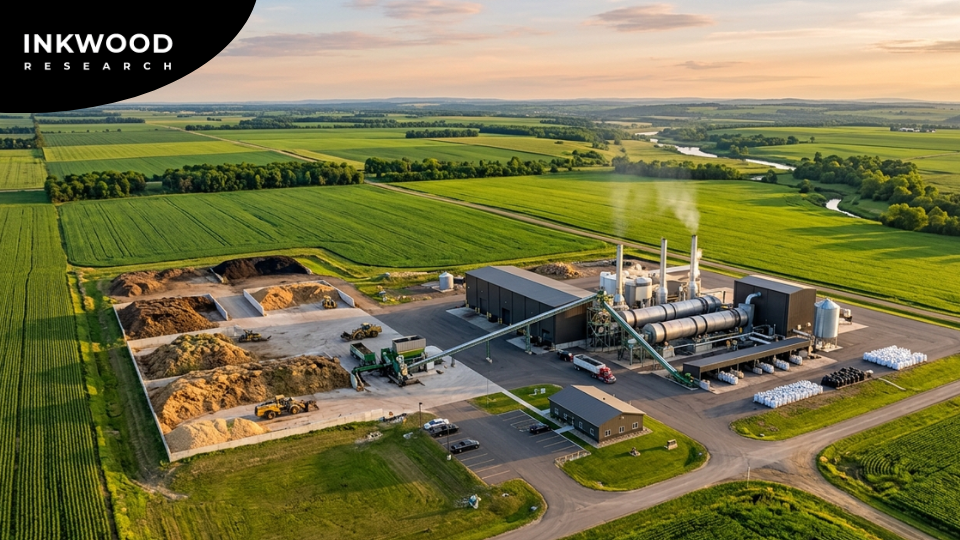
The biochar competitive landscape analysis reveals a dynamic ecosystem of producers, equipment manufacturers, and technology developers. Based on our research, Tier 1 biochar manufacturers, including Airex Energy, Pyreg GmbH, Phoenix Energy, and Oregon Biochar Solutions, command 55–60% of the Asia-Pacific market share while maintaining strong influence across North America and Europe.
Pyreg GmbH (Germany) leads through proprietary pyrolysis technology, operating over 50 commercial installations globally and pioneering carbon credit monetization pathways for clients. Airex Energy advances its patented CarbonFX™ torrefaction technology across Canada and international markets, targeting over one million tonnes of voluntary carbon market biochar credits by 2035.
Additionally, Carbon Gold Ltd., Biochar Now LLC, Carbonis GmbH & Co. KG, and Pacific Biochar compete through differentiated feedstock specialization and integrated carbon market access strategies. Smaller biochar companies are increasingly leveraging prepaid carbon credit revenue to fund capacity expansion, a model particularly effective in regions with clear biochar carbon sequestration market certification pathways.
Furthermore, 62% of high-quality biochar production capacity for 2025 was already locked into long-term offtake contracts, signaling intensifying supply constraints against growing demand. This imbalance underscores strong biochar investment opportunities for new entrants with scalable biochar production technology.
Key Takeaways
- The global biochar market advances from US$838.22 million in 2026 to US$2,285.78 million by 2034 at a CAGR of 13.36%, driven by agriculture, carbon credits, and industrial expansion across the biochar industry analysis.
- Biochar carbon credits command approximately $150/tCO₂e in the voluntary market. Landmark deals by Google (Varaha, 100K tonnes) and Microsoft (Exomad Green, 1.24M tonnes) validate the biochar carbon removal market at scale.
- The Asia-Pacific biochar market leads growth at 16.83% CAGR, while the India biochar market registers the fastest country-level expansion at 18.42% CAGR.
- Slow vs. fast pyrolysis biochar and hydrothermal carbonization continue advancing biochar production cost analysis and feedstock flexibility, enabling new biochar market segmentation across industrial applications.
- Biochar soil amendment, biochar water treatment applications, biochar livestock feed additive, and biochar construction materials market collectively broaden the global biochar industry analysis well beyond traditional agricultural use.
Conclusion
In conclusion, the biochar market stands at a decisive inflection point. Converging forces, from biochar carbon removal market growth and biochar ESG investments to precision biochar production technology and expanding government policies, position this sector for sustained long-term expansion.
Moreover, as leading biochar manufacturers scale operations globally, the intersection of climate finance and agricultural productivity creates unprecedented biochar market growth opportunities for investors, producers, and policymakers alike.
If you require personalized consultation, contact us today!
Be sure to explore our in-depth biochar market research reports or request a FREE sample tailored to your specific business needs.