Table of Contents
This analysis is brought to you by Inkwood Research, a leading market intelligence firm specializing in South Asian automotive technologies, battery performance optimization, and consumer behavior analysis across India, Bangladesh, Pakistan, and Sri Lanka. Our research team combines extensive experience analyzing tropical climate battery performance, infrastructure challenges in developing markets, government policy impacts on automotive sectors, and consumer purchasing patterns across diverse socioeconomic segments. Based on our proprietary research methodologies and strategic partnerships with Indian battery manufacturers, automotive OEMs, aftermarket distributors, and government transport agencies, we deliver actionable insights that empower consumers and businesses navigating India’s dynamic automotive battery landscape.
TLDR
Indian road conditions present unique challenges demanding specialized automotive battery selection considering extreme temperatures, diverse terrain, and varied driving patterns. Furthermore, understanding battery types, capacity ratings, and maintenance requirements helps consumers navigate complex choices across flooded, maintenance-free, and AGM technologies. Consequently, informed purchasing decisions balance initial costs against lifecycle performance while addressing India’s specific environmental and infrastructure challenges. Meanwhile, government initiatives promoting electric mobility create additional considerations for forward-looking consumers.
This guide benefits Indian vehicle owners seeking optimal battery replacement strategies, automotive technicians advising customers on battery selection, fleet managers optimizing maintenance costs, battery retailers educating consumers, automotive engineers designing vehicles for Indian conditions, and sustainability professionals evaluating green transportation solutions. Additionally, import-export businesses and battery manufacturers targeting Indian markets will discover valuable consumer insights.
Understanding Indian Road Challenges
The Infrastructure Reality
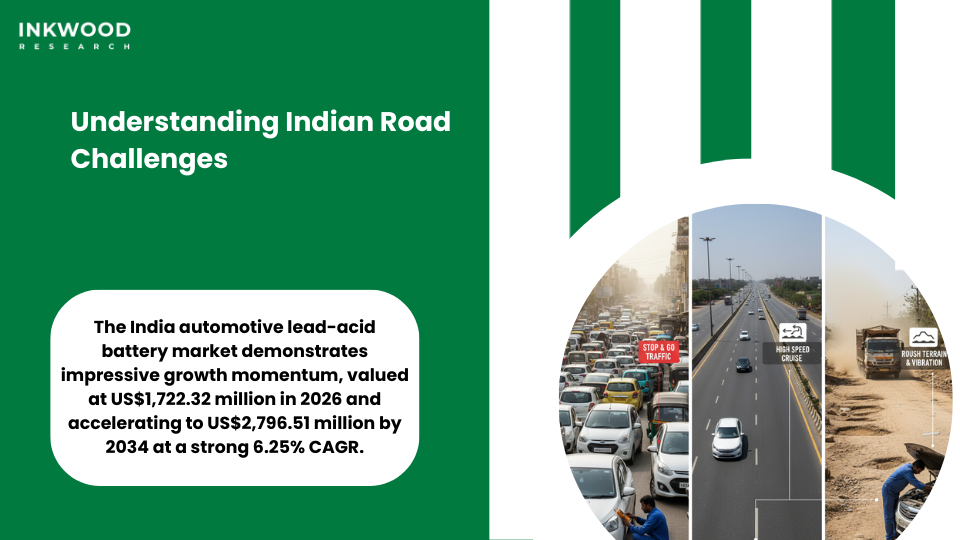
Indian road infrastructure presents extraordinary diversity, ranging from modern highways to rural village paths. This variability creates unique automotive battery demands differing significantly from developed markets with consistent road quality. Moreover, frequent stop-start driving in congested urban areas, combined with long-distance highway travel and rough rural roads, tests battery performance across multiple stress factors simultaneously.
Additionally, traffic congestion in major cities like Mumbai, Delhi, and Bangalore forces vehicles into extended idling periods where alternators struggle to maintain battery charge. These conditions particularly challenge conventional flooded lead-acid batteries designed for regular charging cycles. Subsequently, understanding your specific driving environment becomes essential for appropriate battery selection.
Market Size and Growth Potential
The India automotive lead-acid battery market demonstrates impressive growth momentum, valued at US$1,722.32 million in 2026 and accelerating to US$2,796.51 million by 2034 at a strong 6.25% CAGR. This expansion reflects India’s rapidly growing vehicle population, increasing replacement demand, and rising quality expectations among consumers navigating challenging operating conditions.
Furthermore, market dynamics reveal opportunities across passenger vehicles, commercial transportation, and two-wheeler segments. Each category requires different battery specifications addressing specific performance requirements and cost constraints. Therefore, manufacturers develop diverse product portfolios targeting segmented consumer needs across India’s vast automotive market.
Driving Pattern Variations
Indian driving patterns vary dramatically between vehicle categories and geographic regions. Two-wheeler riders in urban areas experience constant stop-start conditions during rush hour commutes, while rural users face extended low-speed operation on unpaved roads. Similarly, passenger car owners alternate between highway travel and congested city driving, creating mixed-use demands.
Commercial vehicle operators encounter the harshest conditions with heavy loads, extended operation hours, and minimal maintenance attention. These vehicles require robust battery solutions that can withstand sustained high-current demands from starting large diesel engines repeatedly. Consequently, battery selection must consider specific vehicle usage patterns rather than applying generic recommendations across diverse applications.
Battery Types Explained for Indian Conditions

Flooded Lead-Acid Batteries: The Traditional Choice
Flooded lead-acid batteries are widely recognized as the most economical option, a key reason for their dominance in India’s mass-market segments. These conventional batteries utilize a liquid electrolyte requiring periodic water topping to compensate for evaporation during operation. Although maintenance demands create inconvenience, flooded batteries deliver reliable performance at price points accessible to budget-conscious consumers.
Moreover, flooded battery designs tolerate deep discharge cycles better than some sealed alternatives, providing advantages in applications with inadequate charging infrastructure. This resilience proves valuable in rural areas where irregular electricity supply affects home charging capabilities. However, electrolyte spillage risks during rough road travel and accelerated water loss in hot climates represent notable disadvantages.
Maintenance-Free Lead-Acid Batteries: The Practical Middle Ground
Maintenance-free lead-acid batteries eliminate water-topping requirements through sealed designs, minimizing electrolyte evaporation. These batteries appeal to urban consumers who value convenience over marginal cost savings from flooded alternatives. Additionally, sealed construction reduces corrosion risks and simplifies installation in modern vehicles with limited battery compartment access.
Nevertheless, “maintenance-free” terminology sometimes misleads consumers into neglecting terminal cleaning and voltage monitoring. Furthermore, these batteries demonstrate lower tolerance for deep discharge conditions compared to flooded designs. Therefore, applications with reliable charging systems and moderate operating conditions benefit most from maintenance-free technology.
AGM Lead-Acid Batteries: Premium Performance
Absorbent Glass Mat (AGM) technology represents the premium battery segment offering superior performance characteristics, justifying higher price points. AGM batteries utilize glass fiber separators that absorb electrolyte, enabling faster charging, deeper discharge tolerance, and enhanced vibration resistance. These advantages prove particularly valuable for vehicles with start-stop systems or extensive electronic accessories.
However, AGM batteries cost 150-200% more than conventional flooded alternatives, limiting adoption to premium vehicle segments and consumers prioritizing performance over affordability. Additionally, AGM technology requires proper charging voltage regulation, preventing overcharging damage from poorly calibrated alternators common in older vehicles. Subsequently, AGM batteries suit newer vehicles with sophisticated electrical systems better than aging fleet applications.
Enhanced Flooded Batteries: Start-Stop Capable
Enhanced flooded batteries (EFB) bridge the gap between conventional flooded and premium AGM technologies. These batteries incorporate design improvements supporting basic start-stop functionality while maintaining cost advantages over AGM alternatives. EFB technology appeals to manufacturers seeking start-stop capability without full AGM cost implications.
Nevertheless, EFB availability remains limited in Indian aftermarket channels compared to established conventional and maintenance-free products. Furthermore, consumer awareness of EFB technology lags behind more familiar battery types. Therefore, EFB adoption concentrates primarily on OEM applications for vehicles equipped with start-stop systems from the factory.
Selecting Battery Capacity for Your Vehicle
Understanding Capacity Ratings
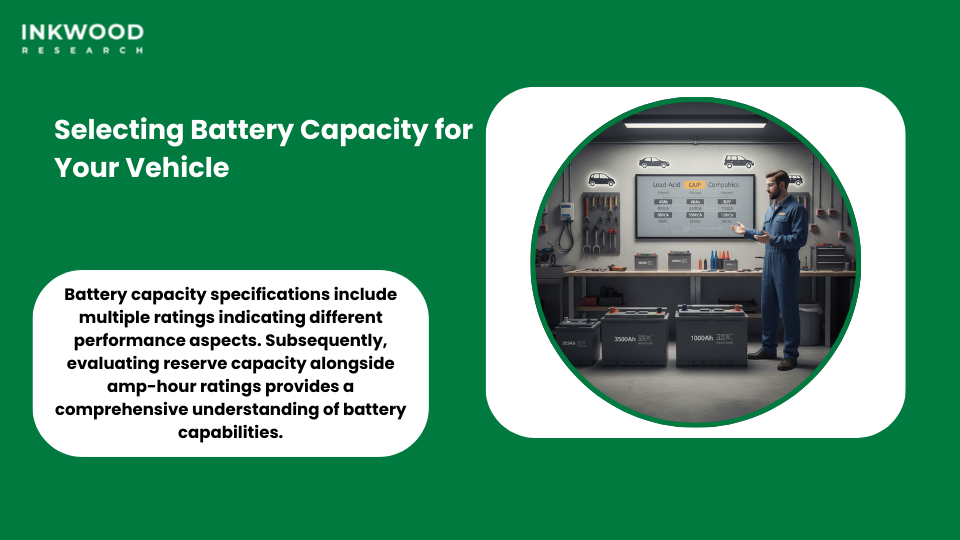
Battery capacity specifications include multiple ratings indicating different performance aspects. Amp-hour (Ah) ratings measure total energy storage capacity, determining how long batteries power accessories without engine operation. Meanwhile, Cold Cranking Amps (CCA) indicate starting power capability in cold conditions, though less relevant in tropical Indian climates than Reserve Capacity (RC) measurements.
Reserve Capacity specifies how long batteries sustain 25-amp loads before voltage drops below usable levels. This metric particularly matters for Indian conditions, where prolonged idling in traffic or accessories usage with the engine off occurs frequently. Subsequently, evaluating reserve capacity alongside amp-hour ratings provides a comprehensive understanding of battery capabilities.
Vehicle-Specific Requirements
Different vehicle types require substantially different battery specifications. Small petrol cars typically use 35-45 Ah batteries providing adequate capacity for compact four-cylinder engines with moderate electrical loads. Meanwhile, diesel vehicles demand 60-80 Ah or larger batteries delivering higher cranking current for compression ignition starting.
Commercial vehicles and SUVs often require 100+ Ah batteries supporting large displacement engines, extended accessory usage, and additional electrical systems. Furthermore, vehicles with extensive aftermarket modifications like powerful audio systems need upgraded battery capacity, preventing premature failure from electrical overload. Therefore, consulting vehicle manufacturer specifications ensures appropriate capacity selection.
Oversizing Considerations
Some consumers consider purchasing batteries with higher capacity than manufacturer specifications, seeking extended lifespan or improved performance. Although moderate oversizing provides benefits, excessive capacity creates potential disadvantages. Larger batteries may not fit properly in standard battery compartments, requiring modifications, risking damage, or improper securing.
Additionally, alternators sized for standard battery capacity might inadequately charge oversized batteries, leading to chronic undercharging and premature failure. This mismatch proves particularly problematic in urban driving with limited high-speed operation for alternator charging. Consequently, battery capacity selection should remain within manufacturer-recommended ranges unless electrical system modifications accompany battery upgrades.
Two-Wheeler Specific Considerations
Two-wheeler batteries operate under distinct conditions requiring different selection criteria. Motorcycle batteries typically range from 4-12 Ah, depending on engine displacement and electrical system complexity. These smaller batteries suffer more severely from quality variations, making brand selection critical for reliable performance.
Moreover, two-wheeler batteries encounter unique challenges from vibration exposure, irregular charging patterns, and frequent short trips, preventing complete charging cycles. Subsequently, premium maintenance-free batteries demonstrate a better value proposition for two-wheelers despite higher initial costs through extended lifespan and reduced maintenance requirements compared to conventional flooded alternatives.
Climate Considerations Across India
Temperature Extremes and Battery Performance
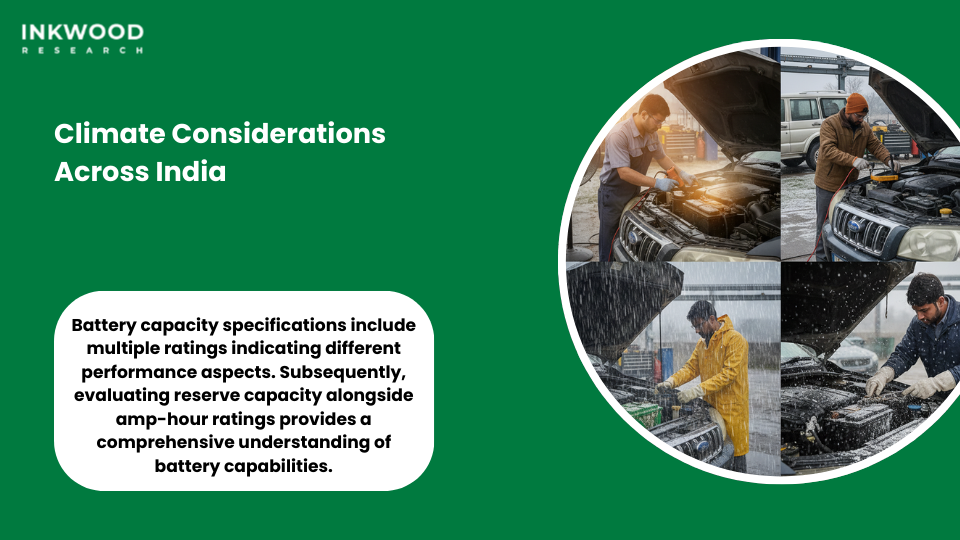
Indian climate variations dramatically affect automotive battery performance and lifespan. Summer temperatures exceeding 45°C in the northern plains accelerate chemical reactions, increasing self-discharge rates and promoting internal corrosion. Conversely, winter temperatures in northern regions, while mild compared to temperate countries, still impact cold-cranking performance for diesel vehicles.
Furthermore, high temperatures accelerate water loss in flooded batteries, necessitating more frequent maintenance. This increased evaporation proves particularly problematic in regions with irregular water quality, where improper top-up practices damage batteries through contamination. Therefore, sealed maintenance-free batteries offer practical advantages in hot, arid regions despite higher initial costs.
Monsoon Season Challenges
Monsoon conditions create unique battery stresses through humidity, water ingress, and corrosion acceleration. Although batteries themselves tolerate moisture exposure, terminal connections and mounting hardware corrode rapidly in humid environments. This corrosion increases electrical resistance, reducing effective battery performance and alternator charging efficiency.
Additionally, monsoon flooding occasionally submerges vehicles partially, exposing batteries to contaminated water that potentially enters flooded battery cells through vent caps. Subsequently, consumers in flood-prone areas benefit from sealed battery designs that minimize water ingress risks. Moreover, regular terminal cleaning during the monsoon season extends battery lifespan through reduced corrosion-related failures.
Coastal Region Special Considerations
Coastal areas combining high temperatures, humidity, and salt air present the harshest operating environments for automotive batteries. Salt-laden air accelerates terminal corrosion and attacks metal components throughout battery construction. These conditions reduce battery lifespan 20-30% compared to moderate inland climates unless preventive measures address corrosion risks.
Battery manufacturers serving coastal markets sometimes offer special corrosion-resistant variants with enhanced terminal protection and improved seal designs. Furthermore, aftermarket terminal protectors and anti-corrosion sprays provide cost-effective protection, extending battery life in aggressive environments. Therefore, coastal region consumers should prioritize corrosion prevention through proper maintenance and protective measures.
Regional Battery Selection Guidelines
Northern India requires batteries with adequate cold-cranking capability for winter diesel starting despite milder winters than temperate regions. Meanwhile, central and western regions prioritize heat tolerance and water retention capabilities, addressing extreme summer temperatures. Southern coastal areas demand corrosion resistance and humidity tolerance, preventing premature failures.
These regional variations suggest consumers should select batteries with specifications optimized for local conditions rather than generic all-India products. Battery retailers serving specific regions ideally stock appropriate variants meeting local climate demands. However, supply chain economics often result in standardized products requiring consumers to implement maintenance practices compensating for climate-related stresses.
Maintenance Requirements and Cost Management
Flooded Battery Maintenance Procedures
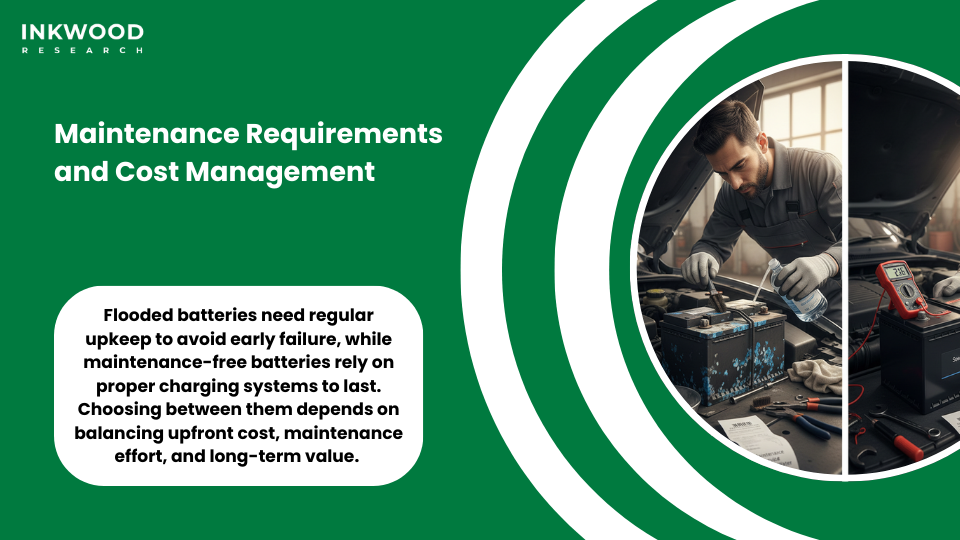
- Flooded lead-acid batteries require regular maintenance to ensure optimal performance and maximum lifespan. Monthly electrolyte level checks prevent plate exposure, causing permanent capacity loss. Distilled water additions compensate for evaporation, maintaining proper electrolyte concentration. However, many consumers use inadequate water sources, introducing contaminants that accelerate battery degradation.
- Additionally, terminal cleaning removes corrosion, maintaining proper electrical connections. Accumulated corrosion increases resistance, reducing effective charging and cranking performance. Simple maintenance using a baking soda solution and a wire brush extends battery life significantly. Nevertheless, Indian consumers often neglect these basic procedures, contributing to premature battery failures and unnecessary replacement costs.
Sealed Battery Care Requirements
- Maintenance-free batteries eliminate water-topping requirements but still benefit from regular terminal cleaning and voltage monitoring. These batteries typically include charge indicators providing basic health assessment, though indicator accuracy varies between brands. Furthermore, proper charging system operation proves critical since sealed batteries tolerate overcharging poorly compared to flooded alternatives.
- Consumers should verify charging voltage remains within the manufacturer-specified ranges, preventing overcharging damage. Many Indian vehicles, particularly older models and commercial vehicles, lack proper voltage regulation, accelerating sealed battery degradation. Subsequently, sealed battery selection requires confirming adequate charging system performance, avoiding premature failures from electrical system issues.
Cost-Lifecycle Analysis
- Total battery ownership costs encompass initial purchase price, maintenance expenses, and replacement frequency. Although flooded batteries cost 30-40% less initially, maintenance time and materials partially offset savings. Moreover, a shorter lifespan from neglected maintenance increases replacement frequency, raising long-term costs.
- Conversely, maintenance-free batteries command higher initial prices but eliminate ongoing maintenance costs and potentially deliver longer service life. This value proposition proves particularly attractive for consumers without mechanical skills or time for regular maintenance. Therefore, total cost analysis should consider individual circumstances, including maintenance capability, driving patterns, and budget constraints.
Government Initiatives Impact
Indian government programs promoting electric vehicle adoption indirectly affect conventional battery markets through consumer awareness and infrastructure development. The FAME II (Faster Adoption and Manufacturing of Electric and Hybrid Vehicles) scheme extends support for EV adoption, potentially influencing future battery technology requirements as the vehicle mix evolves.
Furthermore, the government’s emphasis on domestic battery manufacturing through Production Linked Incentive schemes aims to strengthen local supply chains, reducing import dependencies. These initiatives could improve battery availability and pricing, benefiting Indian consumers through enhanced competition and innovation. Therefore, consumers should monitor policy developments potentially affecting future battery options and costs.
Brand Selection and Quality Assessment
Leading Indian Battery Manufacturers
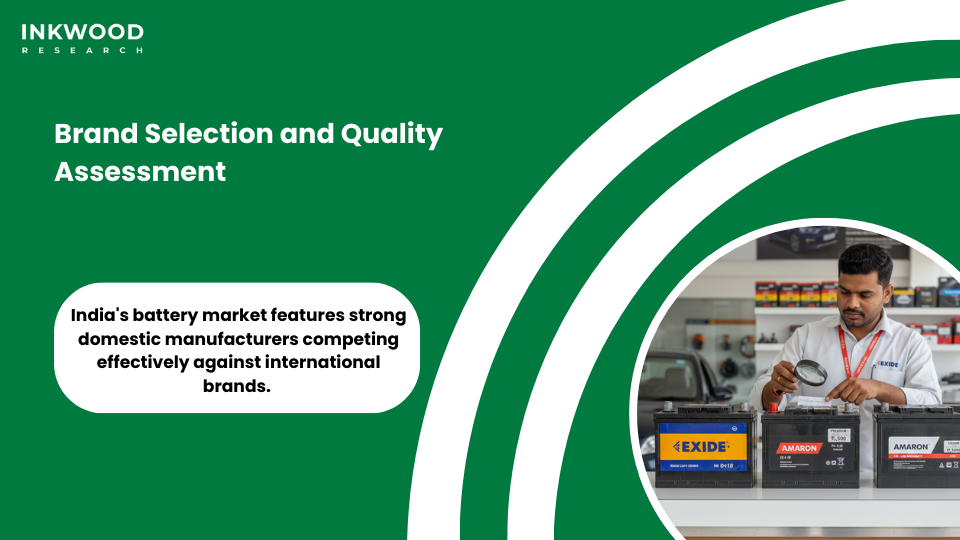
India’s battery market features strong domestic manufacturers competing effectively against international brands. Exide Industries Limited stands as India’s top lead-acid battery producer with extensive manufacturing facilities and distribution networks.
In May 2024, the company signed a Memorandum of Understanding with Hyundai Motor Company and Kia Corporation for EV battery cell development, highlighting expansion into advanced battery technologies alongside traditional lead-acid products. Similarly, Amara Raja Energy & Mobility Limited (formerly Amara Raja Batteries) maintains a significant market presence through the popular Amaron brand.
Quality Indicators and Selection Criteria
Battery quality assessment challenges Indian consumers due to counterfeit products and misleading specifications. Genuine batteries display clear manufacturing dates, enabling assessment of stock freshness. Batteries stored improperly or exceeding 6-9 months from manufacture demonstrate reduced performance and shortened lifespan regardless of brand reputation.
Furthermore, warranty terms indicate the manufacturer’s quality confidence. Premium batteries offer 36-48 month warranties while economy products provide 12-18 month coverage. However, warranty claim processes vary significantly between brands and retailers. Therefore, consumers should verify dealer reputation and claim settlement practices before purchasing, particularly for premium batteries where warranty value significantly impacts total ownership costs.
Price-Quality Tradeoffs
Indian battery markets demonstrate substantial price variations reflecting genuine quality differences alongside marketing positioning. Economy batteries cost INR 3,000-5,000 for passenger car applications, while premium brands command INR 7,000-12,000 for equivalent capacity ratings. These price differences reflect manufacturing quality, raw material grades, and warranty coverage variations.
Nevertheless, higher prices don’t guarantee proportionally better performance or longevity. Some premium-priced batteries deliver only marginal improvements over mid-range alternatives, failing to justify cost differences. Therefore, informed consumers balance brand reputation, warranty terms, and realistic performance expectations, making cost-effective selections appropriate for specific applications.
Aftermarket vs. OEM Batteries
Vehicle manufacturers typically specify particular battery brands for original equipment installations. However, aftermarket replacement batteries from alternative manufacturers often provide equivalent or superior performance at lower costs. This creates opportunities for cost-conscious consumers willing to research alternatives rather than defaulting to OEM specifications.
Conversely, some consumers prefer OEM-specified batteries, avoiding compatibility concerns and ensuring warranty compliance on newer vehicles. Premium vehicle owners particularly favor OEM batteries, maintaining resale values and avoiding potential disputes regarding non-specified component usage. Subsequently, aftermarket versus OEM decisions should consider vehicle age, warranty status, and budget constraints alongside performance requirements.
Key Takeaways
- Indian road conditions and climate variations demand specialized battery selection considering regional challenges, driving patterns, and vehicle-specific requirements. The market’s growth from US$1,722.32 million in 2026 to US$2,796.51 million by 2034 at a 6.25% CAGR reflects increasing vehicle ownership and rising quality expectations.
- Battery type selection should balance maintenance capability, budget constraints, and performance requirements. Flooded batteries suit consumers comfortable with regular maintenance and seeking the lowest initial costs. Meanwhile, maintenance-free alternatives benefit urban users, prioritizing convenience over marginal cost savings.
- Capacity selection must match vehicle manufacturer specifications while considering electrical load modifications and usage patterns. Oversizing batteries beyond the alternator’s charging capability creates chronic undercharging problems, particularly in urban driving conditions with limited high-speed operation.
- Climate considerations prove critical across India’s diverse regions. Northern areas require adequate cold-cranking capability while southern coastal regions demand enhanced corrosion resistance. Temperature extremes in central India accelerate water loss and internal degradation, affecting battery longevity.
- Brand selection should evaluate warranty terms, manufacturing dates, and retailer reputation alongside price considerations. Leading Indian manufacturers Exide and Amara Raja offer proven reliability supported by extensive distribution networks, facilitating warranty service and technical support.
Conclusion:
Selecting appropriate automotive batteries for Indian conditions requires understanding complex interactions between battery technology, climate factors, driving patterns, and maintenance capabilities. Informed consumers balance immediate cost considerations against lifecycle performance expectations while addressing region-specific challenges unique to Indian operating environments.
Looking forward, evolving government policies promoting electric mobility and domestic manufacturing may reshape battery markets through new technologies and competitive dynamics. However, conventional lead-acid batteries will continue serving India’s vast automotive fleet for decades, supporting transportation needs across diverse socioeconomic segments.
If you’re seeking detailed analysis of Indian automotive battery markets, consumer behavior insights, or technology assessment, contact Inkwood Research for customized research supporting strategic planning, market entry decisions, and product development initiatives.
Frequently Asked Questions
Should I choose maintenance-free or flooded batteries for my car in India?
This decision depends on your maintenance capability, budget, and usage patterns. Maintenance-free batteries cost 30-40% more but eliminate water-topping requirements and reduce corrosion risks. Choose maintenance-free if you value convenience and drive primarily in urban areas. Select flooded batteries if you’re comfortable with monthly maintenance and prioritize initial cost savings. Consider climate conditions too—maintenance-free batteries perform better in hot, arid regions where water loss accelerates.
How does the Indian climate affect battery lifespan?
Indian climate significantly impacts battery performance and longevity. Summer temperatures exceeding 45°C accelerate chemical reactions, increase self-discharge rates, and promote internal corrosion, reducing lifespan by 20-30%. Monsoon humidity accelerates terminal corrosion while coastal salt air attacks metal components. Northern winter cold affects cranking performance for diesel vehicles. Regular maintenance, including terminal cleaning and proper water levels (for flooded batteries), helps mitigate climate-related degradation.
Which battery brands are most reliable for Indian conditions?
Leading Indian manufacturers Exide Industries and Amara Raja (Amaron brand) offer proven reliability with extensive distribution networks and warranty support. Both companies invest continuously in manufacturing capabilities and product development, addressing Indian conditions specifically. International brands like Bosch also perform well but may cost more. Focus on purchasing from authorized dealers, ensuring genuine products and proper warranty coverage, rather than selecting brands alone.