Table of Contents
• Asia-Pacific Material Handling Vehicles Market Growth Dynamics
• China Dominates the Asia-Pacific Material Handling Vehicles Market
• India's Emerging Role in the Asia-Pacific Material Handling Vehicles Market
• Southeast Asia Opportunities Within the Asia-Pacific Material Handling Vehicles Market
• E-Commerce Revolution Transforms the Asia-Pacific Material Handling Vehicles Market
• Local Manufacturers Reshape the Asia-Pacific Material Handling Vehicles Market
• Technology Adoption Across the Asia-Pacific Material Handling Vehicles Market
TLDR
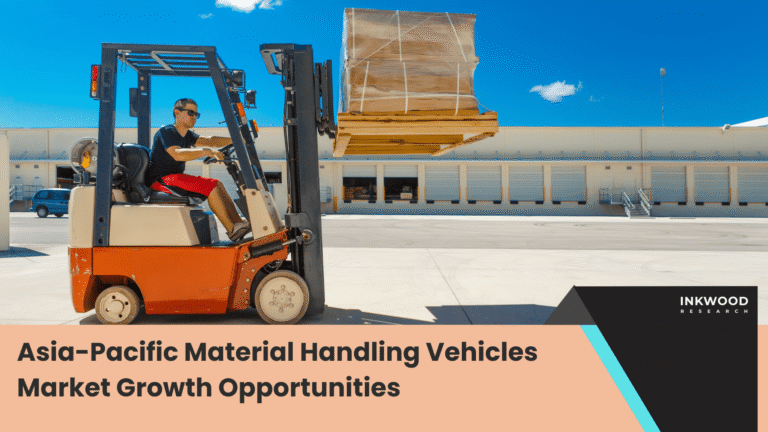
The Asia-Pacific material handling vehicles market experiences explosive growth through manufacturing expansion and e-commerce penetration. Valued at $19.72 billion in 2025, projections indicate advancement to $30.19 billion by 2032 at a remarkable 6.27% CAGR. China’s Belt and Road Initiative creates massive infrastructure investments across participating nations. Meanwhile, Alibaba, JD.com, and regional e-commerce platforms operate extensive logistics networks requiring sophisticated automation. Rising labor costs throughout coastal regions accelerate automation adoption. Furthermore, foreign direct investment supports modern facility construction equipped with advanced equipment throughout Southeast Asia.
Manufacturing executives establishing Asian production facilities discover market intelligence here. E-commerce operators scaling regional logistics networks gain strategic insights. Export-oriented businesses require efficient equipment for global competitiveness. Equipment suppliers targeting high-growth markets access demand drivers and competitive dynamics. Additionally, investors evaluating Asian automation opportunities obtain comprehensive regional perspectives addressing diverse market requirements.
Asia-Pacific Material Handling Vehicles Market Growth Dynamics
The material handling vehicles market throughout Asia-Pacific demonstrates unmatched dynamism globally. Material handling vehicles serve critical functions across manufacturing, warehousing, and distribution operations. According to our research, the material handling vehicles market size reached $19.72 billion in 2025. Moreover, the material handling equipment industry forecasts expansion to $30.19 billion by 2032, progressing at a 6.27% CAGR. Additionally, automated guided vehicles (AGVs) deployment accelerates across regional facilities.
Multiple converging factors drive material handling vehicles demand across diverse economies. Manufacturing capacity shifts from China to Southeast Asian nations create new equipment requirements. Urban population growth intensifies logistics demands serving densely populated metropolitan areas. Additionally, smartphone adoption and digital payment systems enable e-commerce penetration across demographics.
The material handling equipment industry in Asia-Pacific encompasses established Japanese manufacturers, aggressive Chinese competitors, and emerging Southeast Asian operations. This competitive diversity creates dynamic markets with varied customer preferences. Price sensitivity remains higher than in Western markets, driving innovation in cost-effective electric material handling equipment solutions.
Infrastructure Investments Fuel Expansion
China’s Belt and Road Initiative channels substantial funding into transportation and logistics infrastructure across participating nations. Port expansions, railway developments, and highway networks enhance regional connectivity. These improvements support manufacturing growth requiring sophisticated machinery & equipment market solutions. Moreover, warehouse automation solutions benefit from infrastructure development.
Government policies throughout the region encourage foreign direct investment in manufacturing sectors. Tax incentives, infrastructure support, and streamlined regulations attract multinational corporations. Consequently, modern facilities equipped with advanced industrial material handling systems proliferate across multiple countries. Furthermore, logistics automation market growth accelerates with infrastructure improvements.
China Dominates the Asia-Pacific Material Handling Vehicles Market
China represents the world’s largest manufacturing hub, producing goods across electronics, automotive, textiles, and consumer products. The Made in China 2025 initiative promotes industrial upgrading and intelligent manufacturing nationwide. This strategic program drives forklifts market growth through automation adoption across sectors.
E-commerce giants Alibaba, JD.com, and Pinduoduo operate massive logistics networks. These platforms require hundreds of fulfillment centers equipped with sophisticated warehouse automation solutions processing millions of daily orders. Consequently, automated warehouse vehicles adoption accelerates beyond traditional manufacturing applications. Moreover, distribution center automation transforms regional logistics capabilities.
Rising Labor Costs Drive Automation
Coastal provinces experience substantial wage increases as economic development progresses. Manufacturing competitiveness depends increasingly on productivity rather than low labor costs alone. Therefore, companies invest heavily in autonomous forklifts and robotic systems, reducing workforce requirements. Additionally, smart warehouse technologies optimize operations.
Younger generations prefer service sector employment over factory positions. Labor availability challenges intensify in developed regions like the Pearl River Delta and the Yangtze River Delta. Automation becomes necessary rather than optional for maintaining production capacity. Furthermore, industrial trucks and lifts address persistent labor shortages.
Domestic Manufacturers Compete Aggressively
Anhui Heli and Hangcha Group challenge international brands through competitive pricing strategies. These Chinese material handling equipment manufacturers produce quality equipment at substantially lower costs than Western alternatives. Domestic service networks provide rapid support across vast geographical territories. Moreover, the pallet trucks market growth benefits from local production capabilities.
Local companies understand regional requirements better than foreign competitors. Equipment specifications address specific Chinese operational conditions and customer preferences. This localization advantage supports market share gains against established international players. Additionally, electric warehouse vehicles production scales rapidly.
Cold Chain Infrastructure Expansion
Fresh food distribution and pharmaceutical logistics drive cold storage facility development. Middle-class growth increases demand for fresh produce, dairy products, and imported foods. These products require temperature-controlled supply chains from production through final delivery. Moreover, heavy-duty material handling equipment serves cold storage applications.
Material handling trucks operating in freezing environments need specialized capabilities. Electric systems outperform internal combustion alternatives in cold storage applications. Therefore, equipment electrification accelerates faster in cold chain segments than in general warehousing. Additionally, material transport vehicles must maintain reliability in extreme temperatures.
India’s Emerging Role in the Asia-Pacific Material Handling Vehicles Market
India’s position within the Asia-Pacific material handling vehicles market expands rapidly through government manufacturing initiatives and e-commerce growth. “Make in India” campaigns attract foreign investment across the automotive, electronics, and consumer goods sectors. Each new manufacturing facility requires comprehensive material handling solutions supporting production workflows.
Infrastructure development projects create additional equipment demand throughout the construction and industrial sectors. Government investments in highways, ports, and logistics parks enhance supply chain efficiency. These improvements support economic growth while generating warehouse automation solutions requirements. Moreover, global supply chain automation extends throughout India.
Automotive Sector Drives Sophisticated Applications
India emerges as a global automotive manufacturing hub for domestic and export markets. Major international brands establish production facilities leveraging cost advantages and growing domestic demand. Automotive assembly requires precise industrial material handling systems for component movement and finished vehicle transport.
Just-in-time manufacturing principles necessitate reliable equipment, minimizing production disruptions. Consequently, quality and service capabilities influence purchase decisions alongside pricing considerations. Japanese and European manufacturers gain traction in premium automotive applications despite higher costs. Additionally, e-commerce warehouse automation supports automotive parts distribution.
E-Commerce Penetration Accelerates
Amazon India, Flipkart, and regional platforms expand rapidly across urban and rural markets. Smartphone adoption and improved internet connectivity enable digital shopping across demographics. Fulfillment network expansion creates substantial demand for smart warehouse technologies and automated systems. Moreover, distribution center automation transforms Indian logistics.
Grocery delivery services and quick commerce platforms require dense distribution networks. Urban micro-fulfillment centers utilize compact warehouse robots and market solutions optimized for confined spaces. This segment demonstrates faster growth rates than traditional e-commerce categories. Furthermore, automated warehouse vehicles handle diverse product categories.
Infrastructure Challenges Persist
Electrical grid reliability varies significantly across regions, affecting electric material handling equipment adoption. Companies require backup power systems ensuring operations during outages. These additional infrastructure requirements increase total project costs beyond equipment purchases alone. Moreover, material handling equipment manufacturers must address regional constraints.
Service network density remains limited in tier-2 and tier-3 cities. Equipment downtime extends when replacement parts require shipping from distant locations. Therefore, equipment reliability and local service availability strongly influence brand selection. Additionally, logistics automation market development requires infrastructure investments.
Southeast Asia Opportunities Within the Asia-Pacific Material Handling Vehicles Market
Vietnam, Thailand, and Indonesia benefit from supply chain diversification strategies within the Asia-Pacific material handling vehicles market. Multinational corporations establish production capacity, reducing dependency on single-country manufacturing. These investments create substantial warehouse automation solutions opportunities across emerging markets.
Vietnam particularly attracts electronics and textile manufacturing relocating from China. The country’s competitive labor costs, political stability, and improving infrastructure support rapid industrial growth. Foreign companies establish modern facilities equipped with advanced industrial material handling systems technologies. Moreover, global supply chain automation extends throughout Southeast Asia.
- Thailand Leverages Established Industrial Base
Thailand maintains strong automotive and electronics manufacturing sectors. Japanese companies particularly maintain extensive operations throughout the country. These established relationships support equipment sales as facilities modernize and expand. Additionally, forklifts market growth reflects manufacturing expansion.
Thailand’s geographic position within Southeast Asia creates logistics hub opportunities. Distribution centers serving regional markets require sophisticated material handling solutions to manage diverse product categories. Cross-border e-commerce further intensifies these requirements. Furthermore, electric warehouse vehicles adoption accelerates.
- Indonesia Represents Long-Term Potential
Indonesia’s large population and growing middle class create substantial domestic market opportunities. Manufacturing capacity expands, serving local consumption alongside export production. However, infrastructure limitations constrain growth rates below smaller neighbors. Moreover, heavy-duty material handling equipment demand grows steadily.
Island geography creates unique logistics challenges requiring efficient material handling across distribution networks. Port operations particularly demand industrial trucks and lifts for managing containerized cargo. Gradual infrastructure improvements support steady market expansion over time. Additionally, pallet trucks market opportunities emerge.
- Government Incentives Attract Investment
Southeast Asian nations compete aggressively for foreign direct investment through tax incentives and infrastructure support. Special economic zones offer streamlined regulations and enhanced services. Manufacturing clusters develop around these zones, concentrating equipment demand geographically. Moreover, automated guided vehicles (AGVs) deployment increases.
Regional trade agreements facilitate cross-border commerce and supply chain integration. Companies establish operations serving multiple markets from strategic locations. This regionalization supports larger facility investments incorporating advanced automation technologies. Furthermore, material transport vehicles serve cross-border logistics networks.
E-Commerce Revolution Transforms the Asia-Pacific Material Handling Vehicles Market
Asian e-commerce platforms operate at unprecedented scales, transforming the Asia-Pacific material handling vehicles market dynamics globally. Alibaba’s Singles’ Day generates massive sales volumes during 24-hour periods. Processing such volumes requires substantial automation investments across fulfillment networks. Moreover, logistics automation market solutions enable rapid order processing.
JD.com operates highly automated warehouses throughout China featuring robotic sorting, autonomous vehicles, and AI-powered inventory management. These facilities demonstrate advanced automation capabilities previously limited to Western markets. Technology adoption timelines compress dramatically compared to historical patterns. Additionally, smart warehouse technologies proliferate regionally.
- Mobile Commerce Dominates Shopping Patterns
Smartphone penetration throughout Asia enables mobile-first commerce ecosystems. Consumers research, purchase, and track deliveries entirely through mobile applications. This seamless digital experience creates expectations for rapid fulfillment, requiring efficient warehouse operations. Moreover, e-commerce warehouse automation addresses fulfillment challenges.
Social commerce integration within platforms like WeChat and LINE drives impulse purchases. Flash sales and limited-time offers create sudden demand spikes requiring flexible capacity management. Automated warehouse vehicles enable rapid response to volatile order patterns. Furthermore, material handling solutions accommodate peak demand periods.
- Last-Mile Delivery Innovations
Dense urban populations enable innovative delivery models, including drone delivery and autonomous vehicles. However, traditional material handling trucks remain essential for warehouse-to-hub transportation. Equipment must interface seamlessly with emerging last-mile technologies. Additionally, industrial material handling systems support distribution networks.
Reverse logistics complexity increases as return rates rise with e-commerce adoption. Warehouse operations must efficiently process returned merchandise for restocking or disposal. Equipment versatility becomes increasingly important for these multifunctional requirements. Moreover, warehouse robots market solutions handle returns processing.
- Regional Platform Competition
Southeast Asian platforms Lazada, Shopee, and Tokopedia expand aggressively across multiple countries. These companies invest heavily in logistics infrastructure, competing with global giants. Infrastructure investments include fulfillment centers requiring comprehensive material handling equipment and manufacturers solutions. Furthermore, distribution center automation enables competitive service levels.
Local platforms understand regional nuances better than international competitors. Cultural preferences, payment methods, and delivery expectations vary substantially across markets. This localization advantage supports competitive positioning against Western e-commerce platforms. Additionally, electric material handling equipment supports sustainability initiatives.
Local Manufacturers Reshape the Asia-Pacific Material Handling Vehicles Market
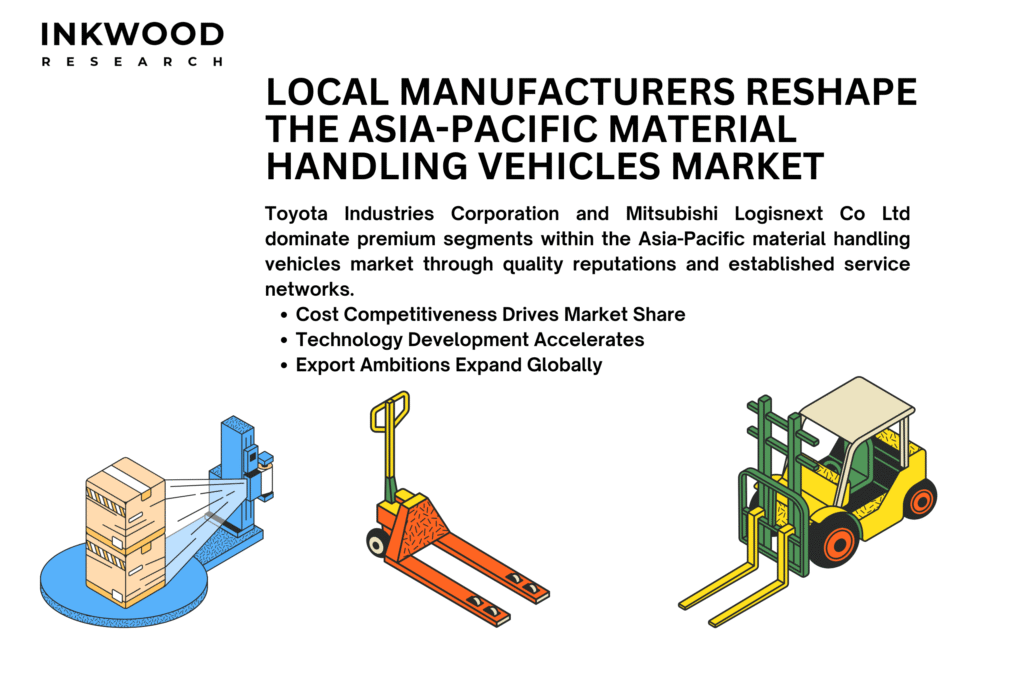
Toyota Industries Corporation and Mitsubishi Logisnext Co Ltd dominate premium segments within the Asia-Pacific material handling vehicles market through quality reputations and established service networks. Japanese manufacturers particularly maintain strong positions in automotive and electronics manufacturing applications. Customers prioritize reliability and precision for critical production environments.
However, Chinese material handling equipment manufacturers gain substantial market share through aggressive pricing and improving quality. Anhui Heli and Hangcha Group produce comprehensive equipment ranges competing effectively against international brands. Domestic companies sold 280,012 units in 2024, demonstrating massive production scale. Moreover, forklifts market competition intensifies.
Cost Competitiveness Drives Market Share
Chinese equipment typically costs 30-40% less than comparable Japanese or European alternatives. This substantial price advantage appeals to cost-conscious customers throughout the region. Quality improvements narrow performance gaps while pricing differentials remain significant. Additionally, warehouse automation solutions are becoming more accessible.
Domestic manufacturers maintain extensive service networks across China and are expanding throughout Southeast Asia. Local parts availability and technician proximity reduce downtime compared to international competitors. These service advantages complement pricing benefits effectively. Furthermore, the logistics automation market growth supports domestic manufacturers.
Technology Development Accelerates
Hangcha announced plans for manufacturing facilities producing 10,000 autonomous forklifts units annually. This massive capacity demonstrates confidence in automated guided vehicles (AGVs) demand growth. Chinese companies invest heavily in R&D, developing technologies competitive with Western innovations. Moreover, smart warehouse technologies advance rapidly.
Partnerships with technology companies accelerate autonomous navigation and fleet management development. Domestic manufacturers collaborate with Chinese AI firms, creating integrated solutions. This ecosystem approach supports rapid technology advancement. Additionally, electric warehouse vehicles incorporate advanced features.
Export Ambitions Expand Globally
Chinese manufacturers increasingly target international markets beyond Asia. Quality certifications and compliance with Western standards enable European and North American sales. Competitive pricing disrupts established markets while improving brand recognition globally. Moreover, the pallet trucks market exports have increased.
Service network limitations constrain growth in distant markets. Companies establish partnerships with local distributors providing after-sales support. These collaborations enable gradual international expansion while managing infrastructure investments. Furthermore, industrial trucks and lifts export volumes grow.
Technology Adoption Across the Asia-Pacific Material Handling Vehicles Market
Technology sophistication varies dramatically across the Asia-Pacific material handling vehicles market. Japanese operations utilize cutting-edge autonomous systems and IoT integration extensively. Chinese facilities rapidly deploy proven technologies at massive scales. Southeast Asian markets selectively adopt automation where labor costs justify investments.
Developed markets like Japan, South Korea, and Singapore demonstrate adoption patterns similar to Western countries. Aging workforces and labor shortages drive automation regardless of costs. Equipment specifications emphasize quality, reliability, and advanced features. Moreover, warehouse robots market solutions address demographic challenges.
Leapfrogging Traditional Development Paths
Emerging markets often skip intermediate technology generations, adopting the latest innovations directly. Mobile payment systems proliferated without an extensive credit card infrastructure. Similarly, warehouses deploy automated warehouse vehicles without decades of conventional automation experience. Additionally, material handling solutions incorporate modern technologies.
This leapfrogging phenomenon accelerates technology diffusion throughout the region. Companies recognize automation advantages without legacy equipment constraining decisions. Greenfield facilities incorporate advanced systems from initial operations. Furthermore, e-commerce warehouse automation benefits from the latest innovations.
IoT Integration Varies by Maturity
Developed markets extensively utilize telematics and fleet management platforms. Real-time data collection enables predictive maintenance and utilization optimization. Cloud-based systems provide visibility across multi-site operations. Moreover, industrial material handling systems incorporate connectivity.
Emerging markets focus on basic functionality rather than advanced connectivity. Infrastructure limitations and cost sensitivities constrain IoT adoption. However, technology costs decline continuously, making advanced features increasingly accessible. Additionally, distribution center automation incorporates basic monitoring.
Service Model Innovations
Asian markets demonstrate flexibility in ownership models, matching diverse customer requirements. Short-term rentals enable seasonal capacity management without permanent fleet expansions. Lease-to-own programs provide pathways toward ownership for growing businesses. Moreover, heavy-duty material handling equipment rental options expand.
Equipment-as-a-service models bundle equipment, maintenance, and management into comprehensive subscriptions. These arrangements appeal to companies preferring outsourced equipment management. Service providers optimize fleet utilization across multiple customers while assuming operational responsibilities. Furthermore, material transport vehicles become services rather than assets.
Key Takeaways
- Explosive Growth: The Asia-Pacific material handling vehicles market expands from $19.72 billion (2025) to $30.19 billion (2032) at a 6.27% CAGR.
- China Dominates: World’s largest manufacturing hub and e-commerce market drives regional demand through massive infrastructure investments.
- India Rising: Manufacturing initiatives and e-commerce growth position India as the next major market with substantial long-term potential.
- Southeast Asia Opportunities: Vietnam, Thailand, and Indonesia attract manufacturing diversification, creating equipment demand.
- E-Commerce Impact: Alibaba, JD.com, and regional platforms operate massive automated logistics networks, transforming the region.
- Local Competition: Chinese manufacturers gain market share through cost advantages, improving quality, and extensive service networks.
- Technology Adoption: Emerging markets deploy cutting-edge automation without legacy constraints through leapfrogging strategies.
Conclusion
The Asia-Pacific material handling vehicles market represents unparalleled growth opportunities globally. Manufacturing expansion, e-commerce penetration, and infrastructure investments create sustained demand across diverse economies.
Regional diversity requires nuanced strategies addressing varied customer requirements, infrastructure conditions, and competitive dynamics. Companies succeeding across Asia-Pacific balance cost competitiveness with quality, service capabilities, and technological sophistication. Moreover, material handling solutions must adapt to regional conditions.
Inkwood Research delivers comprehensive market intelligence supporting strategic expansion decisions. Our regional analysts provide insights into country-specific dynamics, competitive positioning, and emerging opportunities.
Ready to capitalize on Asia-Pacific growth? Contact our specialists for customized analysis addressing your specific regional market entry strategies.